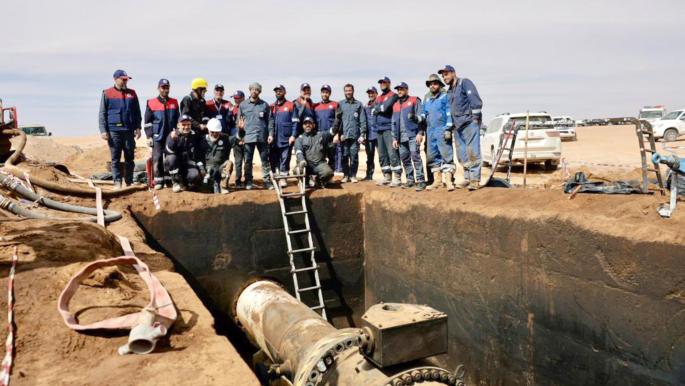
The National Oil Corporation of Libya has announced the resumption of production operations in the Sharara and El Feel oil fields, following the completion of comprehensive maintenance on the crude oil export pipeline. This vital pipeline connects the Sharara fields to the storage tanks at the Zawiya refinery, reflecting ongoing efforts to improve the infrastructure of the oil sector in the country.
This step comes at a critical time for the Libyan economy, which heavily relies on oil revenues. The Sharara and El Feel fields are among the largest oil fields in Libya and play a pivotal role in meeting both local and international market demands.
Details of the Event
The National Oil Corporation reported that the maintenance work included upgrading the equipment and technologies used in the export pipeline, enhancing production efficiency and reducing environmental risks. These works were carried out in collaboration with specialized technical teams, reflecting the corporation's commitment to improving safety and quality standards.
This step is part of a broader strategy aimed at rehabilitating the oil facilities in the country, which have been significantly affected by conflicts and political strife over the years. The resumption of production in the Sharara and El Feel fields is a positive sign of stabilizing security conditions in the region.
Background & Context
Historically, the oil sector in Libya has represented the backbone of the national economy, accounting for over 90% of state revenues. However, this sector has experienced significant fluctuations due to the political and security crises that the country has faced since 2011. These crises have led to a decline in production and the destruction of many oil facilities.
In recent years, the Libyan government has made substantial efforts to regain control over oil fields and boost production by improving infrastructure and ensuring safety for workers and technicians. The resumption of production in the Sharara and El Feel fields is an important step towards achieving economic stability.
Impact & Consequences
The resumption of production in the Sharara and El Feel fields is expected to contribute to increased state revenues, helping to improve the economic situation in the country. This step may also enhance confidence among foreign investors looking for opportunities to invest in the Libyan oil sector.
Moreover, improving productivity in these fields could lead to the creation of more job opportunities, helping to reduce unemployment rates in the country. This is crucial given the economic and social challenges facing Libya.
Regional Significance
Libya is considered one of the largest oil-producing countries in the region, and the resumption of production in the Sharara and El Feel fields could positively impact global oil markets. An increase in production may lead to price stabilization in international markets, benefiting consuming countries.
Additionally, the stability of the oil sector in Libya could enhance regional cooperation in the energy sector and create new opportunities for trade exchanges among Arab countries. This underscores Libya's importance as a strategic hub in the region.
In conclusion, the resumption of production in the Sharara and El Feel fields represents a positive step towards restoring economic stability in Libya and reflects ongoing efforts to improve the infrastructure of the oil sector. There is hope that this step will contribute to enhancing growth and development in the country.