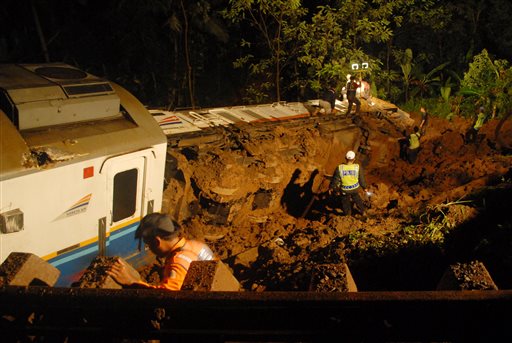
Train operations in Indonesia have resumed after a temporary halt due to landslides that occurred on the track between the regions of Maswati and Sasaksat. The debris from the landslides has been cleared, allowing trains to return to normal operations. The incident took place in a mountainous area, leading to delays for many journeys and impacting travelers.
Local authorities confirmed that emergency teams worked around the clock to remove rocks and dirt that caused the track closure. Heavy machinery was utilized to ensure the safety of travelers and to resume operations as quickly as possible. This incident highlights the challenges faced by the railway network in Indonesia, especially in mountainous regions that are prone to landslides.
Details of the Incident
On Tuesday morning, local authorities received reports of landslides in the Maswati area, which led to the closure of the track to train traffic. Travelers were informed of potential delays, and immediate measures were taken to secure the area. After several hours of continuous work, teams managed to remove the obstacles, and operations on the track resumed that afternoon.
The railway network in Indonesia is one of the main modes of transportation in the country, connecting many major cities. However, the complex geographical conditions, including mountains and landslides, pose significant challenges for the authorities. Officials have indicated that improving infrastructure and updating monitoring systems could help reduce such incidents in the future.
Background & Context
Historically, Indonesia has experienced numerous incidents related to landslides, particularly in mountainous areas. This natural phenomenon occurs frequently due to heavy rainfall and rugged terrain. These incidents have sometimes led to the closure of roads and railways, affecting transportation and trade.
In recent years, the Indonesian government has invested in improving and expanding the railway network to meet the increasing transportation needs of the country. However, challenges remain, as ongoing efforts are required to ensure the safety of travelers and the sustainability of the service.
Impact & Consequences
The impact of landslides on train operations can be significant, leading to delays and confusion in travel schedules. In this case, operations resumed quickly, demonstrating the effectiveness of the authorities' response. However, repeated incidents may lead to a loss of confidence in the public transport system, affecting the number of passengers.
Additionally, improving railway infrastructure can contribute to enhancing the local economy, as it facilitates the movement of goods and passengers between cities. Therefore, investment in this sector is vital for achieving sustainable development.
Regional Significance
Indonesia's experience in dealing with landslides and transportation challenges serves as an important lesson for many Arab countries facing similar geographical conditions. With the increasing need to develop transportation infrastructure, Arab countries can benefit from global experiences in this field.
Furthermore, enhancing the railway network in Arab countries can contribute to boosting inter-trade and tourism, thereby promoting economic growth in the region. Thus, cooperation in transportation and infrastructure is of great importance for achieving developmental goals.