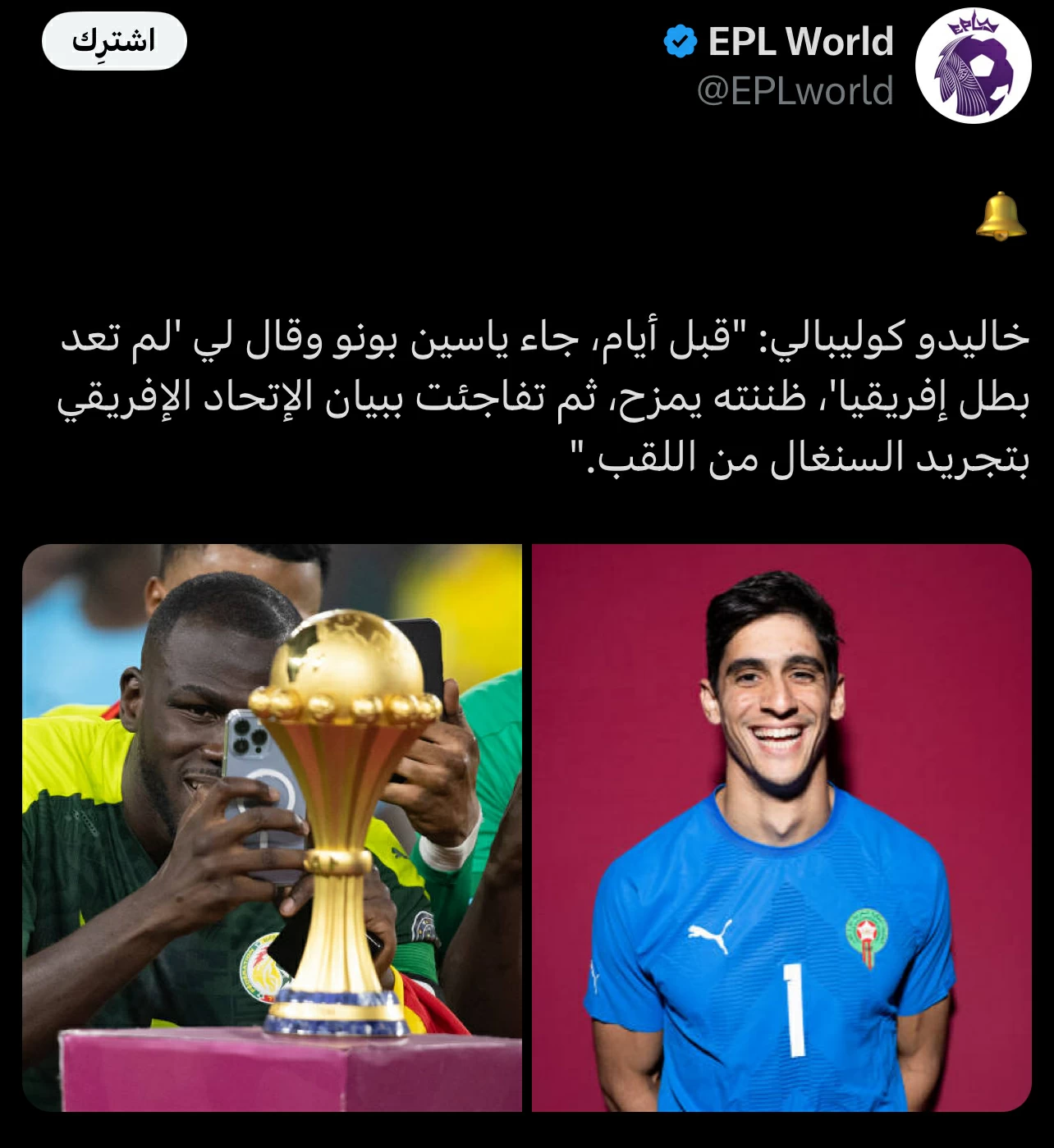
Khalidou Koulibaly, captain of the Senegal national team and defender for Al Hilal in Saudi Arabia, disclosed intriguing information regarding the decision to strip his country of the Africa Cup title. Koulibaly stated that his teammate Yassine Bounou informed him that Senegal was no longer the African champion, prior to the official statement from the Confederation of African Football (CAF). Koulibaly explained to ‘EPL World’ that he initially thought Bounou was joking, but was later surprised when the statement confirming Senegal's title revocation was issued.
In a related context, the African Football Confederation issued an administrative decision to strip the Senegalese team of the title and award the cup to the Moroccan team, following the withdrawal of Senegalese players from the field for several minutes in protest against certain refereeing decisions. This scene sparked widespread debate on both sports and legal levels, with many observers considering the decision to be harsh and disproportionate to the event.
Details of the Incident
According to the decision issued by the African Confederation, the Moroccan team was declared the winner of the final match with a score of 3-0, allowing them to officially claim the Africa Cup title. The decision was based on Articles 82 and 84 of the regulations governing the Africa Cup, which stipulate strict penalties in the event of any team withdrawing from the match or disrupting the course of the competition. This decision elicited mixed reactions within sports circles, as some considered the penalty to be severe, while others viewed it as necessary to maintain the integrity of the competitions.
For its part, the Court of Arbitration for Sport (CAS) confirmed that the Senegalese Football Federation officially filed an appeal against the decision that stripped them of the Africa Cup title for 2025 and awarded the cup to Morocco. This appeal reflects the Senegalese Federation's desire to reclaim the title and also highlights the significance of this event in the history of African football.
Context and Background
Historically, African football has witnessed many controversial events, where refereeing and disciplinary decisions have been the subject of extensive discussions. In recent years, the intensity of these discussions has increased, especially in major tournaments like the Africa Cup. This incident is part of a series of events that reflect the tensions between African teams and administrative bodies, necessitating a reconsideration of some laws and regulations.
It is worth noting that the Senegalese national team has achieved remarkable successes in recent years, having won the Africa Cup title in 2021, making it one of the strong teams on the continent. However, recent events may affect the team's reputation and history.
Impact and Consequences
The decision to strip the title may have negative effects on the morale of Senegal's players and their fans. Such decisions can lead to a loss of confidence in the administrative system of African football, which may reflect on the teams' performances in upcoming tournaments. Additionally, this decision may open the door for further debate regarding the management of sports competitions on the continent.
On the other hand, the Moroccan team may benefit from this decision, as it will enhance its status in the African arena and increase its chances in future competitions. This success could also contribute to fostering sportsmanship among African teams.
Significance for the Arab Region
This event holds particular importance for the Arab region, as football is one of the most popular sports in the Arab world. Major sporting events like the Africa Cup attract the attention of fans and contribute to strengthening ties between nations. Moreover, the success of Arab teams in these tournaments can have a positive impact on relations between Arab and African countries.
In conclusion, this event remains a turning point in the history of African football, reflecting the challenges faced by teams and administrative bodies. Following the developments of this issue will be interesting, especially with the ongoing appeal by the Senegalese Federation.