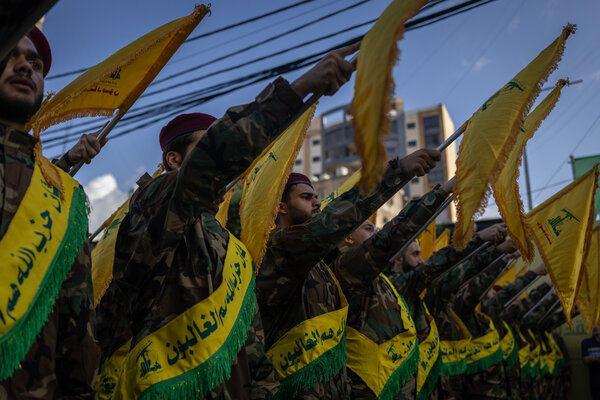
Intelligence sources have reported that the Lebanese Hezbollah continues to wield significant influence in southern Lebanon, despite repeated statements from the Israeli army suggesting a decline in the party's capabilities. This information emerges during a sensitive period marked by rising tensions in the region, raising questions about the security situation in Lebanon.
These reports coincide with the ongoing conflict in the area, as the Israeli army seeks to bolster its security stance. However, intelligence information indicates that Hezbollah still possesses a network of military and political activities that enhance its ability to influence events.
Details of the Situation
Reports indicate that Hezbollah has reinforced its presence in the southern regions, where it enjoys a broad popular base. The party has also prepared itself to confront any potential escalation from Israel, reflecting its constant readiness to counter any threats. This dynamic illustrates the ongoing tension between the two parties, which could lead to military escalation in the future.
At the same time, the Israeli army faces significant challenges in assessing the security situation in southern Lebanon. Despite its repeated attempts to diminish Hezbollah's influence, the reality on the ground shows that the party still retains substantial power, raising concerns in Tel Aviv.
Background & Context
Historically, Hezbollah is considered a key player in the Lebanese-Israeli conflict, having been established in the early 1980s in response to the Israeli occupation of Lebanon. Since then, the party has evolved into a prominent military and political force in the country, making it a constant target for the Israeli army. Over the years, relations between the two sides have seen continuous escalation, with numerous wars and conflicts impacting regional security.
Concerns are growing that any new escalation could lead to a widespread conflict in the region, especially given the current circumstances in neighboring countries. The situation in Syria and Iraq adds further complexity to the conflict, as regional and international interests intertwine in these disputes.
Impact & Consequences
Analyses suggest that Hezbollah's continued strength in southern Lebanon may lead to increased tensions in the region, potentially affecting stability in Lebanon and neighboring countries. Moreover, any military escalation could negatively impact the economic and social situation in Lebanon, which is already grappling with multiple crises.
Furthermore, these dynamics could influence relations between Arab countries and Israel, as some nations seek to improve their ties with Tel Aviv. Should the conflict escalate, these relationships could be significantly affected, reshuffling the cards in the region.
Regional Significance
Developments in southern Lebanon are of particular importance to Arab countries, as any escalation could have far-reaching consequences. These events may impact regional security, necessitating a response from Arab nations to ensure stability in the area.
Ultimately, the situation in Lebanon remains under scrutiny, as observers look to see how events unfold under these complex circumstances. Understanding the dynamics between Hezbollah and Israel is vital for assessing the future security landscape in the region.