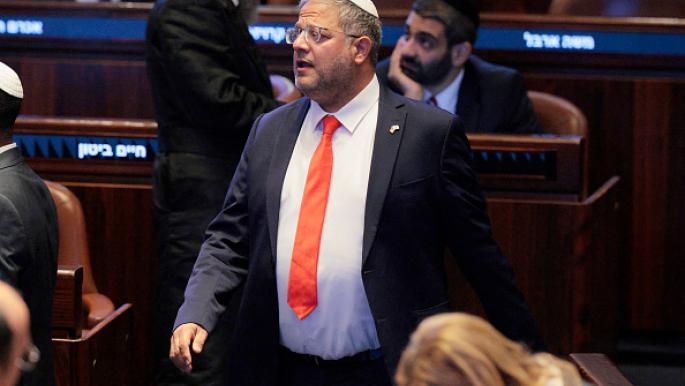
Israeli National Security Minister Itamar Ben Gvir disclosed information indicating that Iranians are privy to his phone conversations. This revelation came during an interview with the official Israeli radio station Kan-Rishon Bet, where he emphasized that such espionage poses a significant threat to Israeli national security.
Ben Gvir, who assumed his position in the current Israeli government, asserted that this information is part of the increasing threats posed by Iran, noting that Tehran is constantly seeking to gather intelligence on Israel. His statement has sparked widespread reactions within political and media circles.
Details of the Incident
In his remarks, Ben Gvir clarified that Iran employs advanced techniques to spy on Israeli officials, including monitoring phone calls. He stressed that these activities necessitate Israel to adopt stringent security measures to protect sensitive information. He also pointed out that this issue is not new, but rather stems from many years of conflict between the two nations.
Iran is regarded as one of the greatest security threats facing Israel, as Tehran seeks to enhance its influence in the region by supporting armed groups. Ben Gvir added that the Israeli government is working on developing strategies to counter these threats, including strengthening cooperation with Israel's allies in the region.
Background & Context
Historically, the relationship between Iran and Israel has been marked by ongoing tension, with Israel viewing Iran as a primary adversary in the Middle East. Since the Islamic Revolution in 1979, Iran has adopted an antagonistic stance toward Israel, leading to heightened tensions between the two sides. In recent years, intelligence activities between the two countries have intensified, as each seeks to gather information on the other.
It is noteworthy that Iran has developed its nuclear programs, raising significant concerns in Israel and among Western nations. Israel considers the Iranian nuclear program an existential threat, prompting it to take military and intelligence measures to address this danger.
Impact & Consequences
Ben Gvir's statements could escalate tensions between Iran and Israel, as Iran may respond to these accusations by increasing its intelligence activities. Furthermore, these remarks could affect Israel's relations with Western countries, which are seeking to reach an agreement with Iran regarding its nuclear program.
Additionally, these statements may lead to increased public support for the Israeli government in the face of external threats. At the same time, they could bolster Iran's position domestically, as it might use these allegations to reinforce its stance as a supporter of resistance against Israel.
Regional Significance
These statements are particularly significant for the Arab region, as they reflect the ongoing tensions between Iran and Israel. Such tensions could impact security and stability in neighboring countries, especially given the presence of Iranian-backed armed groups in some Arab nations.
Moreover, these developments may lead to increased division among Arab states, as their positions toward Iran and Israel differ. Simultaneously, these events could prompt some Arab countries to enhance their cooperation with Israel in confronting Iranian threats, potentially altering the balance of power in the region.
In conclusion, the tensions between Iran and Israel remain a central issue in regional politics, requiring Arab nations to adopt clear and effective stances to address these challenges.