Hagai Elad, the former director of the Israeli human rights organization B'Tselem, which opposes the occupation, confirmed that there is a clear strategy behind the massacres occurring in the occupied West Bank. He expressed this in one word: "Deir Yassin," indicating that the goal is to intimidate Palestinians for the purpose of displacing them, even if gradually, to make the entire country Jewish.
In an extensive article, Elad claimed that the Zionist victory, by almost all measures, is evident in this strategy. He argued that what is happening in the West Bank is not merely random acts but part of an organized plan aimed at changing the demographic composition of the region.
Details of the Events
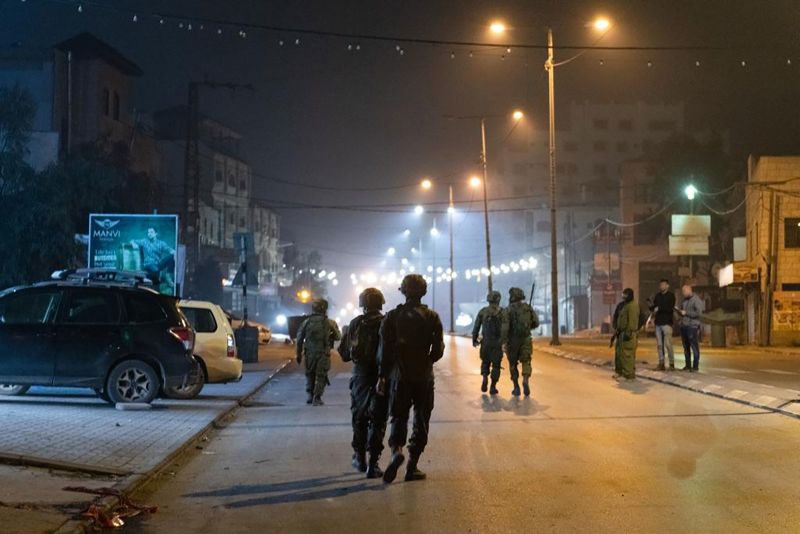
Reports of Israeli violations in the West Bank are increasing, with Palestinian villages and camps subjected to violent practices including incursions, arrests, and demolitions. Elad pointed out that these practices are not new; rather, they follow a historical pattern dating back to the establishment of the Israeli state, where violence has been used as a means to achieve political goals.
This strategy also involves an increasing use of military force, exacerbating the humanitarian situation in the region. This is evident in the rising numbers of injuries and fatalities among Palestinians, in addition to the destruction of property and infrastructure.
Background & Context
Historically, the term "Deir Yassin" refers to the massacre that occurred in 1948, where many Palestinians were killed in the village. This incident has become a symbol of the violence faced by Palestinians during the Nakba and is used today as a reference to understand the current Israeli mentality towards Palestinians.
Since then, the Palestinian territories have witnessed numerous massacres and violations, leading to a loss of faith in the possibility of achieving peace. Elad believes that this mentality is still present in current Israeli policies, where violence is used as a means to control land and populations.
Impact & Consequences
These policies directly affect the lives of Palestinians, as their suffering increases under the current conditions. Moreover, this strategy enhances polarization between Palestinians and Israelis, making it difficult to achieve any form of peaceful settlement.
Furthermore, these violations provoke international reactions, with increasing calls for holding Israel accountable for its human rights violations. Elad noted that the international community must take responsibility for what is happening in the West Bank and take effective steps to stop these violations.
Regional Significance
The events in the West Bank are part of the Palestinian-Israeli conflict, which affects stability across the entire Arab region. As the situation worsens, fears grow regarding escalating tensions in neighboring countries, potentially leading to negative repercussions on regional security.
Additionally, the continuation of these Israeli policies may impact relations between Arab states and Israel, as pressures on Arab governments increase to intervene or take a firmer stance against the occupation.
In conclusion, the situation in the West Bank requires urgent international attention, as the continuation of violations could exacerbate humanitarian conditions and increase the chances of escalation in the region.