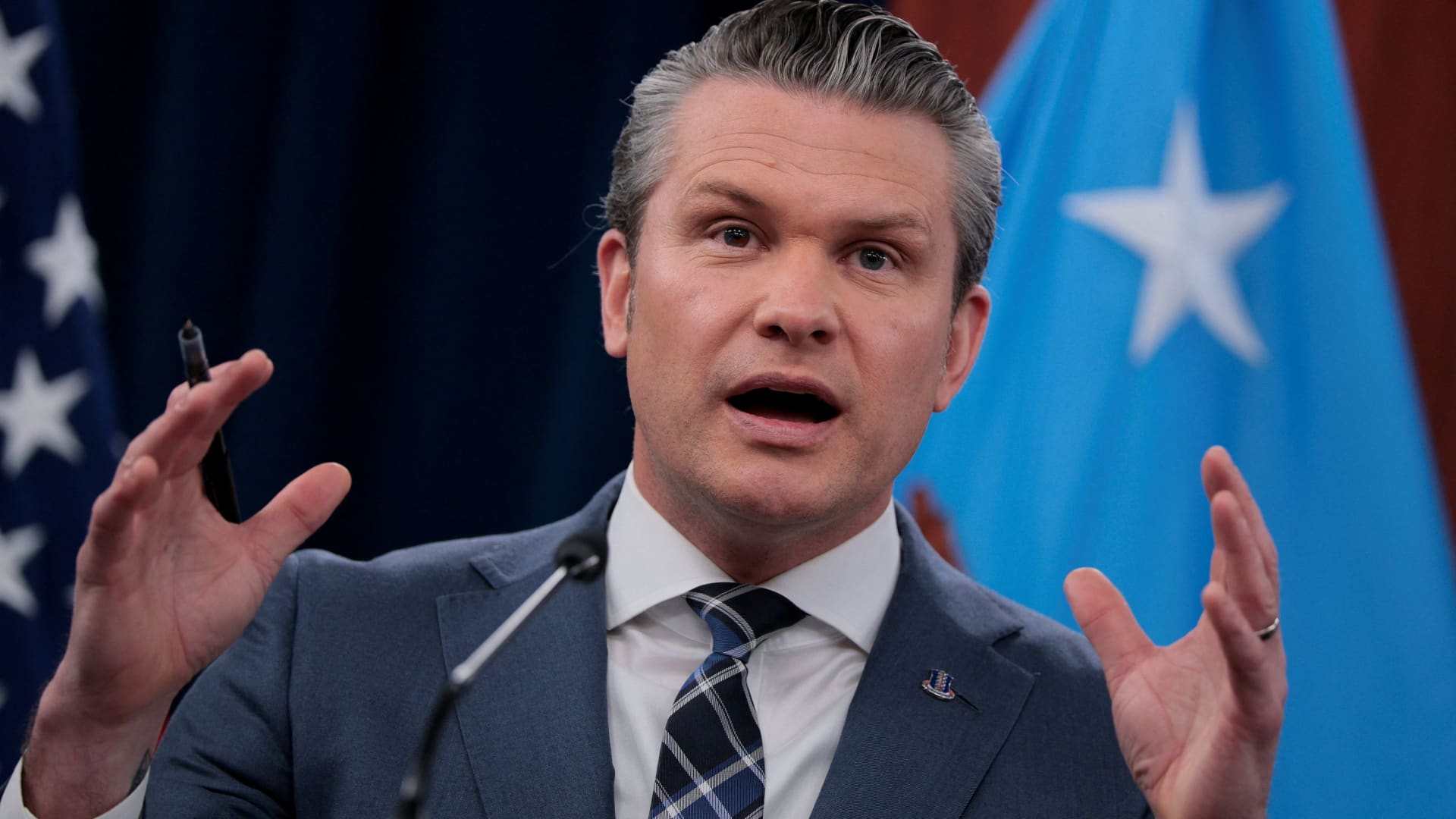
A report by the Financial Times revealed that a broker for U.S. Defense Secretary Peter Hegseth attempted to make a significant investment in defense companies before the outbreak of war with Iran. The newspaper reported that the broker from Morgan Stanley contacted BlackRock last February regarding a multi-million dollar investment in a fund focused on defense industries.
The fund, which has assets of approximately $3.1 billion, includes major investments in companies such as RTX Corp, formerly known as Raytheon, Lockheed Martin, and Northrop Grumman. Although the fund experienced a decline of 12.4% last month, coinciding with the start of the war with Iran, the investment discussed by the broker was ultimately not executed.
Details of the Event
As tensions in the region escalate, Pentagon spokesperson Shawn Parnell denied the report, describing it as "completely false and fabricated." He called for the article to be retracted. Parnell confirmed that Hegseth or any of his representatives did not communicate with BlackRock regarding any such investment, indicating that this report is "another attempt to distort the facts."
These developments come at a time when the conflict between the United States and Iran is intensifying, with the war entering its fifth week without any signs of de-escalation. The United States has sent Marine Corps troops to the region, a move indicating the Pentagon's readiness for potential ground operations in Iran.
Background & Context
Historically, relations between the United States and Iran have been strained since the 1979 Islamic Revolution, witnessing several conflicts and disputes. Since then, the United States has taken various military and economic steps against Iran, including imposing stringent economic sanctions. These policies have exacerbated conditions in the region, making it one of the most tense areas in the world.
In recent years, tensions have significantly increased, especially after the United States withdrew from the Iranian nuclear deal in 2018. Since then, the region has seen an escalation in hostilities, raising fears of a full-scale war.
Impact & Consequences
These events could lead to increased tensions in financial markets, as investors may seek to protect their investments amid geopolitical uncertainty. Additionally, any escalation in the conflict could impact oil prices, negatively affecting the global economy, especially given the heavy reliance on Iranian oil.
Moreover, these conditions may lead to increased divisions among major powers, as each country will take a different stance based on its strategic interests. This could exacerbate humanitarian crises in the region, where civilians suffer from the consequences of the conflict.
Regional Significance
For Arab countries, the rising tensions between the United States and Iran pose a threat to security and stability in the region. Many Arab nations rely on regional stability to safeguard their economic and political interests. Any escalation in the conflict could lead to an influx of refugees and increased humanitarian crises, necessitating an urgent response from Arab countries and the international community.
In conclusion, the situation in the region remains complex and fluid, as political and economic interests intertwine with military tensions. It is crucial to closely monitor developments to understand the various dimensions of this conflict and its impact on the region and the world.