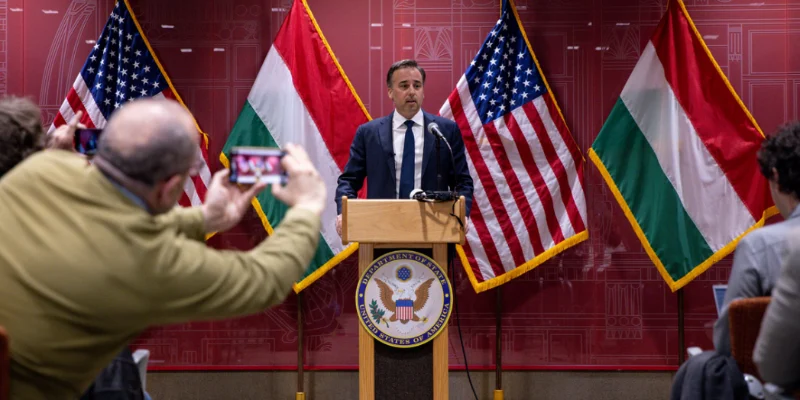
In a significant development, the website "The Insider" has disclosed a recording of a phone call between Hungarian Foreign Minister Peter Szijjarto and his Russian counterpart Sergey Lavrov. During the call, Szijjarto promised to remove the name of the sister of Russian businessman Alisher Usmanov from the European sanctions list. This information raises serious concerns about potential collusion between Budapest and Moscow within the context of complex international relations.
The leaked recording comes at a sensitive time, as pressures are mounting on European countries to unify their stance towards Russia amid escalating geopolitical crises. This collusion is seen as a potential violation of European policies aimed at imposing strict sanctions on individuals and entities linked to the Russian regime.
Details of the Incident
The leaked call reflects the close relationship between Hungary and Russia, with the Hungarian minister appearing to promise his Russian counterpart support in easing the imposed sanctions. Alisher Usmanov is one of the wealthy Russians known for his close ties to the Russian regime, and his sister was included in the European sanctions list due to her role in supporting the regime.
This leak comes at a time when Hungary is facing widespread criticism from other European countries due to its pro-Russian policies, complicating the political situation within the European Union. This incident illustrates how bilateral relations can influence major political decisions in Europe.
Background & Context
Since the onset of the conflict in Ukraine, European countries have taken varying stances towards Russia, with many imposing strict sanctions on Russian individuals and entities. However, Hungary stands out as an exception, as its government seeks to maintain strong relations with Moscow, which has sparked considerable debate within the European Union.
Historically, Hungary has always aimed to balance its national interests with the pressures from the European Union. As geopolitical tensions escalate, it appears that the Hungarian government is leaning towards strengthening its ties with Russia, raising concerns about the impact on the unity of the European Union.
Impact & Consequences
This revelation could have serious repercussions for Hungary's relations with the rest of Europe. If the authenticity of these leaks is confirmed, Hungary may face increased pressure from the European Union to change its policy towards Russia. This could also escalate tensions within the Union, as calls for punitive measures against Hungary for its stance are likely to rise.
Moreover, this incident may affect economic relations between Hungary and Russia, as Hungary heavily relies on Russian energy. Any shift in these relations could lead to severe economic repercussions for Hungary, especially in light of the current economic crises.
Regional Significance
In the context of ongoing events, this collusion between Moscow and Budapest could have implications for the Arab region, particularly given the complex relationships between Arab countries and Russia. Many Arab nations are seeking to strengthen their ties with Russia, and these developments may influence how they engage with Moscow in the future.
Additionally, any escalation in tensions between Russia and Europe could impact global energy prices, which may reflect on oil-producing Arab countries. Therefore, monitoring the developments of this issue will be crucial to understanding how it may affect Arab interests in the future.