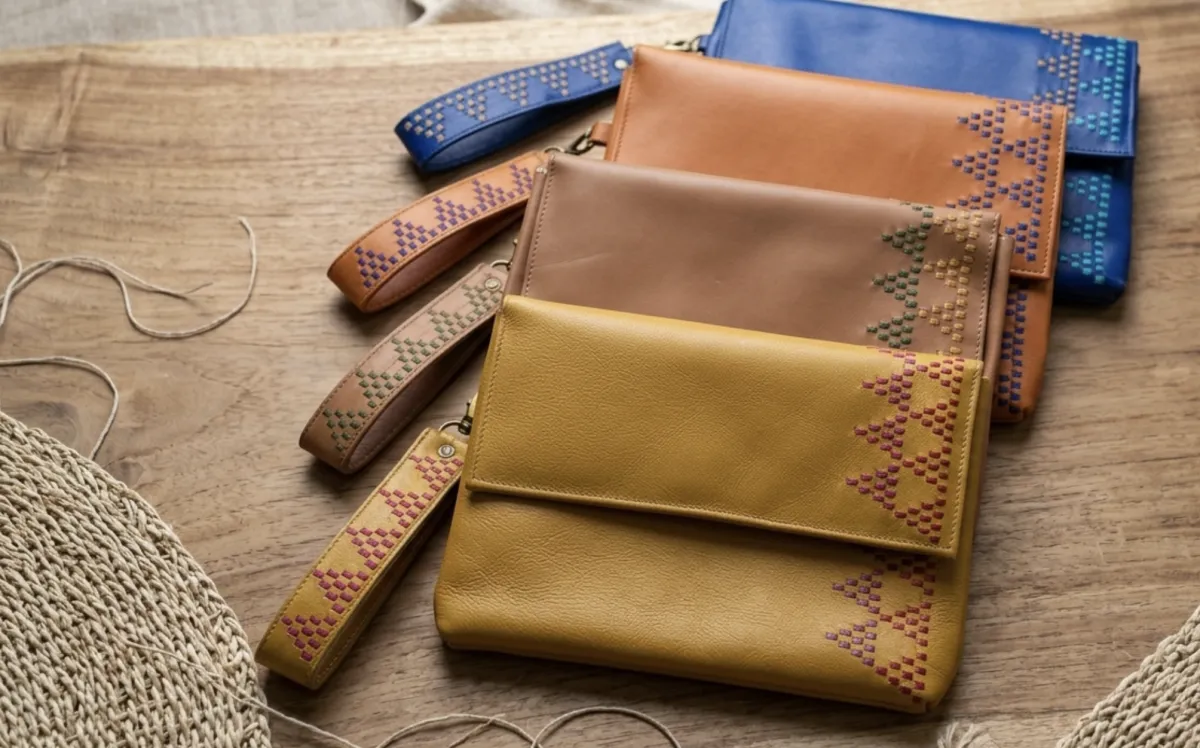
Camel leather shines in the Saudi crafts scene, used to create artistic pieces that blend durability and beauty, reflecting the country's cultural identity. Despite the rise of modern industries, this traditional material has secured its place as a contemporary product that resonates with today's tastes.
Camel leather is a unique material known for its toughness and durability, making it an ideal choice for crafting bags, wallets, and decorative art pieces. These characteristics make camel leather an excellent material for creating long-lasting products that increase in value over time.
Event Details
Saudi artisan Nada Samaan serves as a role model for a new generation of craftsmen rediscovering handicrafts as a means of artistic expression. Samaan states, "The craft of leather and embroidery has been a passion since childhood, where colors and threads were my first language." Her journey began after high school when she enrolled in a vocational institute, where she discovered her ability to transform simple materials into valuable artistic pieces.
Samaan shares her experience with leather, noting that she conducted an embroidery workshop for a company, which became a turning point in her career. "Working with leather was a challenge, but the results were stunning, prompting me to explore more possibilities with this material," Samaan adds.
Background & Context
Artisans in Saudi Arabia are increasingly turning to local resources, reflecting a growing awareness of the importance of preserving cultural heritage. Samaan emphasizes that the choice of camel leather is not random; it is due to its exceptional durability and the clarity of its pores, which gives pieces a timeless elegance. Her work demonstrates how leather can be combined with traditional embroidery to create contemporary art pieces.
The production of leather goods requires precise stages of work, starting from selecting high-quality leather, through tanning processes, to the final design. Each stage demands skill and patience, making every piece carry a unique identity.
Impact & Consequences
These handicrafts contribute to enhancing Saudi cultural identity, reflecting the spirit of the place and the history of traditional crafts. With increasing support for cultural industries, these crafts represent an open space for innovation, elevating the status of artisans in society.
Samaan believes that fears of traditional crafts disappearing are diminishing, as there is now a craft renaissance supported by cultural policies. "We are experiencing a craft renaissance today, where we have space for creativity and innovation," Samaan states.
Regional Significance
Samaan's experience serves as a model in the Arab world, where handicrafts can play a significant role in enhancing cultural identity and economic development. Reviving traditional crafts can contribute to creating new job opportunities and boosting cultural tourism in the region.
In conclusion, Nada Samaan's experience illustrates how cultural heritage can be renewed and thrive through innovation and contemporary design, reflecting artisans' ability to adapt to modern demands.