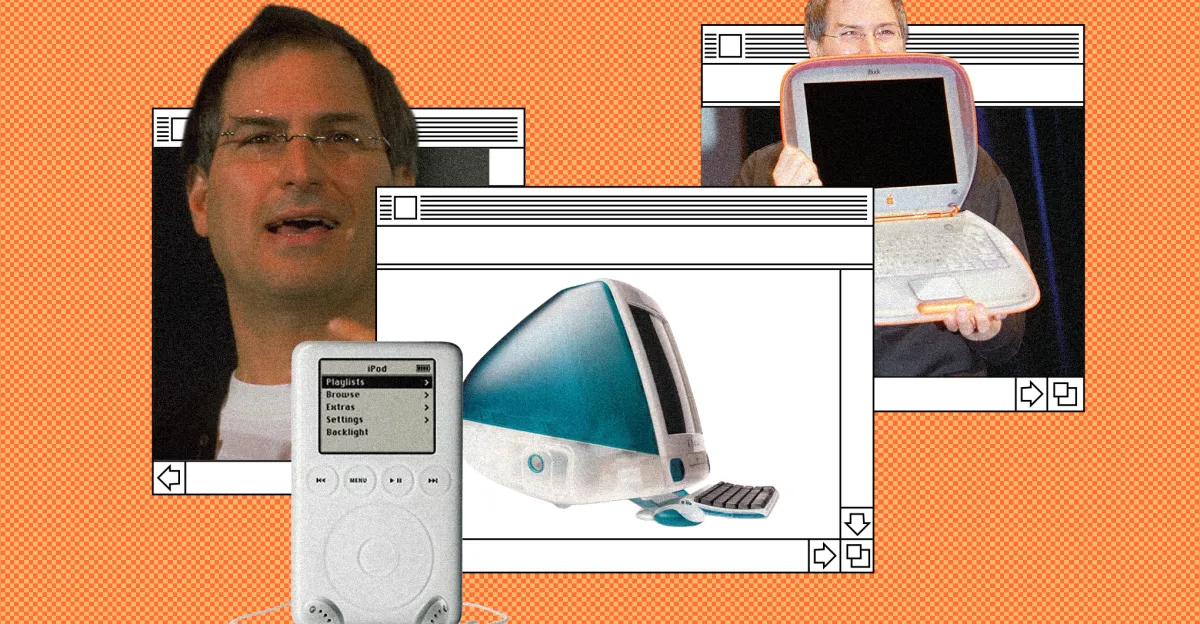
In May 1998, Steve Jobs stood on the stage at the Macworld conference and proudly declared, "Apple is back on track." These words signified a new beginning for Apple, a company that Jobs had founded over two decades earlier, which had suffered from product chaos and a lack of clear vision. Just ten months after his return to the company, Jobs was preparing to launch the iMac, designed to be internet-compatible and reflect a new vision for the world of computing.
When Jobs returned to Apple in 1997, the company was in disarray with its product line. Apple was producing numerous Mac models without any clear strategy, resulting in poor market performance. Jobs had previously stated that "the products were bad" and that there was an urgent need for innovation. However, he had a plan to save the company, and this plan began to take shape with the launch of the iMac.
Event Details
The iMac, launched in August 1998, was revolutionary in its design and performance. It sold 800,000 units in the first five months, making it the best-selling computer in the United States at that time. The iMac was an all-in-one device, completely different from traditional computers that relied on interchangeable components. It also eliminated traditional ports in favor of the new USB standard, making it user-friendly for the average consumer.
It is said that Apple was just 90 days away from bankruptcy when Jobs took over, but things began to change rapidly after the iMac's launch. This was just the beginning of a decade filled with successive innovations, as Jobs introduced numerous game-changing products in the tech world.
Background & Context
Founded in 1976, Apple achieved significant success with the Apple II, but over time, the company began to suffer from a decline in innovation. In the 1990s, Apple faced fierce competition from other companies, such as Microsoft, which dominated the operating system market. Jobs' return to Apple marked a turning point, as he reshaped the company's culture and focused on design and innovation.
In the years following his return, Jobs launched several groundbreaking products, including the iBook and iPod, which helped rebuild Apple's reputation as a leader in technology. Jobs believed that good design and innovation were the keys to success, a belief that proved correct through Apple's tremendous achievements.
Impact & Consequences
Apple's successes under Jobs' leadership had a significant impact on the technology industry. Innovations were not limited to hardware but also included software and services. With the launch of Mac OS X, Apple laid the foundation for many of its future products. The introduction of the iPod in 2001 was a turning point in the music industry, fundamentally changing how music was consumed.
Thanks to Jobs' vision, Apple became one of the largest companies in the world, with a market value exceeding one trillion dollars. The innovations introduced by Apple during this period, such as the iPhone and iPad, transformed how people interacted with technology and influenced all aspects of their daily lives.
Regional Significance
In the Arab world, Apple's successes had a significant impact on the technology market. With the increasing use of smartphones and tablets, Apple products became a symbol of innovation and progress. They also contributed to fostering a culture of innovation in the region, inspiring many young Arabs to develop new applications and services inspired by Apple's successes.
In conclusion, it can be said that Steve Jobs' return to Apple was not just a return of a man but the beginning of a new era in the world of technology. The innovations introduced by Jobs and his team not only changed the course of Apple but also altered the way we interact with technology in our daily lives.