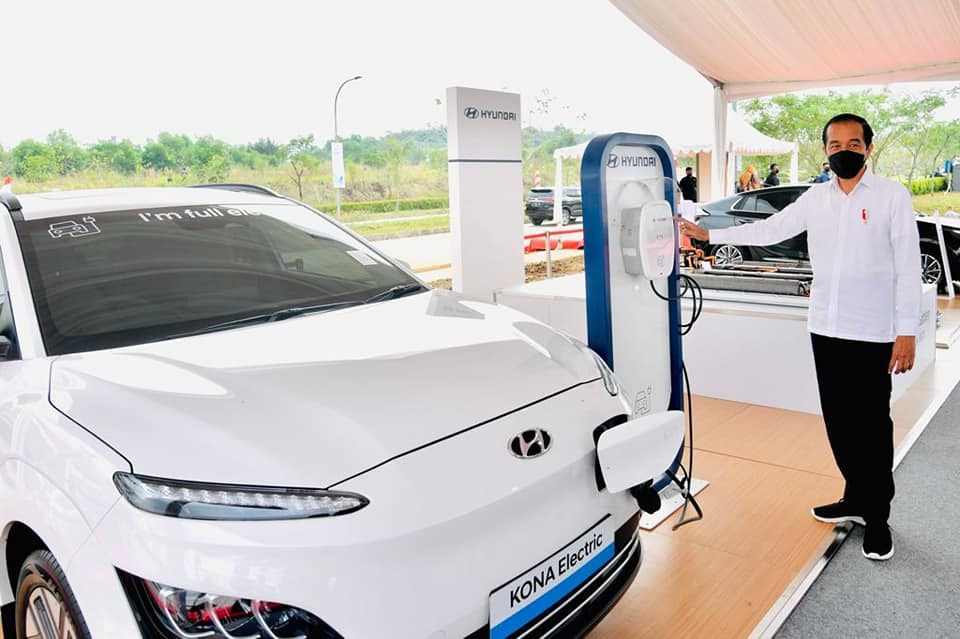
The Indonesian Institute of Economic and Financial Development (Indef) has reported that the Indonesian government needs to urgently reactivate electric vehicle incentives to address financial risks arising from rising global oil prices. This statement was made by the head of the institute's macroeconomics and finance center, M. Rizal Taufiq Rahman, who emphasized that the discontinuation of these incentives could lead Indonesia to lose momentum in accelerating the adoption of electric vehicles, particularly among the middle class.
Rahman pointed out that the risks associated with slowing growth in the electric vehicle market have become evident, especially after the financial incentives are set to expire in 2025. This could lead to increased prices for electric vehicles and reduced purchasing power for citizens.
Event Details
Data indicates that electric vehicle sales in Indonesia from January to November 2025 reached approximately 82,000 units, accounting for 11-12% of the total national car market, thanks to government incentives. However, geopolitical tensions between the United States, Israel, and Iran have contributed to persistently high global oil prices, which have exceeded $100 per barrel, increasing the financial support burdens on the national budget.
It is expected that energy support allocations in 2026 will reach around 210 trillion Indonesian rupiah, a highly sensitive amount to fluctuations in oil prices. Any increase of $1 in the price per barrel could add a financial burden ranging from 6-7 trillion Indonesian rupiah. Thus, a rise of $10 per barrel could lead to an additional support burden of 60-70 trillion Indonesian rupiah.
Background & Context
Indonesia is considered one of the largest economies in Southeast Asia and has seen increasing interest in developing the electric vehicle sector as part of its strategy to achieve environmental sustainability and reduce dependence on fossil fuels. However, economic and political challenges, including oil price volatility, could significantly impact this emerging sector.
The Indonesian government aims to achieve its environmental goals by promoting the use of electric vehicles, but this requires substantial investments in infrastructure and technology. Continued government support is crucial to maintain the competitiveness of electric vehicles in the market.
Impact & Consequences
Analyses indicate that the continuation of financial incentives for electric vehicles will not only help maintain citizens' purchasing power but will also have a positive impact on the country's financial stability. Replacing one million traditional vehicles with electric ones could save approximately 13 million barrels of oil annually, representing significant savings and contributing to improving the national energy balance.
Furthermore, the government's success in promoting the use of electric vehicles will contribute to reducing reliance on oil imports, enhancing Indonesia's energy independence and mitigating financial risks associated with global oil price fluctuations.
Regional Significance
Arab countries are also facing similar challenges amid rising oil prices and their impact on national economies. Many Arab nations heavily rely on oil revenues, making them vulnerable to price fluctuations. Indonesia's experience in promoting electric vehicle use could serve as a model for Arab countries seeking to diversify their income sources and reduce dependence on oil.
In conclusion, it is clear that promoting the use of electric vehicles is not just an environmental choice but an economic strategy aimed at achieving financial stability and reducing risks associated with global energy markets.