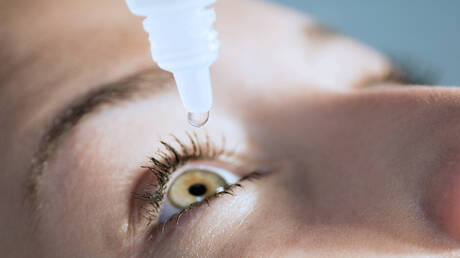
The U.S. Food and Drug Administration recently announced its approval of a new eye drop aimed at treating presbyopia, which could change the lives of millions worldwide. This drop serves as a potential alternative to traditional reading glasses, relied upon by many in their daily lives.
Presbyopia is a common health challenge among the elderly, as near vision begins to deteriorate with age. With the increasing number of individuals suffering from this condition, the existence of an effective treatment could have a substantial impact on their quality of life.
Details of the New Eye Drop
The new eye drop contains components that enhance visual focus by altering the shape of the eye's lens, aiding in better visibility of nearby objects. Clinical trials conducted on this drop have shown positive results in improving vision among participants.
This eye drop is considered a breakthrough in eye care, as it can be used easily without the need for a prescription, making it accessible to a larger number of people. Additionally, its use is less expensive compared to glasses, facilitating patients' access to treatment.
Background & Context
Historically, reading glasses were the only available solution for treating presbyopia. With advancements in technology, research has begun to focus on developing new treatments, including surgical options and drops. Recent studies have contributed to a better understanding of how the eye functions, leading to the development of this new drop.
It is noteworthy that presbyopia affects a significant portion of the population, with estimates indicating that approximately 50% of individuals over the age of fifty experience this condition. Therefore, developing an effective treatment represents an important step towards enhancing eye health in this age group.
Impact & Consequences
This new eye drop could lead to a radical change in how doctors address presbyopia. If its effectiveness is consistently proven, it may become the first-line option for treating this condition, reducing reliance on glasses.
Moreover, the economic impact of this treatment could be substantial. Instead of spending money on glasses, patients could use this drop, saving them additional costs and enhancing their ability to enjoy their daily lives.
Regional Significance
In the Arab region, where the elderly population is increasing, this drop could have a significantly positive impact. The new treatment may improve the quality of life for many individuals suffering from presbyopia, promoting their independence and reducing reliance on others.
Additionally, the availability of this treatment in Arab markets could help raise health awareness regarding eye problems, leading to increased medical check-ups and a greater focus on overall eye health.
The approval of this new eye drop by the U.S. Food and Drug Administration represents an important step towards improving eye health and may open new avenues for treating presbyopia. With ongoing research and development, we can expect to see more innovations in this field in the near future.