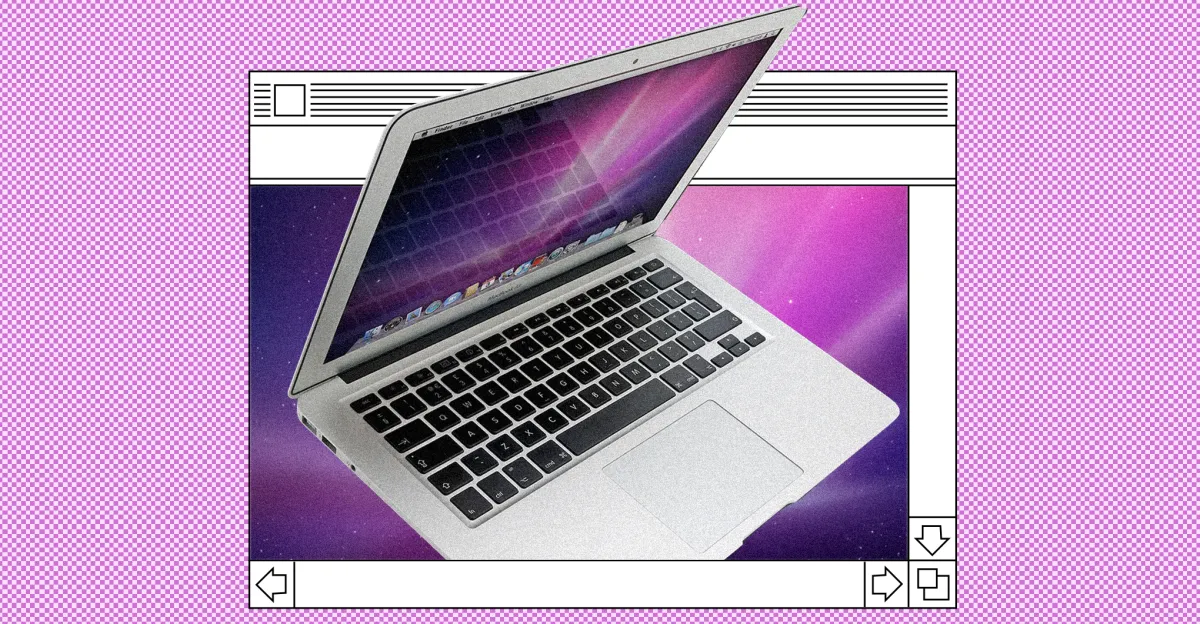
In January 2008, the Macworld Expo witnessed an event that changed the course of laptop history, as Steve Jobs introduced the MacBook Air from inside a paper envelope, astonishing the audience and eliciting mixed reactions among competing companies. Within minutes of the presentation, officials from other companies began attempting to replicate the revolutionary design, reflecting the MacBook Air's impact on the industry.
Although the MacBook Air did not achieve the same level of fame as the iPhone or iPad, its influence was profound. It helped redefine the concept of portable computers, presenting a new vision centered around lightweight design and sleek aesthetics.
Event Details
When the MacBook Air was launched, it weighed approximately 1.36 kilograms and featured a sleek metallic design, making it appear more like a work of art than a technical device. At that time, other laptops were struggling with excess weight and traditional designs. However, the MacBook Air lacked some essential features such as a DVD drive and an Ethernet port, sparking debate about its practicality.
Despite this, Jobs insisted that the MacBook Air represented the foundation of the future, aiming to provide a unique user experience. Over the years, this vision proved to be correct, as the device became a symbol of innovation.
Background & Context
Before the launch of the MacBook Air, other companies like Dell and Lenovo dominated the laptop market. However, the focus on design and performance in the MacBook Air represented a radical shift. In 2010, Apple released a new design for the device, making it more accessible to the general public rather than just being a luxury item.
This new design was not merely superficial improvements; it included enhancements in performance such as faster boot times and longer battery life, making the MacBook Air the preferred choice for many users.
Impact & Consequences
The success of the MacBook Air led to the emergence of a new category of laptops known as ultrabooks, as other companies attempted to mimic its lightweight and elegant design. However, none of these companies could provide a user experience comparable to that offered by Apple, allowing the MacBook Air to outshine its competitors in the market.
The transition to M-series processors in 2020 was another step towards achieving vertical integration, as Apple was able to enhance performance and reduce power consumption, making the MacBook Air more efficient.
Regional Significance
In the Arab region, the MacBook Air has become a symbol of innovation and technological advancement. Many startups and creatives in the Arab world have begun using this device as a primary tool in their work, reflecting the impact of modern technology on the digital economy in the region.
The increasing use of laptops in education and remote work highlights the importance of the MacBook Air in facilitating these processes, contributing to the development of digital skills in the Arab world.