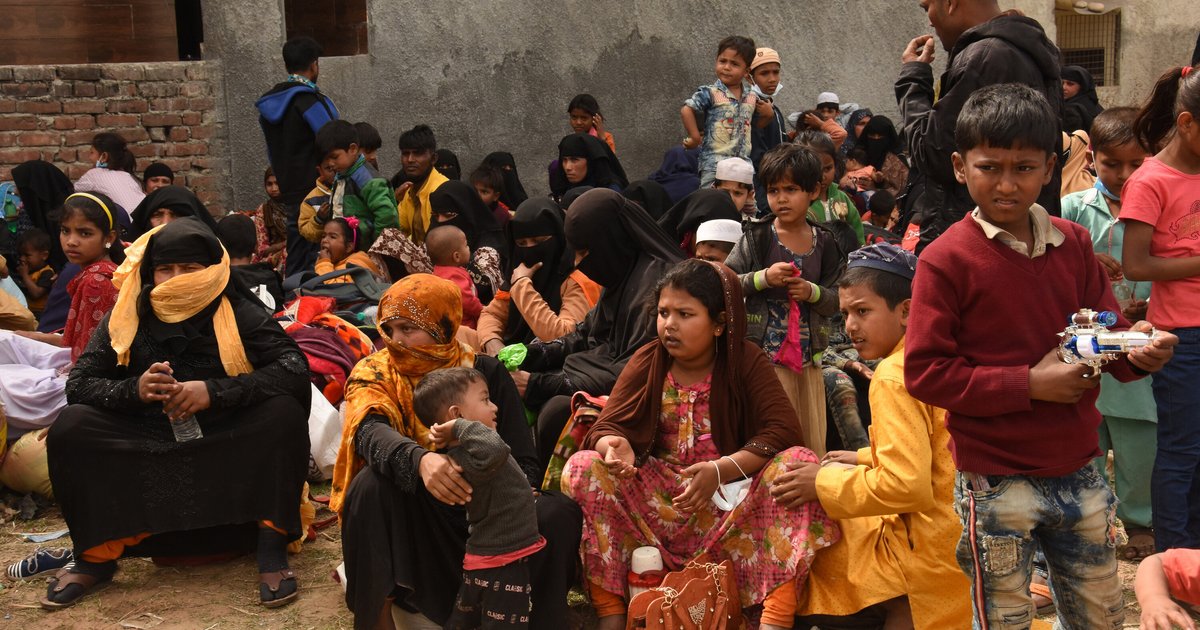
A human rights group and representatives of the Rohingya Muslims submitted an official complaint to the Indonesian Attorney General on Monday, accusing the newly elected president of Myanmar, Min Aung Hlaing, of committing crimes against humanity and genocide against the Rohingya minority. This step comes at a time when international calls for accountability for the serious violations faced by the Rohingya in Myanmar are growing.
It is noteworthy that the military council in Myanmar, which seized power in a military coup in 2021, faces widespread accusations of committing human rights violations, particularly targeting ethnic minorities, including the Rohingya. Min Aung Hlaing was elected president of Myanmar on the third of this month by a military-aligned parliament, receiving 429 votes out of 584 in a process whose integrity is questionable.
Details of the Complaint
The spokesperson for the Indonesian Attorney General's office, Anang Subriyatna, stated that the complaint was filed by a Rohingya woman who fled Myanmar, along with prominent figures such as former Indonesian Attorney General Marzuki Darusman and representatives from the local human rights group KontraS. Subriyatna explained that the complaint pertains to crimes against humanity and genocide committed against the Rohingya people by the military council government, including Min Aung Hlaing.
The complaint is set to be referred to a specialized division for serious crimes within the Attorney General's office, where Indonesian law grants the country's courts universal jurisdiction to consider cases related to serious crimes occurring anywhere in the world.
Background & Context
Indonesia, the world's largest Muslim-majority country, has been receiving Rohingya refugees for years, with thousands risking their lives on perilous sea journeys to reach Indonesia or Malaysia. The Rohingya Muslims hail from Rakhine State in western Myanmar, and before the recent military campaigns, their number was estimated to be over a million within the country, in addition to large numbers in neighboring countries. However, Myanmar authorities consider the Rohingya as "illegal migrants" from Bangladesh, leading to their deprivation of citizenship under the 1982 law, rendering most of them stateless.
For decades, the Rohingya have faced discriminatory policies that included restrictions on movement, marriage, work, and education. Violations peaked during a large-scale military campaign in 2017, which UN investigators reported was characterized by "intent to destroy" and could amount to crimes against humanity and genocide. This led to more than 740,000 Rohingya fleeing to Bangladesh, where they now live in overcrowded camps under harsh humanitarian conditions.
Impact & Consequences
In 2019, Gambia, supported by Islamic and human rights countries and organizations, filed a lawsuit against Myanmar at the International Court of Justice, accusing it of violating the Genocide Convention. In 2020, the court issued provisional orders requiring Myanmar to protect the Rohingya and prevent acts of genocide, while proceedings in the case continue. Since the military coup in February 2021, the military council in Myanmar has faced additional accusations of committing widespread violations against civilians and opponents, amid increasing international isolation.
Calls are growing to expand international accountability mechanisms for crimes committed against the Rohingya and other ethnic groups in Myanmar, reflecting the increasing concern of the international community regarding the deteriorating humanitarian situation in the country.
Regional Significance
This event serves as a reminder of the importance of humanitarian solidarity in the face of serious human rights violations and highlights the urgent need to activate international accountability mechanisms. It also underscores the role of Islamic countries in supporting human rights issues, especially amid the humanitarian crises faced by minorities in conflict areas.
In conclusion, the Rohingya issue remains one of the most prominent humanitarian crises in the world, calling for a concerted international effort to end their suffering and achieve justice.