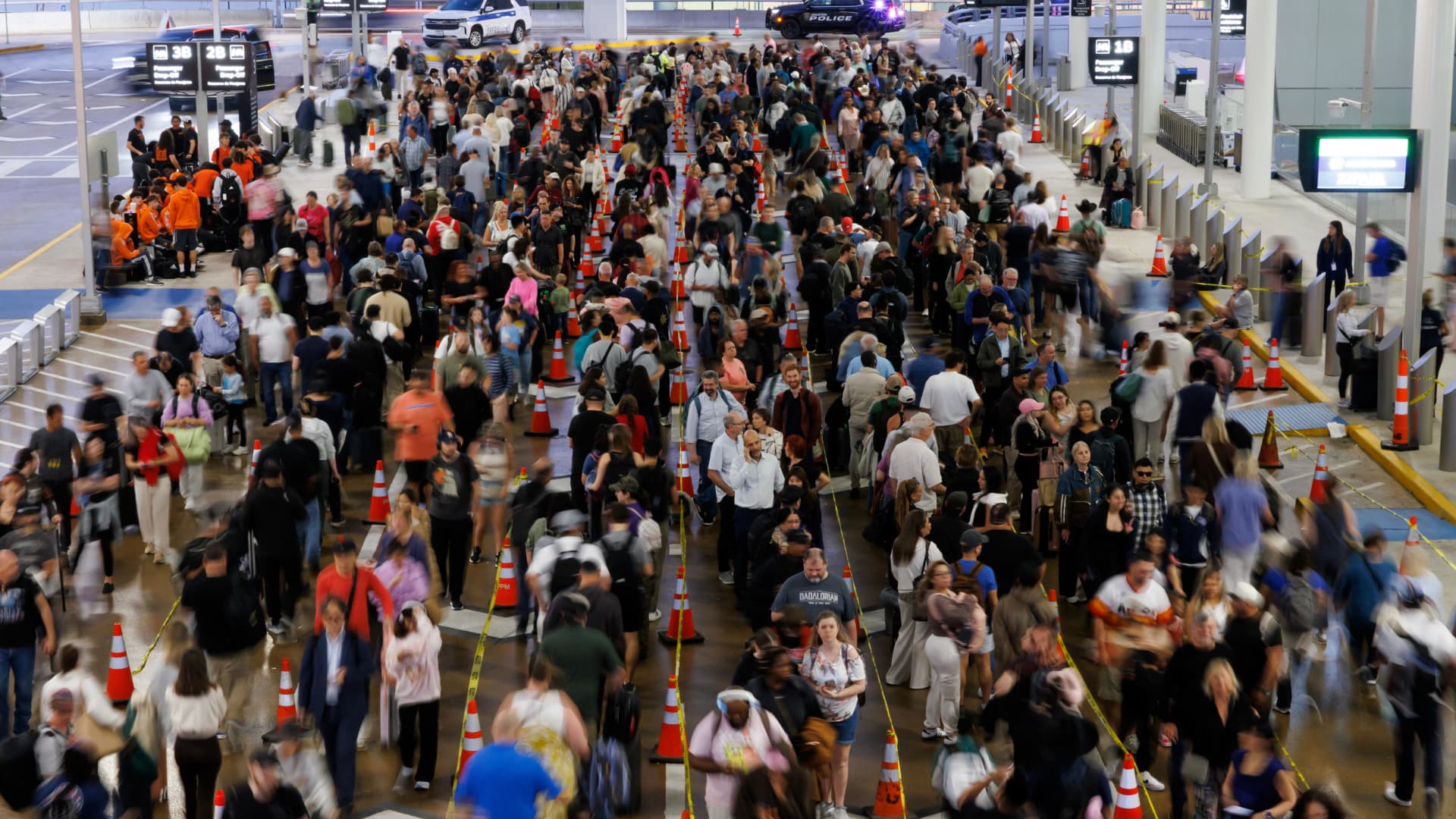
Travelers face significant challenges this year as airfare prices have surged noticeably, alongside severe airport congestion. With rising fuel costs and regional conflicts, traveling may become less appealing for many.
Reports indicate that airfare prices have increased by as much as 20%, placing travelers in difficult positions. For instance, Genevieve Price, a naturopathic doctor from San Diego, confirmed that she plans to cap her spending on trips, with a budget not exceeding $900 for flights to Rome.
Event Details and Current Situation
Airlines in the United States are under increasing pressure, having experienced a significant rise in fuel prices, which have reached $3.98 per gallon at major airports, marking an increase of nearly 60% since the onset of the conflict between the United States, Israel, and Iran. This situation has led to the cancellation of numerous flights, especially in the Middle East, where some airspaces have been closed, further increasing travel costs.
Airlines such as United Airlines and Delta Air Lines have confirmed that demand for travel remains strong despite the rising prices. However, executives have warned that they may need to reduce the number of flights if demand decreases. At the same time, Scott Kirby, the CEO of United Airlines, indicated that ticket prices may continue to rise.
Background & Context
Historically, the aviation sector in the United States has seen significant recovery in recent years, particularly in international travel. However, the sudden spike in fuel prices and regional conflicts have greatly impacted this recovery. Additionally, the U.S. government shutdown that affected the Transportation Security Administration (TSA) led to staffing shortages, resulting in long lines at airports.
Reports show that many travelers are facing wait times of up to three hours at some major airports, which may lead them to consider alternative options such as driving instead of flying. This situation reflects the challenges the aviation sector is facing under current conditions.
Impact & Consequences
The repercussions of rising airfare prices and airport congestion extend beyond individual travelers, affecting the economy as a whole. A decline in travel demand could reduce revenues for airlines, potentially impacting jobs in the sector. Additionally, rising prices may negatively affect tourism in many destinations, reflecting adversely on local economies.
Moreover, ongoing disruptions in the aviation sector could lead to changes in travel patterns, as travelers may prefer to seek more economical options or avoid traveling altogether. This shift could have long-term effects on the aviation and tourism industries.
Regional Significance
In the Arab region, these developments could significantly impact travel and tourism. With rising ticket prices, many Arabs may hesitate to travel to international destinations, which could affect tourism in countries that rely on Arab visitors. Furthermore, the political situation in the region, such as conflicts in the Middle East, may lead to reduced flight availability, complicating the situation further.
In conclusion, it seems that 2023 will be a challenging year for travelers, as they face rising prices and congestion at airports, which may influence their desire to travel.