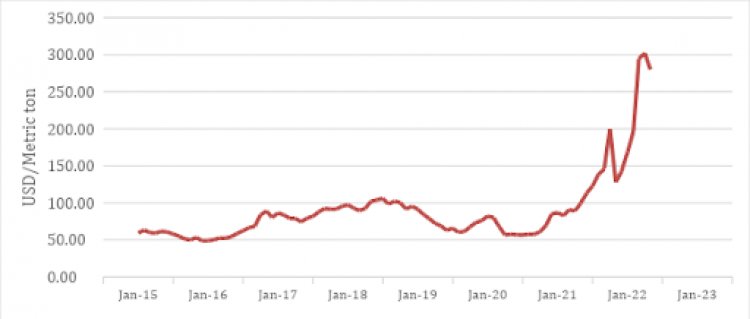
The economist Fakhry Al-Faqi stated that the continuous rise in global natural gas prices is a direct cause of increased fertilizer production costs. He pointed out that this increase significantly affects the agricultural sector, negatively reflecting on local prices and increasing burdens on farmers.
Fertilizers are essential elements that farmers rely on to boost crop yields. With rising production costs, farmers face significant challenges in maintaining the required production levels to meet market demands. These challenges could lead to a shortage of agricultural products, driving prices up and affecting food security.
Event Details
Reports indicate that gas prices have seen notable increases over the past months due to global market fluctuations and rising demand. This situation places additional pressure on the fertilizer industry, which heavily relies on gas as an energy source and raw material.
In this context, Al-Faqi emphasized that governments need to take urgent measures to support the agricultural sector, including providing financial assistance to farmers and facilitating access to fertilizers at reasonable prices. He also called for the development of long-term strategies to enhance local fertilizer production and reduce reliance on imports.
Background & Context
Historically, gas prices have experienced significant fluctuations influenced by various factors, including geopolitical crises and climate changes. In recent years, global crises such as the COVID-19 pandemic and the war in Ukraine have led to increased demand for gas, contributing to unprecedented price hikes.
Arab countries are among the largest gas consumers in the world, with many relying on natural gas for energy and fertilizer production. Therefore, any increase in gas prices directly impacts the agricultural economy in these countries, necessitating effective measures to mitigate the effects of this increase.
Impact & Consequences
The rise in fertilizer production costs leads to increased prices for agricultural products, negatively impacting consumers' purchasing power. This increase may also result in a decline in agricultural production, increasing reliance on imports and affecting food security in Arab countries.
Moreover, these challenges could exacerbate economic crises in some countries, where farmers struggle to achieve sufficient profits to cover production costs. This situation may drive some farmers to reduce their cultivated areas, further increasing pressure on local markets.
Regional Significance
Arab countries are among the most affected by rising gas prices, as many farmers depend on imported fertilizers. This situation places additional pressure on governments to provide necessary support to farmers and enhance local production.
Under these circumstances, Arab countries must consider new strategies to bolster food security, including investing in agricultural technology and developing alternative energy sources. These steps could help reduce reliance on gas and lessen the impact of global price fluctuations.
In conclusion, the current situation requires concerted efforts between governments, the private sector, and farmers to address the challenges arising from rising gas prices and work towards sustainable solutions that enhance the agricultural sector's ability to face future crises.