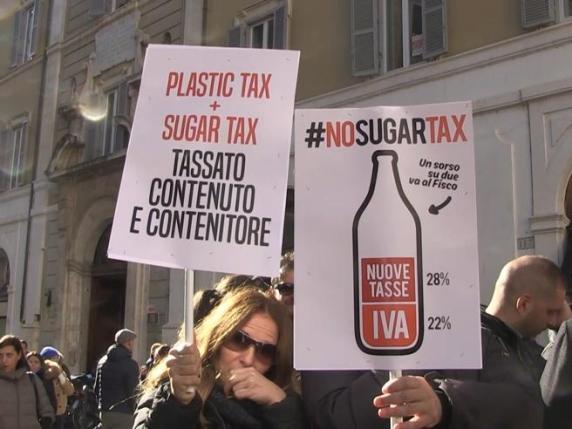
Disagreements among the parties forming the Italian government are intensifying regarding the introduction of new taxes on beverages, known as the "sugar tax." The Forza Italia party has expressed its strong condemnation of attempts to impose retroactive taxes, complicating the position taken by Prime Minister Giorgia Meloni's government. Meanwhile, Deputy Prime Minister Antonio Tajani stated that the government is ready to make amendments to this proposal in parliament.
These events come at a time when Italy is facing increasing economic challenges, prompting many citizens and businesses to seek clarity on the potential ramifications of these taxes. Most of the criticisms directed against this tax have come from business owners and representatives of beverage companies, who describe it as unfair and likely to have negative effects on the business market.
On its part, the League, the coalition partner, criticized Tajani's statements as unclear and called for clarification from Meloni. This sharp exchange among the members serves as a warning bell regarding the unity of the coalition and its ability to address critical issues in the country.
Following the announcement of the controversial tax plan, many economic experts believe that this step could have long-term consequences for the Italian economy. Adding tax burdens at a time when the country suffers from weak growth could lead to further deterioration in the economic situation of citizens, which may directly affect local consumption.
This is not the first such debate in Italian politics; the country has previously witnessed several attempts to reduce the budget by imposing new taxes, which have always sparked widespread controversy. Italy is one of the nations facing significant difficulties in balancing economic growth with fiscal austerity, increasing political tensions as a result.
Moreover, this issue is closely tied to how public funds are managed during times of crisis. Many analysts argue that introducing new taxes is a concerning move that reveals a lack of effective options to address economic conditions.
There has been no shortage of similar events in the Middle East, where economic problems in Arab countries have also worsened due to unbalanced government policies. Historical experiences in countries like Lebanon and Tunisia illustrate how such economic policies can lead to public protests and widespread rejection by society.
In the end, the question remains: can the Italian government overcome this internal crisis, or will its divisions impact its stability and ability to face challenges? Everyone is looking forward to what the next parliamentary discussions will yield and what this may mean for the country's future.