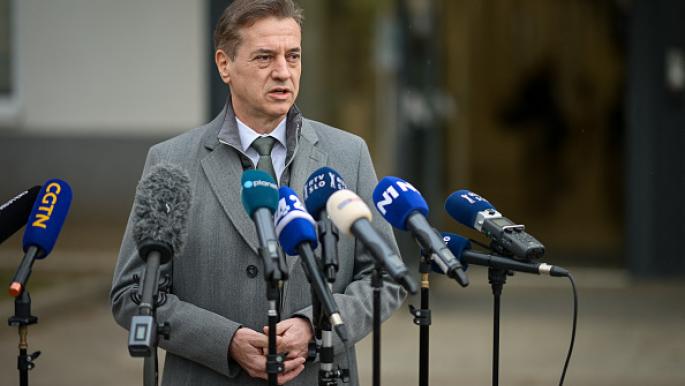
Slovenian Prime Minister Robert Golob announced on Sunday his victory in the general elections, where his party secured approximately 28.6% of the votes. Despite this electoral success, forming a stable government poses a significant challenge due to the political divisions plaguing the country.
Golob, who took office in 2022, represents a political stream that seeks to promote liberal values in Slovenia, facing increasing populist movements. The election results revealed that voters are divided between a desire for change and a shift towards more moderate policies.
Details of the Election
The recent elections in Slovenia serve as a real test for the policies adopted by Golob, as his party received a lower percentage of votes than expected. This decline in support reflects growing dissatisfaction with the economic and social situation in the country. Additionally, opposition parties, representing populist currents, gained significant support, complicating the political landscape further.
Golob, who belongs to the Freedom Movement party, now faces the difficult task of forming a government coalition with other parties. Negotiations are expected to be complex, as each party seeks to achieve its own interests.
Background & Context
Historically, Slovenia has undergone significant political transformations since gaining independence from Yugoslavia in 1991. The country has experienced periods of political stability interspersed with economic and social crises. In recent years, populist movements have emerged in many European countries, including Slovenia, leading to divisions within society.
These divisions are evident in the recent elections, where results showed that voters are split between a desire to continue liberal policies or move towards more extreme options. This situation reflects the social and economic tensions the country is experiencing, which require an effective political response.
Impact & Consequences
The implications of the current elections extend beyond Slovenia, as they could influence the political landscape across Europe. With the rise of populist movements, other countries in the region may witness similar shifts, increasing the challenges faced by liberal values.
If Golob succeeds in forming a stable government, it could have a positive impact on the Slovenian economy and relations with the European Union. However, if he fails, it may lead to further political chaos and instability.
Regional Significance
The Slovenian elections exemplify the challenges facing democracies worldwide, including in Arab countries. Many Arab nations are grappling with similar political and social divisions, making it essential to study and learn from international experiences.
The results of the elections in Slovenia could serve as a lesson for Arab countries on the importance of political dialogue and cooperation among different parties, especially in light of the economic and social crises affecting the region.
In conclusion, Robert Golob faces significant challenges following his electoral victory, as he must work to form a stable government amid increasing political divisions. His success or failure may have far-reaching implications for Slovenia and Europe as a whole.