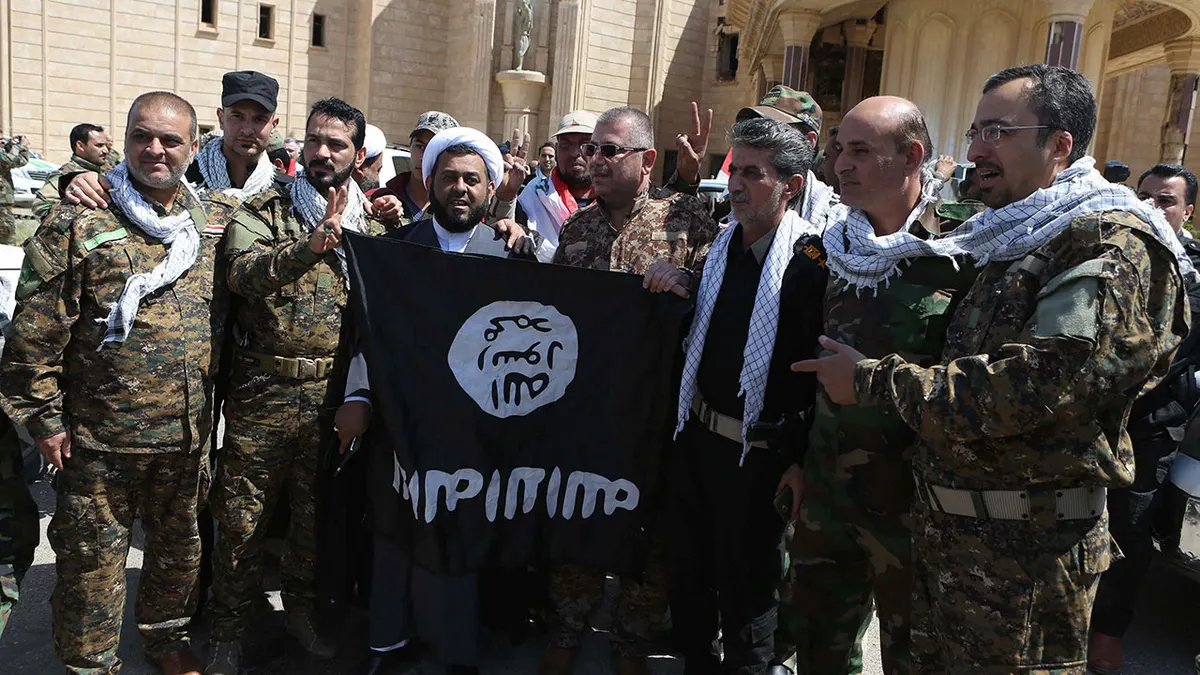
Coordinated rocket attacks targeted Popular Mobilization Forces in Iraq, resulting in the deaths of three members and injuries to three others. The assaults occurred in Babil, Anbar, and Nineveh provinces, raising concerns about escalating tensions in the region.
According to a statement from the Popular Mobilization Forces, the attack, which was carried out using drones and rockets, is considered a treacherous assault on Iraqi forces. Iraqi security forces documented the downing of a drone and a rocket in two other locations in Basra and Anbar, further intensifying military tensions in the country.
Details of the Incident
The attacks on the Popular Mobilization Forces came at a sensitive time, as Iraqi forces were preparing to face increasing security challenges in the country. The statement indicated that the sector of Brigade 17 in the Popular Mobilization Forces, located in the Sudanese control area, was among the targeted sites. This reflects an escalation in military operations against the Popular Mobilization Forces, which are considered part of the Iraqi security system.
These attacks come at a time when pressures are mounting on the Iraqi government to secure the country from external and internal threats. Many observers have expressed concern that these attacks could lead to greater escalation in the conflict between Iraqi forces and armed groups supported from abroad.
Background & Context
Historically, Iraq has witnessed numerous military attacks targeting the Popular Mobilization Forces, which were formed in 2014 to confront ISIS. The Popular Mobilization Forces played a pivotal role in reclaiming territories that were under the control of the organization, making them a target for many attacks by external powers seeking to undermine their role.
The relationship between Iraq and the United States is complex, as American forces are present in the country under the pretext of combating terrorism. However, the presence of these forces has sparked widespread controversy in political and public circles, with some considering their presence a violation of Iraqi sovereignty.
Impact & Consequences
These attacks underscore the urgent need to enhance security and stability in Iraq. They may lead to heightened tensions between the Iraqi government and external powers, potentially negatively impacting reconstruction and development efforts in the country. Furthermore, the continuation of these attacks could contribute to increased internal division and escalate the conflict among armed factions.
Moreover, these events may affect relations between Iraq and its neighbors, especially amid ongoing tensions in the region. Iraq faces significant challenges related to security and the economy, and any escalation of violence could exacerbate these crises.
Regional Significance
The events in Iraq are part of the larger picture of regional security in the Middle East. Tensions between major powers in the region, such as the United States and Iran, cast a shadow over the security situation in Iraq. These attacks could increase tensions among various factions in Iraq, which may negatively reflect on the stability of neighboring countries.
Ultimately, the situation in Iraq requires a comprehensive response from all concerned parties, including the Iraqi government and regional and international powers. Cooperation and coordination among these parties is the only way to achieve security and stability in the country.