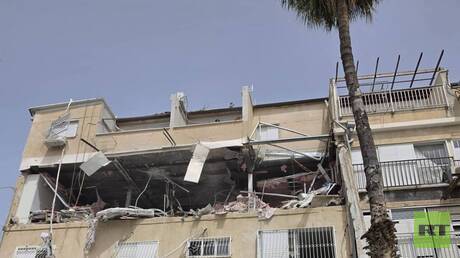
Rocket debris fell across wide areas in central Israel on Saturday, with Israeli authorities detecting a barrage of missiles coming from Iran. Sirens sounded in several cities, including Tel Aviv, Bnei Brak, and Petah Tikva, raising concerns among residents.
Videos and images circulated on social media show scenes of the debris that fell in these areas, reflecting the scale of the threat Israel faces amid escalating regional tensions. Reports indicate that these attacks come at a sensitive time, as fears of military escalation in the region increase.
Details of the Incident
According to official data, several rockets were launched from Iranian territory, marking a serious escalation in tensions between Israel and Iran. Israeli authorities confirmed that air defenses were on high alert, and the Iron Dome system was activated to counter these attacks. Despite this, debris fell in populated areas, resulting in minor injuries among civilians.
This incident is part of a series of reciprocal attacks between Israel and Iran, with Israel accusing Iran of supporting armed groups in the region, complicating the security situation further. Reports suggest that these attacks may be a response to Israeli military operations against Iranian targets in Syria.
Background & Context
Historically, relations between Israel and Iran have been increasingly strained, especially following the Iranian nuclear agreement in 2015. Israel considers the Iranian nuclear program an existential threat, having conducted several military operations against Iranian targets in Syria. Additionally, Iranian support for armed groups such as Hezbollah in Lebanon and Hamas in Gaza exacerbates tensions.
In recent years, the region has witnessed an escalation in reciprocal rocket attacks, with armed groups launching rockets into Israeli territory while Israel has responded with airstrikes on sites belonging to these groups. This escalation reflects a state of instability in the region, raising fears of a broader conflict.
Impact & Consequences
The repercussions of this incident extend beyond Israeli borders, affecting regional security overall. The rocket attacks demonstrate Iran's capability to strike directly at the heart of Israel, increasing concerns among neighboring countries. Furthermore, these events could lead to greater military escalation, threatening stability in the region.
Moreover, this incident may impact international relations, as major powers might be prompted to reassess their strategies in the region. The tensions between Israel and Iran could attract the attention of major powers, potentially leading to international interventions in the conflict.
Regional Significance
These events are particularly significant for Arab countries, reflecting the ongoing tensions between Iran and Israel. Arab nations are closely monitoring these developments, as any escalation could affect their security and stability. Additionally, these events may reopen discussions about regional alliances, with some countries seeking to strengthen ties with Israel in the face of the Iranian threat.
In conclusion, this incident highlights the security challenges facing the region and underscores the need for diplomatic solutions to ease tensions. The current situation requires all parties to work towards achieving stability and security in the region.