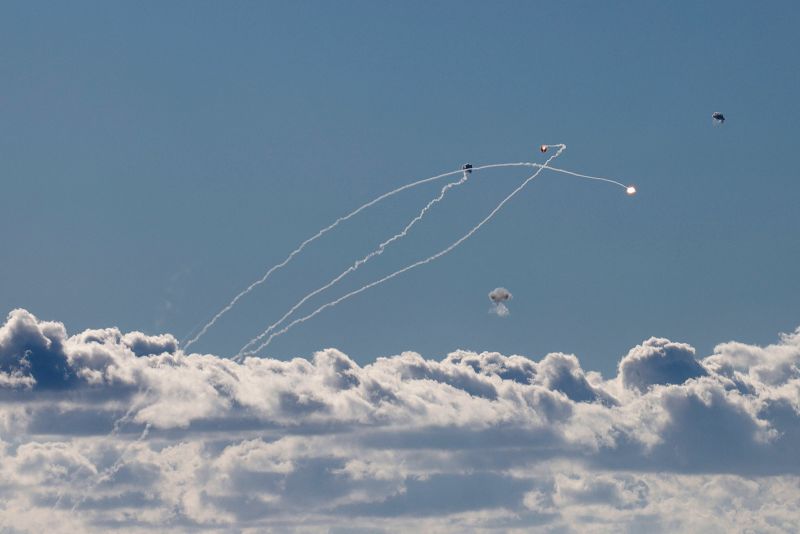
The last few hours have seen an unprecedented military escalation in the Middle East, with rockets launched from Lebanese territory towards Western Galilee, coinciding with an Iranian missile attack on Greater Tel Aviv. These events occur amid increasing tensions between various parties in the region, raising concerns about the possibility of a larger escalation.
Initial analysis of the events suggests that the attacks may be part of a broader strategy aimed at pressuring Israel, amidst the ongoing conflict between Iran and Israel, which involves exchanges of attacks through regional proxies.
Details of the Incident
According to local sources, several rockets were detected being launched from Lebanon, prompting the activation of the Israeli air defense system. At the same time, reports indicated that Iran had launched a barrage of missiles towards Tel Aviv, further heightening tensions in the region. These attacks come at a sensitive time, as discussions were ongoing about stabilizing the situation in the Middle East, but it seems that matters are heading towards greater escalation.
The Israeli authorities did not delay in responding, confirming that any attack on its territory would be met with a strong response. Military spokespersons indicated that Israel reserves the right to retaliate at the appropriate time and place, raising fears of a comprehensive military escalation that could affect the entire region.
Background & Context
Historically, the Lebanese-Israeli border has experienced ongoing tensions, with several rounds of conflict between Hezbollah and Israel. Additionally, Iranian-Israeli relations have been strained for decades, as Iran considers its support for Hezbollah part of its strategy to counter Israeli influence in the region.
In recent years, Iran has increased its military support for Hezbollah, making Israel's northern border a constant point of tension. This recent escalation comes at a time when regional and international pressures on Iran are increasing, which may push it to take more aggressive steps.
Impact & Consequences
The military escalation between Lebanon and Israel, along with the Iranian attacks, could lead to serious repercussions for regional security. These events are likely to provoke military reactions from Israel, potentially opening the door to a new round of conflict.
Moreover, these events could impact international relations, as major powers may intervene in an attempt to calm the situation. The United States, for example, may pressure Iran to halt its escalation while supporting Israel in the event of larger attacks.
Regional Significance
These developments affect not only Lebanon and Israel but also extend their repercussions to other Arab countries. The escalation of tensions between Iran and Israel could lead to increased divisions within the Arab world, where positions towards both Iran and Israel vary significantly.
These events may also affect peace efforts in the region, as Arab countries may find themselves compelled to reassess their strategies in light of rising military tensions. It is crucial for Arab nations to closely monitor these events, as any escalation could lead to unforeseen consequences.
In conclusion, the region appears to be heading towards a new phase of tensions, with increasing risks of military escalation that could impact security and stability in the Middle East. It is essential for the involved parties to remain in contact and seek diplomatic solutions to avoid further escalation.