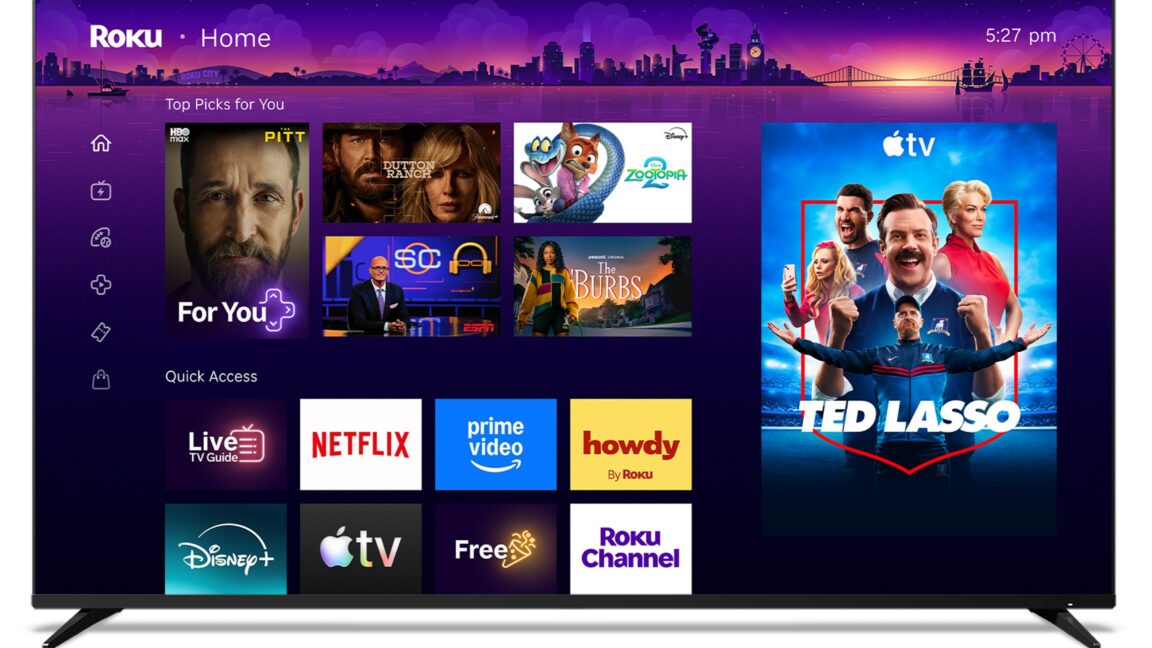
Roku, a company known for its streaming services, has introduced a large and permanent advertisement on the home screen of its operating system, eliciting mixed reactions from users. Many have expressed their dissatisfaction with this change, asserting that they do not need additional recommendations, as they already know what they want to watch.
This initiative is part of Roku's effort to boost its advertising revenue, as the reliance on ads in the digital streaming world continues to grow. With increasing competition in this field, companies seem to be seeking new ways to profit, even at the expense of user experience.
Details of the Announcement
The new advertisement included on the Roku OS home screen appears as a prominent ad space, making it clearly visible to users. Many users have voiced their displeasure with this change, considering it a hindrance to their experience with the system.
Interactions on social media reflect that many prefer not to receive any recommendations, with one user stating, "I don’t want recommendations! I know what I want to watch." This sentiment echoes a general feeling among users that they do not require additional ads.
Background & Context
Founded in 2002, Roku has become one of the leading companies in the streaming service sector. As reliance on streaming platforms has increased, Roku has expanded its services to include more advertising options. In recent years, the company has seen significant growth in its user base, prompting it to invest more heavily in advertising.
This move is part of a broader strategy through which Roku aims to increase its revenues, especially amid fierce competition from other companies like Netflix and Amazon Prime Video. However, introducing ads on the home screen may negatively impact user loyalty.
Impact & Consequences
The addition of ads on the home screen of Roku OS is a bold step that could lead to varied outcomes. On one hand, this move could help the company increase its revenues; on the other hand, it may alienate some users who prefer an ad-free experience.
Studies show that users tend to shy away from services that include intrusive ads, which could negatively affect Roku's user base. In this context, the company may need to reassess its advertising strategy to ensure it does not lose its user base.
Regional Significance
With the increasing use of streaming services in the Arab region, this move may influence how local companies handle ads on their platforms. If Roku, which is popular in some Arab countries, has made this decision, others may follow suit, potentially altering the user experience in the region.
It is crucial for companies in the region to monitor user reactions to these changes, as the advertising experience could play a significant role in determining their success in attracting and retaining users.