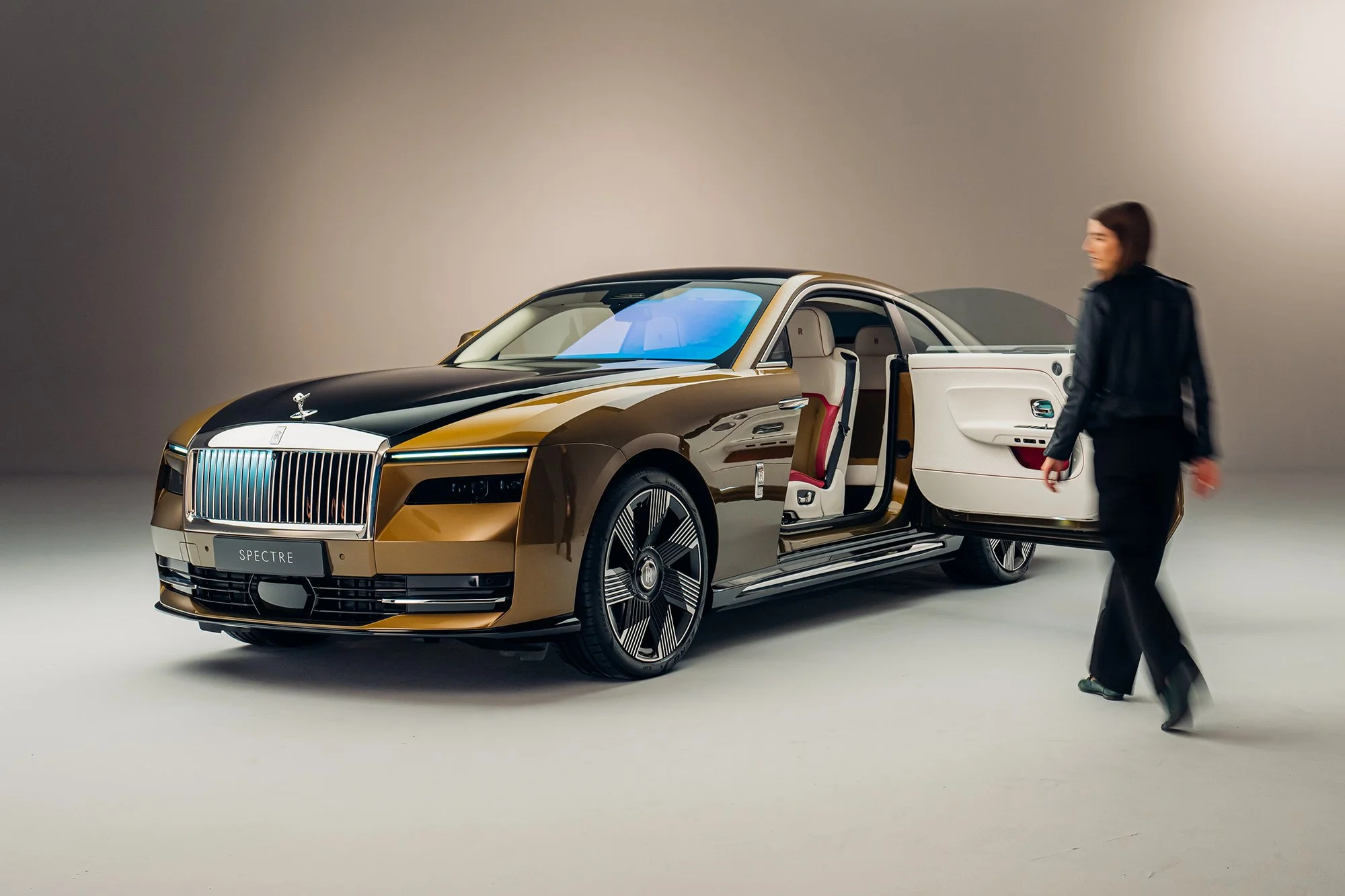
Rolls Royce, the renowned British luxury car manufacturer, has announced its reversal of the ambitious plan to fully transition to electric vehicles by 2030. The company confirmed that it will continue to produce cars with traditional V12 engines, responding to customer requests who still prefer these engines.
In 2022, Rolls Royce launched its first electric model, the Rolls Royce Spectre, and announced its intention to end the production of internal combustion engine vehicles by the end of the decade. However, the current CEO, Chris Brownridge, who took office in 2023, clarified that the company will continue to manufacture vehicles with V12 engines, noting that "demand still exists" from a segment of customers.
Details of the Announcement
Brownridge stated that the company is adopting a flexible production approach, saying, "We make what customers want." He pointed out that some customers still prefer traditional engines, which represent a part of the brand's heritage. He also added that the full transition plan to electric vehicles announced by his predecessor, Torsten Müller-Ötvös, was "timely," but it was based on regulatory and market conditions different from those that exist today, especially with changing legislation and fluctuating demand.
This reversal comes at a time when car manufacturers around the world are facing increasing challenges in transitioning to electric vehicles. Bentley, owned by the Volkswagen Group, has decided to postpone its goal of a full transition to electric vehicles from 2030 to 2035, and has announced the reduction of hundreds of jobs at its factory in Crew, UK.
Background & Context
Rolls Royce is considered one of the leading companies in the luxury car industry, producing around 5,600 cars annually. However, the challenges faced by major companies in this sector are increasing, as large firms have incurred massive losses related to restructuring their investments in the electric vehicle sector. Honda has projected losses of up to $15.7 billion, while Stellantis has reported financial burdens exceeding €22 billion (approximately $23.8 billion), most of which is related to adjusting its electric strategy.
Brownridge also noted the impact of geopolitical tensions, particularly in the Middle East, on the luxury car sector. Despite strong growth in demand from the region over the past five years, there is difficulty in predicting developments in the situation.
Impact & Consequences
The reversal of Rolls Royce's plan for a full transition to electric vehicles could significantly impact the strategies of other companies in the sector. With increasing economic pressures and changes in legislation, companies may find themselves compelled to reassess their future plans. This decision also reflects the challenges companies face in meeting diverse customer expectations.
Moreover, the continued production of V12 engines may reflect the company's desire to preserve its luxury heritage, as these engines are an integral part of Rolls Royce's identity. However, this decision may raise questions about the future of electric vehicles in the luxury market.
Regional Significance
Looking at the Arab market, Rolls Royce's reversal from a full transition to electric vehicles may affect demand patterns in the region. With the increasing demand for luxury cars, traditional engines may remain a preferred choice for some customers in Arab countries, where the culture associated with luxury and distinction plays a significant role in their choices.
In conclusion, Rolls Royce remains committed to meeting its customers' needs, as it is currently working on expanding its factory in Goodwood with an investment of £300 million (approximately $380 million) to enhance its ability to manufacture bespoke vehicles according to customer requests, reflecting the ongoing demand for luxury tailored to personal taste.