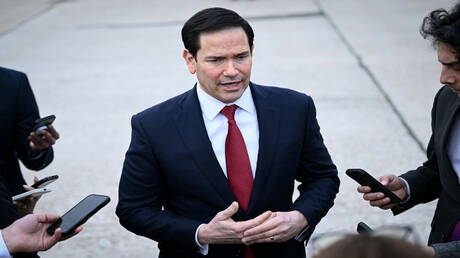
U.S. Secretary of State Marco Rubio defended the military strike carried out by former President Donald Trump's administration against Iran, asserting that it was a necessary step in confronting Iranian threats. Rubio made these statements during a press conference, where he indicated that the strike represented our "last opportunity" to address Iran's destabilizing activities in the region.
Rubio's comments come at a time when questions are increasing among Americans regarding the effectiveness of the strike, especially considering the potential impact on international relations and regional security. He noted that the strike aimed to protect U.S. interests and those of its allies in the region, as well as to halt Iran's hostile activities, which include supporting armed groups and advancing its nuclear programs.
Details of the Event
Earlier, U.S. forces launched a military strike on sites belonging to the Iranian Revolutionary Guard Corps in response to previous attacks targeting U.S. forces in Iraq. This strike has elicited mixed reactions, with some viewing it as a necessary step to safeguard national security, while others consider it an unjustified escalation that could lead to further tension in the region.
Rubio, speaking as part of the U.S. administration's efforts to justify this operation, emphasized that the strike was well-considered and taken after a comprehensive risk assessment. He also pointed out that the administration sought to balance responding to Iranian threats while ensuring that the conflict did not escalate into a full-scale war.
Background & Context
Historically, U.S.-Iran relations have been tense since the Islamic Revolution in 1979, witnessing numerous crises and conflicts. In recent years, tensions have notably escalated, particularly after the U.S. withdrawal from the Iran nuclear deal in 2018. This withdrawal led to the reimposition of economic sanctions on Iran, further intensifying the tensions between the two countries.
Moreover, Iran's military activities in the region, including its support for groups like Hezbollah in Lebanon and the Houthis in Yemen, have raised significant concerns among the U.S. and its allies. The U.S. administration has deemed these activities as threats to regional and international security.
Impact & Consequences
The U.S. military strike on Iran could have far-reaching consequences, not only for the relations between the two countries but also for the stability of the entire region. This strike is likely to escalate the conflict, potentially dragging the region into a broader war.
Furthermore, international reactions to this strike will be crucial. Other countries, such as Russia and China, may seek to exploit the situation to enhance their influence in the region, complicating the geopolitical landscape further.
Regional Significance
For Arab countries, the escalation between the U.S. and Iran could directly impact their security and stability. Many Arab nations, especially those located near Iran, may feel anxious about the implications of this conflict, particularly if military actions escalate.
This situation could also affect oil prices and financial markets in the region, as any military escalation may lead to increased oil prices due to concerns over supply disruptions. Therefore, the situation requires close monitoring by Arab nations to ensure their security and interests.
In conclusion, the question remains about the effectiveness of the U.S. strike in achieving its objectives and whether it will contribute to regional stability or further complicate the situation. Upcoming events will determine the trajectory of U.S.-Iran relations and their impact on regional security.