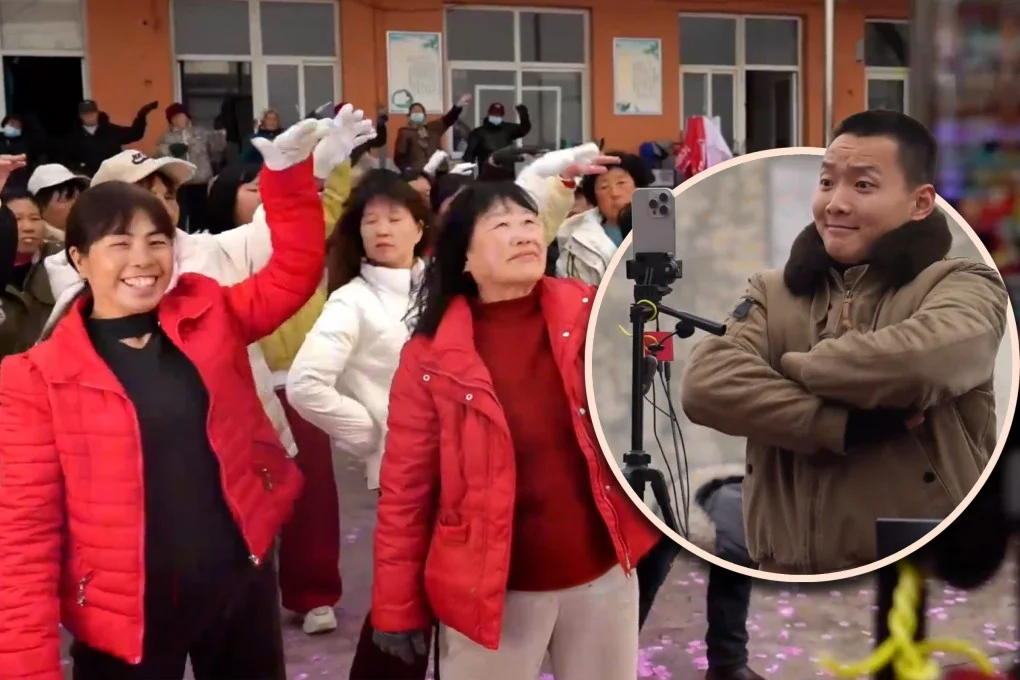
In a unique phenomenon, a group of rural women in the village of Junying, Henan Province, China, has gained widespread fame through live streaming platforms. This group, known as 'Aunts Who Leave Behind', consists of women aged 60 and older who perform dance routines that attract the attention of younger audiences by mimicking popular dances trending online.
Under the supervision of local millennial managers, these women adorn themselves with sunglasses and gloves, wear colorful jackets, and perform dances using various props in an abandoned square. These performances are not merely traditional dances; they represent a cultural interaction between generations, as the aunts blend folk heritage with modern trends.
Event Details
The group consists of over 20 women, and their videos have shown significant viewer engagement, with audiences sending virtual gifts during live broadcasts. This phenomenon reflects how technology can create new opportunities for communication and entertainment, even in rural communities.
These women, considered part of the older generation in society, aim to break the stereotypes associated with aging, presenting a role model for how to enjoy life at any age. They also contribute to strengthening social bonds between different generations.
Background & Context
The phenomenon of 'Aunts Who Leave Behind' is part of a larger movement in China, where the popularity of group dances in public spaces is increasing, especially among the elderly. This trend can be attributed to several factors, including the desire to promote physical activity, social interaction, and the search for new ways to express oneself.
Over the years, rural communities in China have faced significant challenges, including the mass migration of youth to cities in search of better job opportunities. This has left many elderly women in villages alone, leading to the emergence of these new social phenomena as a means of interaction and communication.
Impact & Consequences
This phenomenon illustrates how folk arts can play a pivotal role in enhancing cultural identity, especially amid the rapid changes occurring in societies. It also highlights the importance of technology in empowering marginalized groups, such as elderly women, to express themselves and participate in social life.
Moreover, this phenomenon reflects the social transformation in China, where traditional concepts regarding women's roles and aging are changing. Through these performances, women demonstrate that age is not a barrier to creativity and enjoyment.
Regional Significance
This phenomenon bears similarities to what is happening in Arab communities, where the popularity of folk arts and traditional dances is increasing among both youth and the elderly. These experiences can serve as inspiration for women in the Arab world, where they can use technology to promote their culture and express themselves.
Ultimately, 'Aunts Who Leave Behind' serves as a living example of how to transcend cultural and social barriers through the arts, opening the door for intergenerational dialogue and strengthening social ties.