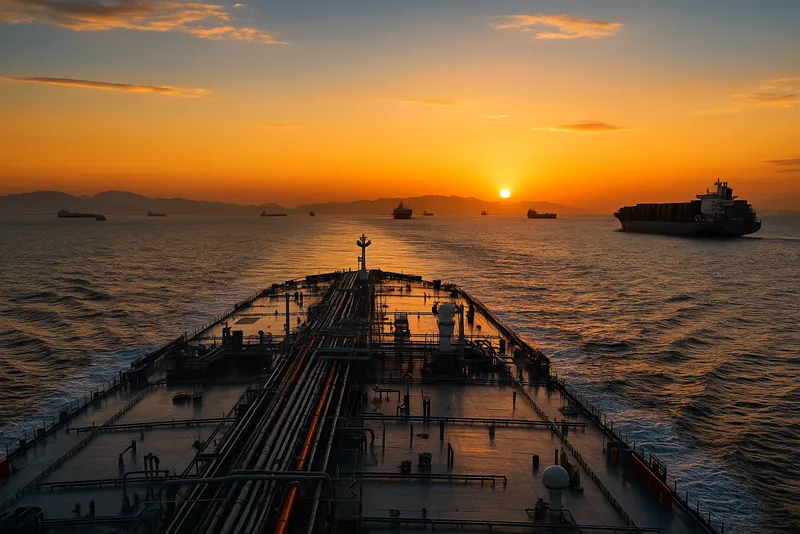
The German-Russian Chamber of Commerce has announced that Russia is generating additional revenues estimated at around €10 billion monthly from its raw material exports, amid the effective closure of the Strait of Hormuz. This situation reflects the impact of geopolitical crises on the global economy, as Russia benefits from the increasing demand for its natural resources due to declining oil supplies from other regions.
These additional revenues come at a time when many countries are suffering from the effects of economic sanctions, providing Russia with an opportunity to strengthen its position in the global energy market. The effective closure of the Strait of Hormuz, one of the most critical maritime routes for oil transport, has increased pressure on global markets, through which a significant percentage of global oil exports pass.
Details of the Situation
Russia has managed to increase its oil and gas exports, contributing to the enhancement of its revenues. This increase represents a strategic opportunity to bolster the Russian economy amid the Western sanctions imposed on it. Reports indicate that Russia has succeeded in expanding its markets, particularly in Asia, where the demand for Russian energy has surged.
The current closure of the Strait of Hormuz comes at a sensitive time, as Russia seeks to exploit available opportunities to strengthen its position in the global market, reflecting the challenges faced by oil-producing countries in the Middle East.
Background & Context
Historically, Russia has heavily relied on its oil and gas exports to generate revenue. With the escalation of geopolitical tensions, particularly following the Ukrainian crisis, Russia has begun to seek new markets to enhance its exports. This situation underscores the challenges faced by oil-producing countries in the Middle East.
The geopolitical landscape has shifted significantly, prompting Russia to adapt its strategies to maintain its economic stability and market presence. The ongoing conflicts and sanctions have necessitated a reevaluation of its export strategies.
Impact & Consequences
The effects of these additional revenues extend beyond Russia's borders, influencing global markets and oil prices. With the increasing demand for Russian oil, global markets may experience price fluctuations, impacting oil-consuming countries. Furthermore, this situation may enhance Russia's ability to withstand the economic sanctions imposed on it.
As the dynamics of the global energy market evolve, the implications of Russia's increased revenue will likely resonate across various sectors, affecting international relations and energy policies worldwide.
Regional Significance
The significance of this situation is profound, as it not only affects Russia but also has broader implications for the Middle East and global energy markets. Oil-producing nations in the region face new challenges as they navigate the complexities of supply and demand in a shifting geopolitical landscape.
Ultimately, the ability of Russia to capitalize on these circumstances may reshape its role in the global energy market, presenting both opportunities and challenges for other nations involved in oil production and trade.