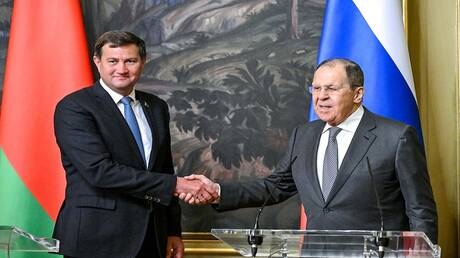
Russian Foreign Minister Sergey Lavrov affirmed his country's commitment to work with their counterparts in Belarus to defend the mutual interests of both nations on the international stage. This was stated during Lavrov's remarks, where he highlighted the importance of enhancing bilateral cooperation and supporting joint initiatives that benefit both parties.
These statements come at a time when the world is witnessing significant geopolitical transformations, as Russia seeks to strengthen its relationships with traditional allies, including Belarus, amidst escalating tensions with the West. This cooperation is seen as part of Moscow's strategy to enhance its influence in the region.
Details of the Event
In the context of his remarks, Lavrov clarified that Russia and Belarus are working to enhance cooperation in various fields, including economics and security. He pointed out that there are numerous joint initiatives that have been agreed upon during previous meetings, aimed at strengthening integration between the two countries.
Lavrov also confirmed that Russia will continue to support Belarus in facing the challenges it encounters, noting that the relations between the two countries go beyond mere bilateral cooperation, encompassing coordination on regional and international issues.
Background & Context
Historically, Russia and Belarus have maintained close relations, with Belarus being one of Moscow's key allies in Eastern Europe. The relationship between the two countries has evolved significantly since the collapse of the Soviet Union, with many agreements signed to enhance cooperation in various fields.
As tensions rise between Russia and the West, particularly following events in Ukraine, Belarus has become a strategically important point for Moscow. Political events in Belarus, including popular protests against the government, have further underscored the need for cooperation between the two nations.
Impact & Consequences
Strengthening cooperation between Russia and Belarus could have significant implications on the international stage. With increasing Western pressure on Russia, Moscow may seek to bolster its relationships with allies to form a united front against these pressures.
This cooperation could also affect regional balances in Eastern Europe, potentially increasing Russian influence in the area, which may raise concerns among neighboring countries and the European Union.
Regional Significance
For the Arab region, the enhancement of relations between Russia and Belarus could open new avenues for cooperation in various fields, including economics and security. Arab countries may seek to leverage these relationships to bolster their interests amid global geopolitical changes.
In conclusion, the cooperation between Russia and Belarus appears to represent an important strategic step in the context of international relations, and it may have far-reaching implications on the global and regional stages.