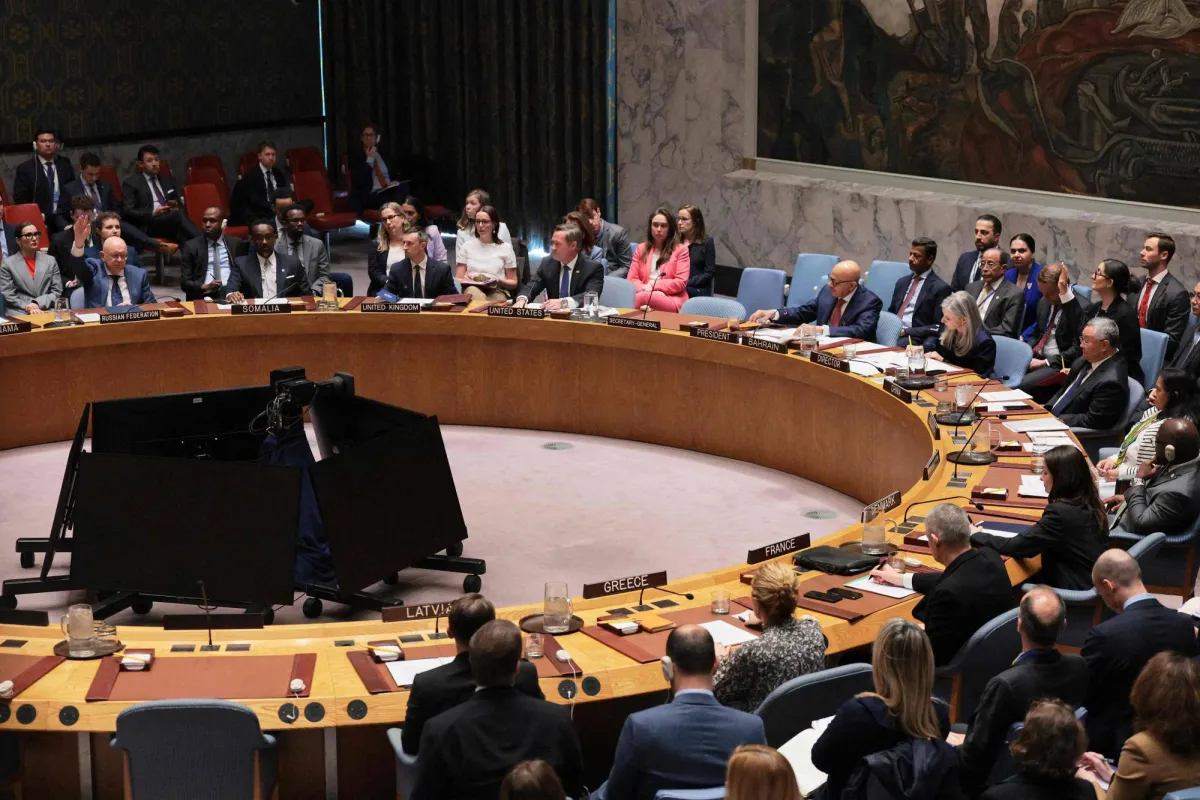
The United Nations Security Council failed on Tuesday to take effective action regarding one of the most serious global crises since its inception, as both Russia and China exercised their veto power to block a resolution presented by Bahrain aimed at protecting commercial shipping in the Strait of Hormuz. This failure reflects growing frustration with the effectiveness of multilateral diplomacy in maintaining international peace and security, increasing the risks of escalating conflict between the United States and Israel on one side and Iran on the other.
After weeks of intensive negotiations, Bahrain responded to several demands from Russia and China; however, the Security Council was unable to adopt the text, which received support from 11 votes, while Russia and China opposed it, and two members abstained from voting. Bahraini Foreign Minister Abdullatif Al-Zayani expressed deep regret over the outcome, warning that the failure to adopt the resolution could undermine the council's credibility and encourage further unrest in one of the world's most critical trade routes.
Details of the Event
The blocked resolution aimed to enhance freedom of navigation in the Strait of Hormuz, a vital artery for global energy supplies. Al-Zayani noted that Iran had issued repeated threats to close the waterway and target commercial vessels, which constitutes a violation of international law. Despite this setback, Al-Zayani affirmed that Gulf countries would continue to coordinate with their international partners to protect maritime security and ensure the freedom of trade movement.
The voting that took place in the Security Council reflects deep divisions within the council, especially amid rising regional tensions. The U.S. ambassador to the UN, Mike Waltz, reaffirmed his country's support for Bahrain and its allies, indicating that Russia and China's use of the veto represents a bias towards Iran, despite widespread international support for maintaining freedom of navigation.
Background & Context
Historically, the Strait of Hormuz is considered one of the most important waterways in the world, through which approximately 20% of global oil supplies pass. In recent years, the region has witnessed escalating tensions between Iran and Western countries, leading to growing concerns about the stability of global supply chains. Reports have warned that any disruption to navigation in this strait could have severe consequences for oil markets and food security.
Warnings about escalating tensions in the region come at a time when fears of a potential military escalation between Iran and Israel are increasing. The Russian representative indicated that the resolution was unbalanced, warning that it could set a dangerous precedent in international law.
Impact & Consequences
This failure in the Security Council may complicate the security situation in the region, as Iran is expected to continue escalating its military activities. The French representative, Jérôme Bonafon, expressed his country's regret over the failure to pass the resolution, emphasizing the importance of freedom of navigation for stability in the Middle East.
Under these circumstances, Gulf countries may seek to enhance their military cooperation with the United States and its allies, potentially leading to further escalation of tensions. Additionally, the ongoing tensions in the Strait of Hormuz could affect global oil prices, negatively impacting the global economy.
Regional Significance
This development reflects the significant challenges facing Arab countries amid rising regional tensions. The lack of international consensus on maritime security issues may weaken Arab nations' ability to protect their economic interests. Furthermore, the continuation of tensions could exacerbate humanitarian crises in the region, especially given the difficult economic conditions many Arab countries are experiencing.
In conclusion, the current situation requires urgent action from the international community to ensure freedom of navigation in the Strait of Hormuz and to avoid any escalation that could lead to widespread military conflict.