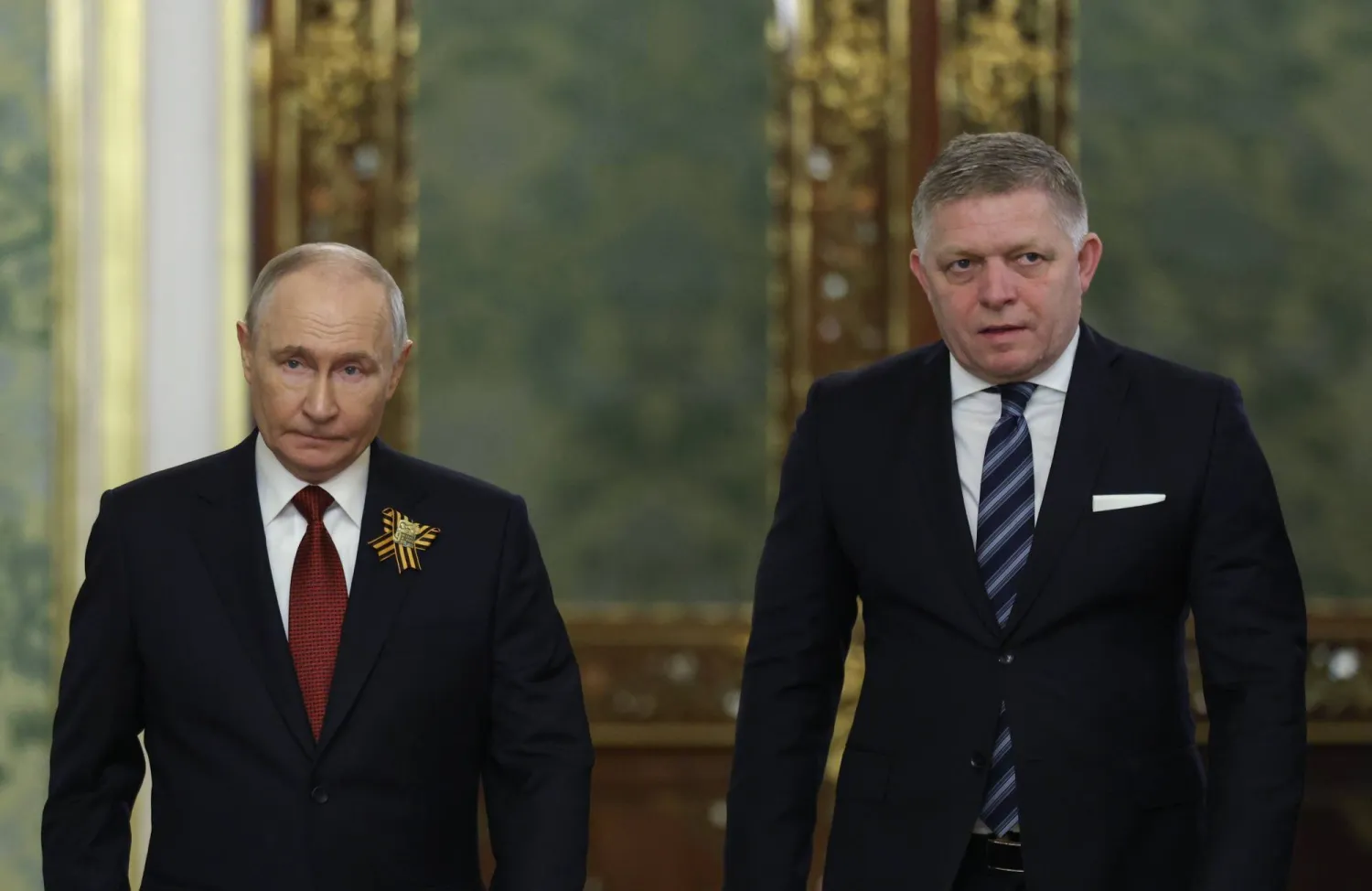
Russian President Vladimir Putin, during his meeting with Slovak Prime Minister Robert Fico at the Kremlin, confirmed that Russia will continue to meet Slovakia's energy resource needs. These remarks come at a time when European pressure is increasing on member states to limit their dependence on Russian energy.
Slovakia is one of the few European countries that still heavily relies on Russian energy imports, receiving oil through the Soviet-era Druzhba pipeline and importing natural gas via the TurkStream network. This dependency reflects the historical relationship between the two countries, which remains intact despite current geopolitical tensions.
Details of the Meeting
Fico's visit to Moscow was part of the celebrations marking the anniversary of the Soviet Union's victory over Nazi Germany in World War II. Although he did not attend the military parade in Red Square, his meeting with Putin was pivotal in strengthening bilateral relations.
In statements broadcast by Russian television, Putin emphasized that Moscow will do its utmost to meet Slovakia's energy needs, indicating that Russian supplies will continue despite Western sanctions and political tensions. This statement reflects Russia's commitment to enhancing its partnership with Slovakia under the current circumstances.
Background & Context
Historically, Slovakia has depended on Russian energy since the Soviet era, with these relations forming a crucial part of its economic infrastructure. As European pressures escalate, Slovakia seeks to maintain a political and economic balance with Russia, warning that a rapid abandonment of Russian energy could lead to significant economic costs.
In recent years, European-Russian relations have faced increasing tensions, particularly following events in Ukraine. Nevertheless, Slovakia remains one of the countries that prefer to maintain positive relations with Moscow, reflecting the complexity of the geopolitical landscape in the region.
Impact & Consequences
Putin's statements serve as a clear message to other European countries seeking to reduce their reliance on Russian energy. As pressures mount, Slovakia appears to be striving to maintain its economic stability by preserving its partnership with Moscow.
This situation could affect relations within the European Union, where member states may have differing views on how to engage with Russia. Additionally, continued reliance on Russian energy may spark debates regarding energy security in the region.
Regional Significance
Arab countries are indirectly affected by these developments, as energy price stability is closely linked to Russian and European policies. Continued cooperation between Russia and Slovakia may have implications for the global energy market, which could reflect on oil and gas prices in the Arab region.
Under these circumstances, Arab nations must closely monitor developments, as any changes in Russian-European relations could impact their economic and energy strategies.