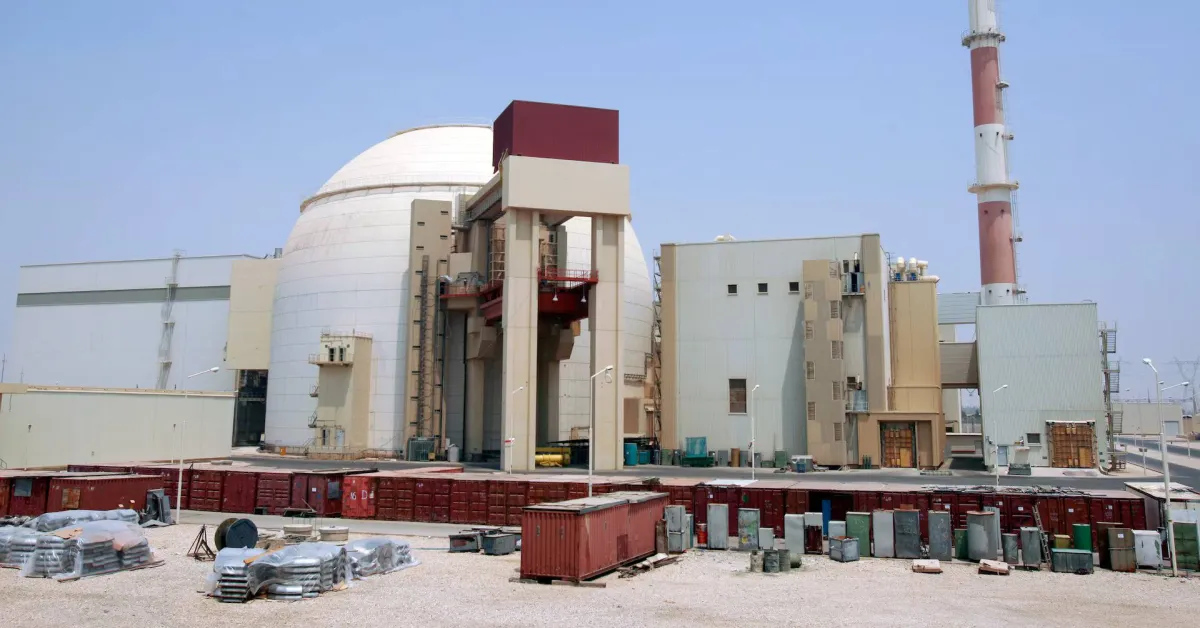
Moscow plans to request guarantees from the United States and Israel for a ceasefire during the evacuation of more of its personnel from the Iranian Bushehr nuclear power plant. Alexey Likhachev, the head of the Russian state nuclear corporation Rosatom, stated that the operation will involve approximately 200 people and is scheduled for next week.
The Bushehr plant, built with Russian assistance, represents a strategic point in nuclear cooperation between Russia and Iran, where Rosatom employees are working on establishing new units. This move comes at a time when the situation in the region is witnessing a notable escalation in military and political tensions between the United States and Iran.
Details of the Evacuation
Likhachev confirmed that Moscow will utilize all available channels to ensure compliance with the ceasefire during the evacuation process. He indicated that the relevant authorities in Israel and the United States will be informed of the convoy's movement routes. This request arises amidst rising tensions between Washington and Tehran, as both sides have exchanged threats regarding the next phase of the conflict.
In related developments, U.S. President Donald Trump has threatened to deliver severe military strikes against Iran, further intensifying regional tensions. In response, Iran has escalated its rhetoric, asserting that it will continue to fight until victory is achieved.
Background & Context
The Bushehr plant is one of the most prominent nuclear projects in Iran, having been operational since 2011 with Russian assistance. This facility has sparked international controversy due to concerns over its potential military applications. As tensions between Iran and the United States escalate, the plant has become a focal point for global attention, especially amid the mutual threats exchanged between the two parties.
Historically, relations between Russia and Iran have been characterized by cooperation in various fields, including energy. However, the current situation reflects a shift in regional dynamics, with increasing pressure on Iran from Western powers.
Impact & Consequences
This evacuation operation could lead to further escalation in tensions between Iran and the United States, as any violations of the ceasefire could be viewed as military escalation. Additionally, the success of the evacuation heavily depends on the responses of the involved parties, particularly under the tense security conditions.
These developments are likely to impact international relations, as major powers will closely monitor how events unfold in the region. Any escalation could also affect oil prices and global markets, given the strategic importance of the area.
Regional Significance
Arab countries are directly affected by the tensions between Iran and the United States, as any escalation could destabilize the region. These events may raise concerns among neighboring countries, especially those with ties to either Iran or the United States.
Under these circumstances, Arab nations must be prepared to address any potential repercussions, whether political or economic. Regional dialogue and cooperation may be essential to avoid escalating situations.