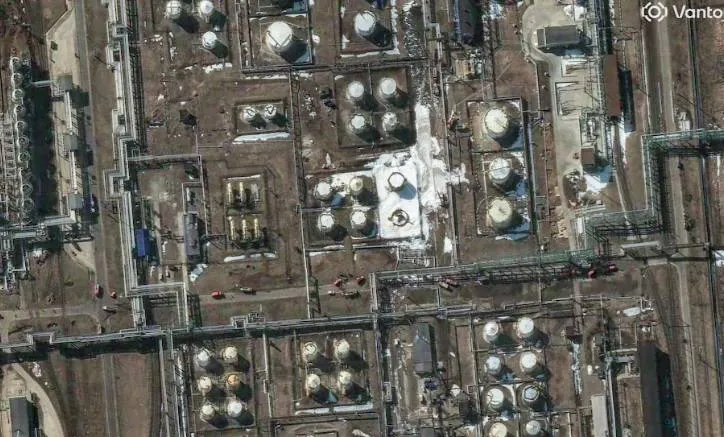
Sources in the oil sector reported on Thursday that Russia will cut its oil production by one million barrels per day following Ukrainian attacks targeting the infrastructure of ports, pipelines, and refineries. This reduction equals one-fifth of Russia's total production capacity, increasing pressure on global markets already experiencing unprecedented disruptions.
These developments come as Ukraine intensifies its attacks on Russian oil facilities, having targeted the ports of Ost-Luga and Primorsk on the Baltic Sea last month in an attempt to weaken the Russian economy. This has disrupted at least 20% of Russia's total export capacity, threatening to have negative impacts on the global oil market.
Details of the Event
The Ost-Luga port, one of Russia's most important ports, halted oil exports a week ago due to intensive airstrikes. With Ukrainian drones targeting infrastructure, Russia's oil pipeline network has become congested, leading to storage tanks reaching capacity. This situation forces some oil fields to reduce their production to avoid increasing pressure on the network.
Despite benefiting from rising oil prices since the onset of US-Israeli attacks on Iran, the production cut will negatively impact state revenues, as oil and natural gas account for one-quarter of the budget's revenues. Furthermore, Russia's export capacity was already limited even before the attacks, following the suspension of the Druzhba pipeline supplying oil to Hungary and Slovakia.
Background & Context
Historically, Russia has relied on oil and gas exports as a primary source of revenue, but Western sanctions and Ukrainian attacks have significantly affected this sector. In February, Russian oil production reached 9.184 million barrels per day, but the potential scale of production cuts has yet to be determined.
On the other hand, Kazakhstan is suffering from the export bottleneck at Ost-Luga, exporting between 200,000 and 400,000 metric tons of oil through the same line. Additionally, seasonal maintenance of Russian refineries exacerbates the issue of oil surplus in the Transneft network.
Impact & Consequences
The reduction in Russian production may lead to an increase in global oil prices, affecting oil-importing countries, especially amid current crises in the Middle East. This cut could also increase pressure on countries that rely on Russian oil, creating instability in global markets.
At the same time, some countries may benefit from rising prices, potentially increasing tensions between producing and consuming nations. This situation may also enhance the importance of diversifying energy sources for importing countries.
Regional Significance
Arab countries are directly affected by these developments, as many rely on oil as a primary source of revenue. Rising oil prices may improve the economic situation for some producing countries, but they could also increase burdens on importing nations.
In light of these circumstances, it is crucial for Arab countries to adopt effective strategies to adapt to changes in global oil markets, including enhancing regional cooperation and developing alternative energy sources.
In conclusion, the reduction of Russian oil production reflects the significant challenges facing global markets amid current crises. These challenges are expected to continue impacting the global economy, necessitating effective responses from both producing and consuming countries.