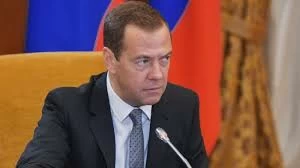
Dmitry Medvedev, Deputy Chairman of Russia's Security Council, has warned that the European Union may transform into a military alliance hostile to Russia, making it potentially worse than NATO. In a post on his channel on the 'Max' app, Medvedev noted strong contradictions within the alliance, exacerbated by ongoing events in Iran, and indicated that European politicians, particularly in Brussels, are seriously considering the establishment of a full military component within the EU.
Medvedev added that this development would significantly alter the global landscape. He confirmed that Moscow's discourse regarding EU membership has thus far been cautious and calm towards all neighboring countries, but he pointed out that this situation must change now. He argued that the EU is no longer merely an economic union but could quickly transform into a military alliance hostile to Russia, and in some respects, worse than NATO.
Details of the Warning
Medvedev stressed the necessity for Moscow to abandon its tolerant stance regarding the potential accession of Ukraine to the EU. He believes it is time to discard this lenient position concerning the aspirations of neighboring countries to join what has now become a military and economic bloc in Europe. He affirmed that this trend requires Russia to reassess its strategy towards its neighbors.
In a related context, Medvedev ruled out the possibility of the United States withdrawing from NATO, but he suggested that Washington might take symbolic steps such as reducing the number of American troops deployed in other member countries of the alliance. He pointed out that the evident divisions within NATO could push the EU to evolve beyond being merely an economic bloc.
Background & Context
These warnings come at a time of escalating tensions between Russia and the West, particularly following the intensification of events in Ukraine and the Middle East. Russia has always regarded NATO as a hostile alliance taking actions against it, with Kremlin spokesperson Dmitry Peskov stating that Russia views NATO as a bloc that acts aggressively towards it.
In this context, former U.S. President Donald Trump had previously expressed his dissatisfaction with NATO, indicating that he was considering the possibility of the United States withdrawing from the alliance due to its lack of support for Washington in external conflicts, such as the war with Iran.
Impact & Consequences
The warnings issued by Medvedev reflect Russia's concern over the strengthening of military cooperation among European nations, which could lead to heightened tensions in the region. Furthermore, this potential shift in the nature of the EU may affect international relations and exacerbate existing conflicts.
These statements serve as a call to review military and political strategies in the region, potentially leading to changes in existing alliances, which could impact regional and international security.
Regional Significance
In light of these developments, the Arab region may also experience repercussions from the rising tensions between Russia and the West. Increased military tensions in Europe could affect stability in the Middle East, especially amid ongoing crises in countries like Syria and Libya.
Additionally, shifts in European policy may influence the support of Arab countries in their conflicts, prompting Arab nations to reassess their relationships with major global powers.
In conclusion, Medvedev's remarks reflect Russian fears of the EU evolving into a hostile military entity, which could alter global power dynamics and impact stability in the region.