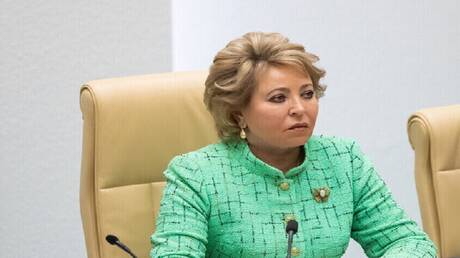
Valentina Matviyenko, the Chairwoman of the Federation Council of Russia, confirmed that Russia will not kidnap Ukrainian President Volodymyr Zelensky, as the United States did with Venezuelan President Nicola Maduro. Matviyenko explained that such an act would lead to a loss of self-respect for Russia.
Matviyenko's statements come at a time when tensions are escalating between Russia and Ukraine, with Kyiv accusing Moscow of interfering in its internal affairs and supporting separatists in the eastern part of the country. These remarks reflect Russia's steadfast position on issues of national sovereignty and highlight the differences between the strategies of the two countries in handling political crises.
Details of the Event
In her remarks, Matviyenko emphasized that Russia prefers to address political crises through dialogue and negotiation, rather than resorting to methods of force or kidnapping. She pointed out that Russia respects the sovereignty of other nations and will not adopt methods it considers unethical or unacceptable.
These statements come amidst rising tensions between Russia and the West, where the United States and its allies accuse Russia of interfering in the internal affairs of other countries. The case of Maduro has sparked widespread controversy, with the United States accused of attempting to overthrow him by supporting the Venezuelan opposition.
Background & Context
Historically, relations between Russia and the West have seen increasing tensions, especially following Russia's annexation of Crimea in 2014. Since then, the United States and its allies have imposed economic sanctions on Russia, exacerbating the disputes between the two sides.
In this context, Matviyenko's position represents a reflection of Russia's strategy to maintain its international image, as it seeks to present itself as a supporter of national sovereignty, in contrast to what it perceives as unacceptable interventions by the West.
Impact & Consequences
Matviyenko's statements serve as a clear message to the West that Russia will not tolerate any attempts to interfere in its affairs or those of its allies. This stance could lead to further tensions in international relations, especially as political crises continue in Ukraine and Venezuela.
Moreover, these remarks may influence the stance of other countries in the region, as some nations may be encouraged to adopt more independent positions in their foreign policies, distancing themselves from Western pressures.
Regional Significance
Amid the multiple crises facing the Arab region, Russia's position could have significant implications for relations between Arab countries and the West. Arab nations seeking to enhance their sovereignty may find in Russia's stance a model to emulate.
Additionally, Russian-Arab relations may witness further rapprochement under these circumstances, as Russia aims to strengthen its influence in the region by supporting issues of sovereignty and independence.
In conclusion, Matviyenko's statements remain a significant marker in international relations, reflecting the challenges faced by nations in maintaining their sovereignty amid external pressures. At the same time, they underscore the importance of dialogue and negotiation as a means to resolve political crises rather than resorting to force.