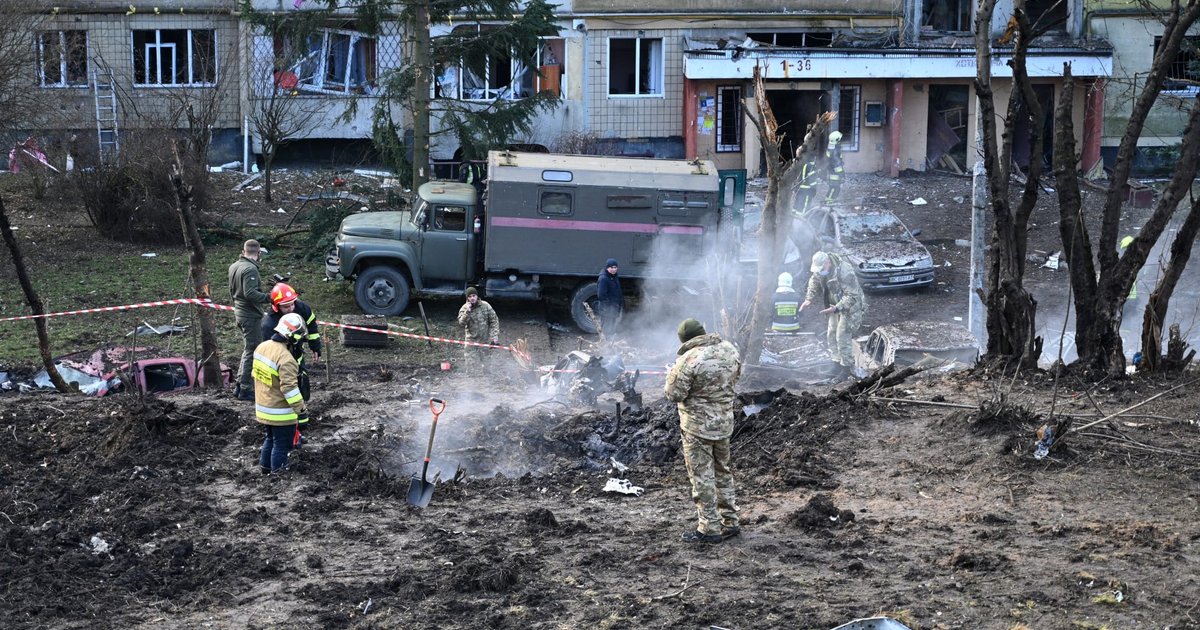
A massive Russian attack involving drones and missiles on Ukraine has resulted in the deaths of 6 individuals and injuries to 46 others, according to official sources. This attack, which is the largest of its kind in weeks, saw Russia launch nearly 400 drones, along with 23 cruise missiles and 7 ballistic missiles, targeting 10 locations across the country.
In detail, the Ukrainian Air Force confirmed that the Russian strikes were concentrated in several areas, causing severe damage to infrastructure, including an energy facility in the Chernihiv region of northern Ukraine. This attack led to power outages affecting approximately 150,000 consumers in the city and surrounding areas, with the electricity distribution company stating that repair work would commence as soon as security conditions improved.
Details of the Attack
The official agency Ukrinform reported that Ukrainian air defenses managed to shoot down 541 out of 550 drones that attacked the country on Tuesday, reflecting the effectiveness of Ukrainian air defenses despite increasing pressures. Meanwhile, the Russian Ministry of Defense claimed to have shot down 389 Ukrainian drones overnight, indicating an escalation in the conflict between the two sides.
In a related context, reports indicate that the Russian army has intensified its efforts to breach Ukrainian defense lines, raising concerns about the potential for a large-scale ground offensive in the upcoming spring. These developments come at a sensitive time as Russia continues to bolster its military capabilities in the region.
Background & Context
The war between Russia and Ukraine has been ongoing since 2014, when Russia annexed Crimea, leading to heightened military and political tensions in the region. Since then, Ukraine has experienced a series of Russian attacks targeting critical infrastructure, significantly impacting civilian life.
The recent attacks occur at a critical juncture, as international pressure on Russia is mounting due to its actions in Ukraine, resulting in economic sanctions. Additionally, the situation in Ukraine raises concerns among neighboring countries, which fear the conflict may extend into their territories.
Impact & Consequences
The repercussions of the Russian attacks extend beyond Ukrainian borders, affecting global energy markets, especially with a fire breaking out at the Russian port of Ust-Luga, a key center for oil exports. The fire, which erupted as a result of an attack by Ukrainian drones, has led to the suspension of oil exports, potentially impacting global oil prices.
Moreover, the military escalation between both sides could exacerbate the humanitarian crisis in Ukraine, where civilians are facing dire conditions due to the ongoing conflict. Humanitarian organizations warn of worsening situations if attacks continue, which could lead to an increase in the number of displaced persons and refugees.
Regional Significance
The events in Ukraine hold particular significance for Arab countries, as political and economic conditions in the region are intertwined with global developments. Rising energy prices due to the conflict may affect the economies of oil-importing Arab nations, increasing economic pressures on them.
Furthermore, the positions of Arab countries regarding the conflict may be influenced by these developments, as some nations seek to maintain balanced relations with both Russia and the West. This conflict may open avenues for reevaluating the foreign policies of Arab states amid ongoing geopolitical changes.
In conclusion, the situation in Ukraine remains tense, with continued reciprocal attacks between Russia and Ukraine, raising concerns about the near future in the region. The current situation requires careful analysis and international cooperation to mitigate escalation and achieve peace.