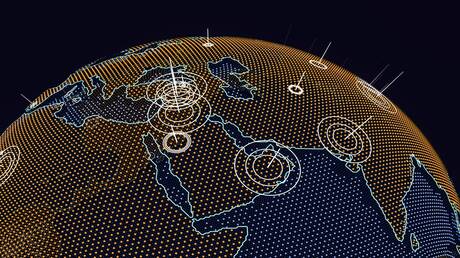
Russian Deputy Prime Minister Alexander Novak emphasized that the world is experiencing a strong and deep shock as a result of the ongoing crisis in the Middle East, noting that addressing the repercussions of this crisis will take at least several months. These statements come at a time when tensions in the region are escalating, raising concerns about global stability.
Novak's remarks reflect Russian concerns about the implications of the crisis, as Russia plays a significant role in regional and international politics. He pointed out that the economic and social impact of the crisis will have far-reaching effects on the countries involved, in addition to its impact on international relations.
Details of the Situation
Novak's statements coincide with the escalation of events in the Middle East, where the region is witnessing an increase in armed conflicts and humanitarian crises. These events have exacerbated economic and social conditions, complicating the political landscape. Additionally, the successive crises in the region affect both regional and international security, necessitating a response from the international community.
In this context, Russia is seeking to enhance its role as a mediator in regional crises, hoping that its efforts will contribute to achieving stability. However, the challenges are significant, especially in light of the political and ethnic divisions that some countries in the region are experiencing.
Context and Background
Historically, the Middle East has witnessed numerous crises that have impacted its stability. From the Israeli-Palestinian conflict to the wars in Syria and Iraq, the region has always been a theater of tensions. These crises have led to significant humanitarian and economic repercussions, making it difficult to achieve peace and stability.
Russia is considered one of the major powers seeking to influence the course of events in the Middle East, aiming to strengthen its relations with Arab and Islamic countries. However, the challenges facing Russia in this context require effective strategies to deal with multiple crises.
Impact and Consequences
The repercussions of the crisis in the Middle East extend beyond regional borders, affecting the global economy. The rise in oil and gas prices due to tensions in the region may impact global markets, increasing economic pressures on consuming countries.
Moreover, the humanitarian crises resulting from armed conflicts lead to a flow of refugees, posing an additional challenge for neighboring countries. These conditions call for a response from the international community, as efforts must be combined to resolve the crises and achieve stability.
Significance for the Arab Region
For Arab countries, the repercussions of the crisis in the Middle East mean more economic and social challenges. The ongoing crises affect sustainable development and increase poverty and unemployment rates. Additionally, political divisions may hinder cooperation efforts among Arab nations.
Under these circumstances, Arab countries must seek common solutions to face challenges and enhance regional cooperation to achieve stability and development. Collective action is the only way to navigate through these complex crises.
In conclusion, the repercussions of the Middle East crisis remain an urgent issue requiring international and regional attention. The challenges are significant, but hope for achieving peace and stability still exists if effective steps are taken to address the crises.