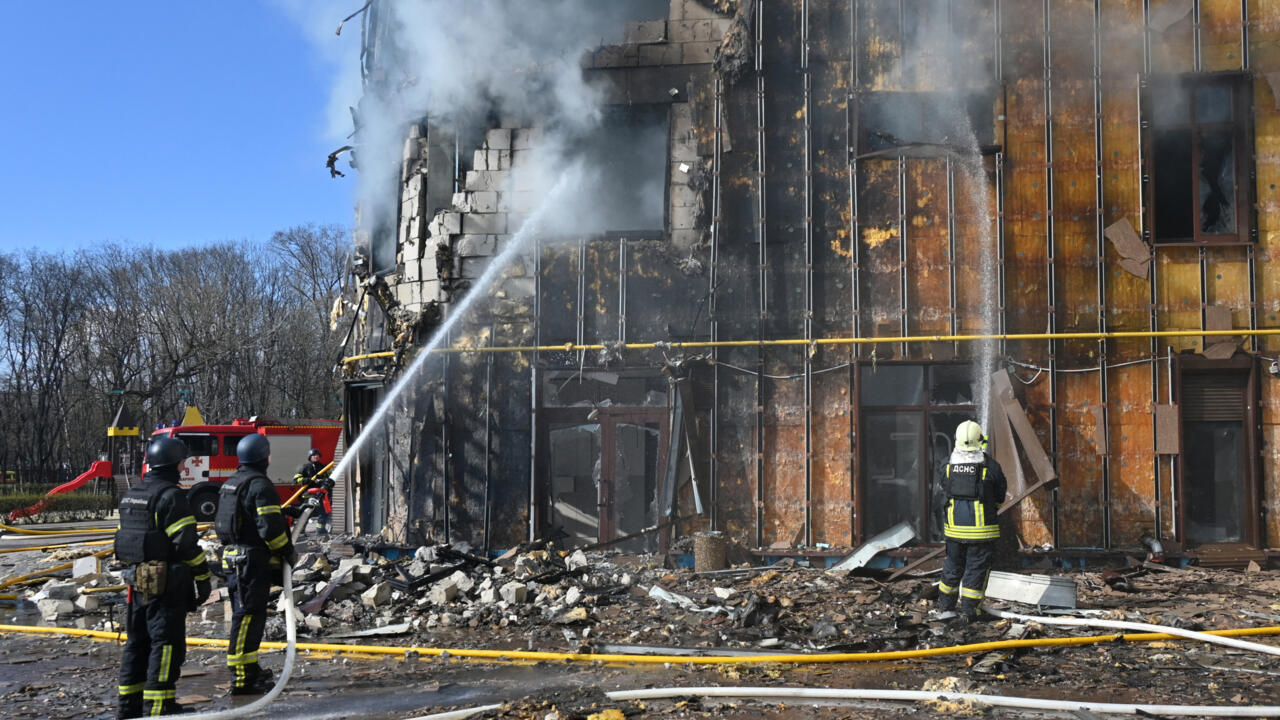
A large-scale Russian attack on Friday resulted in at least two deaths in Ukraine, which President Volodymyr Zelensky described as an 'Easter escalation.' These attacks come at a time when Moscow has changed its military strategies to penetrate Ukrainian air defenses.
The Ukrainian Air Force confirmed that it managed to destroy 515 drones out of 542 and 26 missiles out of 37 launched by Russia since Thursday evening. In a statement via the Telegram app, defense units reported that they shot down most of the drones and missiles, reflecting the effectiveness of Ukrainian air defenses in the face of increasing attacks.
Details of the Incident
In the context of the attacks, the governors of the Zhytomyr and Kyiv regions indicated that the drone strikes targeted residential and civilian infrastructure, resulting in one death in each area. Zelensky wrote on the X platform that 'the Russians have only intensified their attacks, turning what should have been calm in the skies into an escalation during Easter.' Last week, Zelensky proposed a halt to strikes during the Easter holiday, but Moscow rejected this proposal.
For her part, Ukrainian Prime Minister Yulia Svyrydenko confirmed that 'the purpose of these daytime strikes is clear, as Russia is deliberately trying to increase civilian casualties, disrupt life, spread fear, and damage Ukraine's infrastructure.' The spokesperson for the air force noted that the enemy is using new routes and new drones, indicating a continuous update in attack methods.
Background & Context
Since the beginning of the war over four years ago, Russia has often launched significant attacks with drones and missiles during the night. However, the past few weeks have seen a notable escalation, with Moscow sending hundreds of drones and missiles during the day, leading to the highest number of weapons used in such attacks on March 24.
In the Kharkiv region in the northeast of the country, Governor Oleh Syniehubov reported that two people were killed and more than 20 others injured in missile, bomb, and drone attacks over the past 24 hours. Ihor Terekhov, the mayor of Kharkiv, confirmed that this series of strikes may be the most intense since the beginning of the war and the most severe since the start of the year.
Impact & Consequences
This escalation comes at a sensitive time, as Ukraine seeks to bolster its air defenses in the face of increasing attacks. This Russian military escalation reflects changes in war strategies, complicating the security situation in the region. Additionally, these attacks could exacerbate the humanitarian situation in Ukraine, as civilian casualties rise and daily life is disrupted.
The continuation of these attacks may affect international support for Ukraine, as pressures on the international community to intervene or provide more military and humanitarian aid may increase. Furthermore, the escalation of hostilities could lead to heightened tensions between Russia and Western countries, which may negatively impact peace efforts in the region.
Regional Significance
The events in Ukraine directly affect the geopolitical situation in the Arab region, as Arab countries are closely monitoring the rising tensions in Europe. Additionally, the humanitarian crises resulting from the war could lead to new waves of refugees, putting additional pressure on neighboring countries. Moreover, rising energy prices due to the conflict could impact the economies of Arab countries that rely on oil and gas.
In conclusion, the situation in Ukraine remains volatile, with growing fears of a new escalation in hostilities. This situation requires a coordinated international response to ensure regional stability and protect civilians affected by the conflict.