A Russian sailor, named Alexey Galaktionov, has left Yemen heading back to his homeland after being detained for nearly eight months. This followed an attack on the ship he was working on by the Houthi group, which resulted in him sustaining injuries.
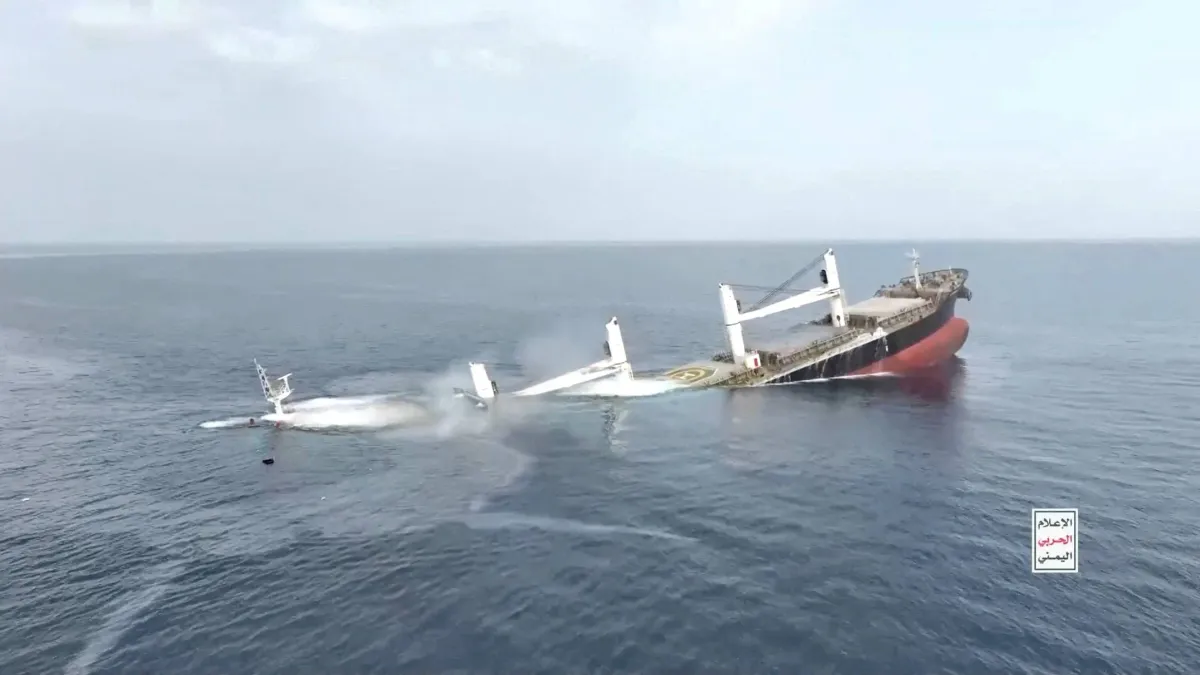
In July 2025, the Greek-flagged ship, which was sailing under a Liberian flag, came under heavy attack from the Houthis, who used unmanned boats and missiles over two consecutive days. The attack led to the sinking of the ship and the detention of its 22-member crew, along with three armed guards.
Details of the Incident
According to reports, the Russian sailor was transported on a United Nations aircraft, coordinated with the UN envoy. His departure was arranged after he completed treatment for the injuries sustained during the attack. Last December, the remaining crew members were released, reflecting complex diplomatic efforts to return these sailors to their home countries.
The attack on the ship occurs amidst escalating tensions in the region, where the Houthi group has carried out over 100 attacks on commercial vessels, which they described as a campaign of solidarity with the Palestinians during the conflict in Gaza. These attacks ceased following a ceasefire announcement in October of last year.
Background & Context
Historically, the region has witnessed ongoing tensions between the Iran-backed Houthis and regional and international powers. Attacks on commercial vessels are not new, but they reflect an escalation in targeting maritime infrastructure. The Houthis view these attacks as part of their strategy to pressure their adversaries, both domestically and internationally.
These events coincide with the escalating conflict in Gaza, where the Houthi group seeks to bolster its regional position by conducting military operations against maritime targets. This escalation raises concerns within the international community, which is striving for stability in the region.
Impact & Consequences
The departure of the Russian sailor from Yemen underscores the importance of diplomatic efforts in resolving humanitarian crises. It also highlights the risks faced by commercial vessels in tense territorial waters. The continuation of such attacks could exacerbate economic conditions in the region, where many countries rely on maritime trade.
On the other hand, these events may affect the relations between Russia and the concerned countries, as the detention of sailors is viewed as an unacceptable act in the international community. This could prompt Russia to adopt a harsher stance towards the Houthis, further complicating the political landscape in the region.
Regional Significance
These events are part of the larger picture of multiple crises affecting the Arab region. Armed conflicts, such as those occurring in Yemen and Gaza, directly impact regional stability, hindering development efforts and increasing civilian suffering.
The ongoing tensions between the Houthis and other countries may lead to a new military escalation, threatening maritime security and affecting global trade flows. These conditions call for the international community to intensify its efforts to resolve conflicts and achieve peace in the region.
In conclusion, the departure of the Russian sailor from Yemen highlights the urgent need for dialogue and negotiation as a means to resolve crises, emphasizing the importance of protecting human rights in the context of armed conflicts.