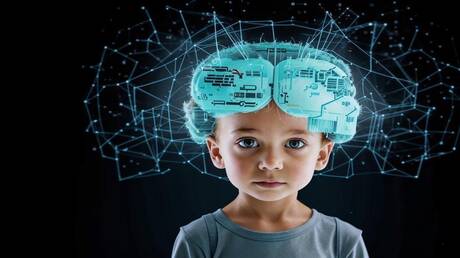
The Russian Ministry of Education and Science has announced a new scientific achievement, where experts from South Ural State University have successfully trained an artificial neural network capable of evaluating and analyzing the level of creativity in humans. This development comes at a time when interest in artificial intelligence applications is growing across various fields, including arts and sciences.
The developed neural network relies on advanced techniques in deep learning, allowing it to analyze creative patterns in artistic and literary works. Scientists have indicated that this network could contribute to a deeper understanding of the human creative process and how to stimulate it.
Details of the Achievement
This neural network is part of a broader research project aimed at exploring the relationship between artificial intelligence and human creativity. The network has been trained on a wide range of data, including artistic and literary works from various cultures, giving it the ability to evaluate creativity from multiple perspectives.
The process involves using sophisticated algorithms to analyze the different elements of creative works, such as style, technique, and content. Thanks to these algorithms, the network can provide accurate assessments that reflect the level of creativity in various works.
Background & Context
The importance of artificial intelligence is increasing in the modern era, as it has become an integral part of many fields, including education, health, and the arts. Recent years have seen significant advancements in artificial intelligence technologies, leading to the emergence of new applications that contribute to improving the quality of life.
In this context, the development of a neural network to assess creativity is an important step towards utilizing artificial intelligence in new areas. This field could open new horizons for research and development and enhance scientists' ability to better understand creative processes.
Impact & Consequences
This achievement could have a significant impact on how artistic and literary works are evaluated. If the neural network proves effective, it may become an important tool for artists and writers, helping them improve their works and better understand audience reactions.
Moreover, this technology could contribute to the development of new educational programs aimed at enhancing creativity among students. By using artificial intelligence, teachers can provide precise and useful feedback that helps students improve their creative skills.
Regional Significance
In the Arab region, this development could have a positive impact on the cultural and artistic landscape. With the growing interest in arts and creativity, this technology could help enhance artistic and literary production, contributing to the overall development of the cultural scene.
This technology could also pave the way for collaboration between scientists and artists in the Arab world, fostering the exchange of ideas and creativity. Amid the challenges facing the region, such initiatives could be a step towards enhancing creativity and innovation.