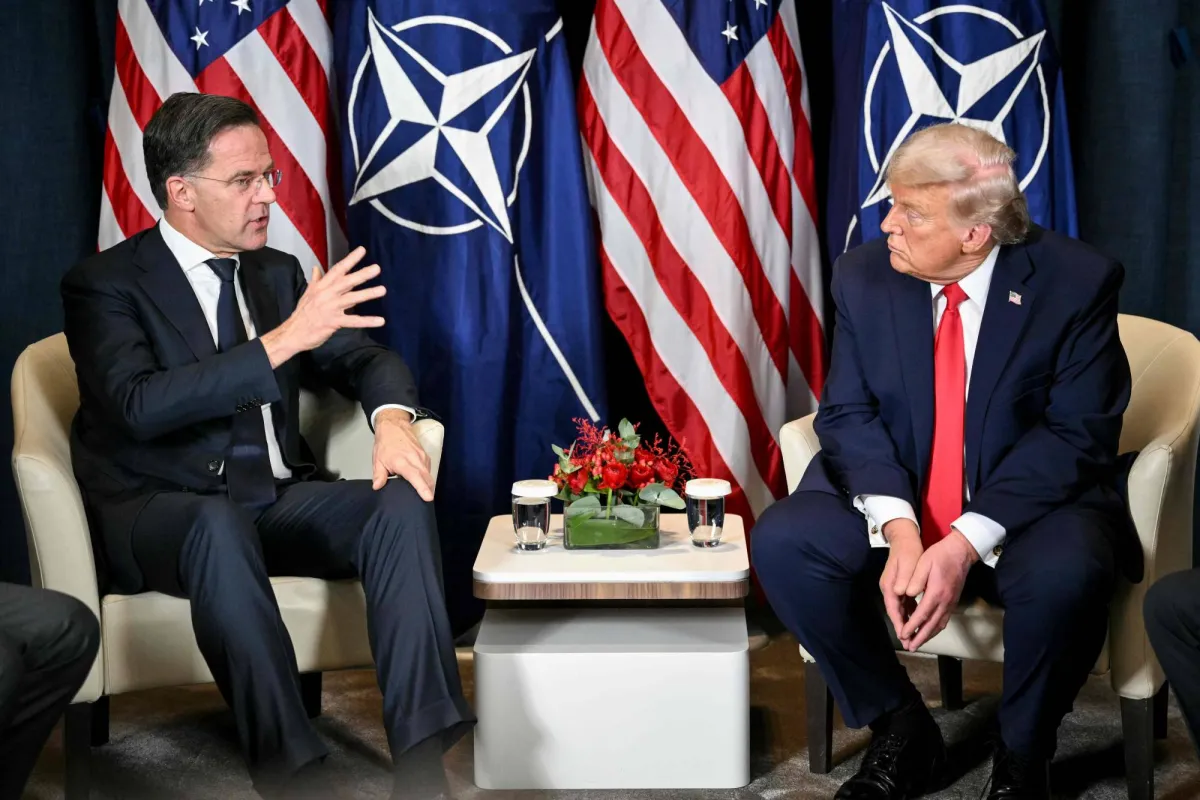
All eyes in Washington and Brussels are on the anticipated visit of NATO Secretary General Mark Rutte, set to begin on Wednesday, where he will meet with U.S. President Donald Trump at the White House. This visit is a significant milestone aimed at containing the escalating tensions between the United States and its European allies amidst growing disagreements over security and strategic matters.
The timing of this visit is particularly sensitive, as transatlantic disagreements are increasing regarding the ongoing war against Iran, in addition to repeated U.S. pressures on European nations to boost their defense spending. Relations within NATO have experienced noticeable strain in recent months, following Trump’s renewed criticisms of European allies for their failure to meet military budget commitments.
Event Details
Rutte is scheduled to hold several high-level meetings and events from April 8 to 12, where he will meet with Secretary of State Marco Rubio and Secretary of Defense Pete Hegseth, and will also participate in a meeting with the Ronald Reagan Presidential Foundation. Through these meetings, Rutte aims to ease tensions within the alliance and maintain the unity of the military coalition that has been a cornerstone of Western security for over seven decades.
The main topics Rutte will discuss during his meetings in Washington include burden-sharing within the alliance, NATO's role in international crises, and maintaining the alliance's unity in the face of increasing security challenges. Observers believe that Rutte is seeking to convince the U.S. administration that continued American leadership within NATO is a fundamental pillar of U.S. influence on the international stage.
Background & Context
It is important to note that the current disagreements between the United States and European nations extend beyond defense spending to strategic differences regarding the management of international crises. Analysts indicate that some European countries have begun to seek to enhance their defense capabilities independently, complicating transatlantic relations.
In this context, Rutte's visit is part of diplomatic efforts aimed at containing the crisis and preventing it from escalating into an institutional dispute that could affect the cohesion of the alliance. Several researchers at American think tanks have confirmed that the current tensions within the alliance reflect deeper changes in the nature of transatlantic relations.
Impact & Consequences
Analyses predict that the outcomes of Rutte's visit will significantly influence the future of relations between the United States and European nations, especially given the increasing security challenges. Experts note that any escalation in U.S. rhetoric towards NATO may provoke deep concern in European capitals, potentially leading to changes in European defense strategies.
Furthermore, the continuation of tensions may push some European countries to enhance their defense cooperation further with non-European nations, which could alter the nature of traditional military alliances in the region.
Regional Significance
The disagreements within NATO have implications for regional security in the Middle East, where the United States plays a pivotal role in many crises. The rising tensions between the United States and Iran, along with pressures on European nations, may lead to shifts in security policies in the region.
Under these circumstances, Arab nations may seek to enhance their defense cooperation with traditional partners or even explore new alliances to confront the increasing security challenges.
In conclusion, Rutte's visit to Washington serves as a real test of NATO's ability to adapt to new challenges and ensure the continued unity of the alliance in the face of global crises.