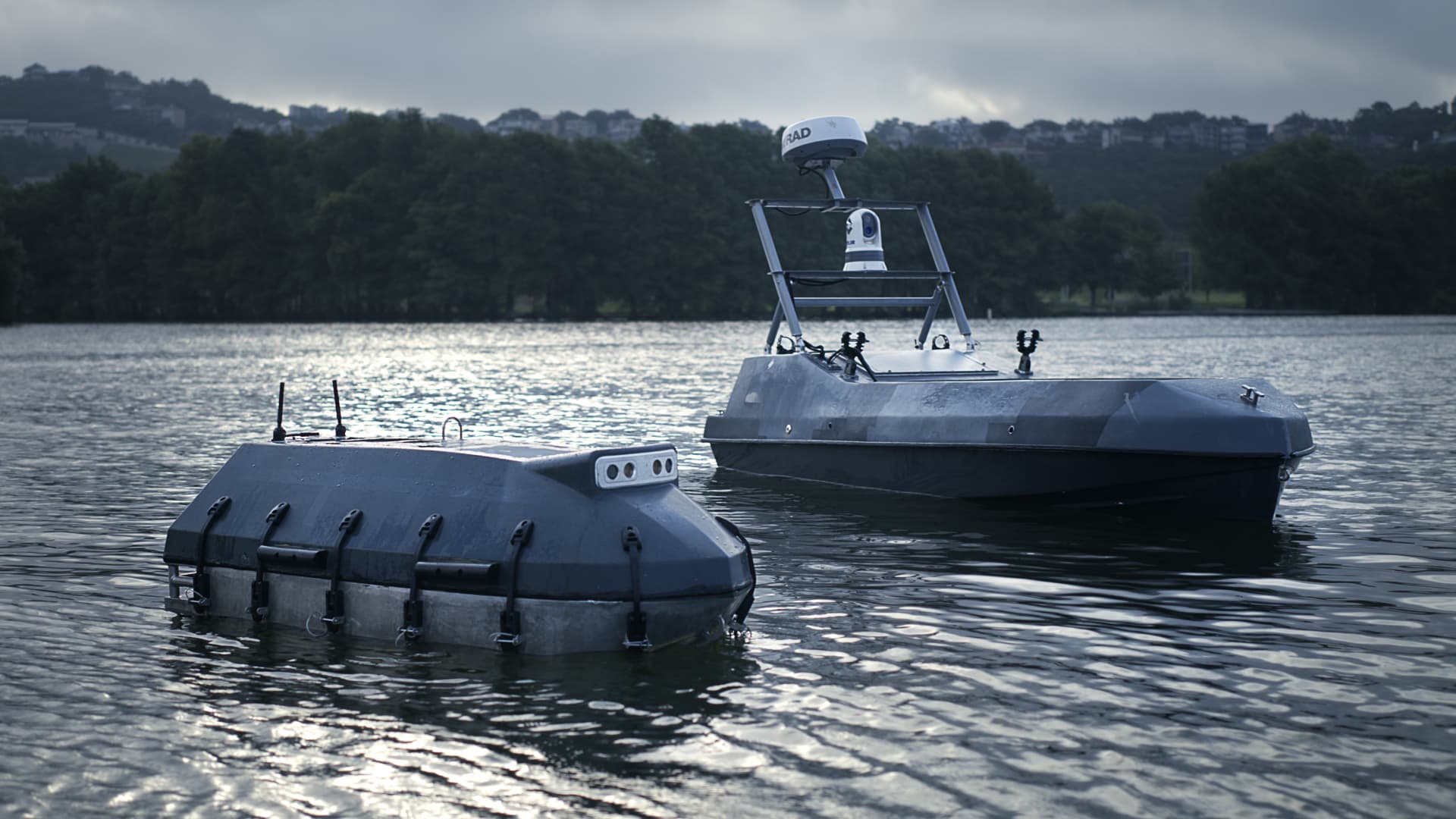
Sarnak, a leader in the development of autonomous ships, has announced that it has raised $1.75 billion in a new funding round, reflecting the increasing demand from the U.S. military for innovative defense systems. This round, led by Kleiner Perkins, has boosted the company's valuation to $9.25 billion, up from $4 billion in a previous funding round last year.
The company intends to use these funds to expand its supply chain and shipbuilding facilities, planning to construct over 20 ships annually by 2027, including a new shipyard known as Port Alpha in Texas.
Details of the Funding Round
In an interview with CNBC, Denio Mavroukas, CEO of Sarnak, confirmed that there is a genuine shift in demand towards unmanned systems that can be produced in large quantities at much lower prices than traditional ships. He noted that the vessels produced by Sarnak could help reduce risks to military personnel in hazardous environments, assisting the United States in mitigating China's dominance in this area.
Sarnak aims to achieve production levels not seen in the United States since World War II, as this direction is part of broader plans to modernize the U.S. military initiated by former President Donald Trump.
Background & Context
In recent years, Silicon Valley has invested billions of dollars in defense technology companies, aiming to compete with traditional contractors like Lockheed Martin and Northrop Grumman. Sarnak, ranked 19th on CNBC's list of the most innovative companies, is one of the emerging defense firms receiving significant venture capital support.
Last year, Sarnak signed a contract with the U.S. Navy worth $392 million. Other companies such as Shield AI, Palantir, and Anduril have also achieved significant successes during the Trump administration, reflecting a shift in how the U.S. government interacts with emerging defense companies.
Impact & Consequences
This move by Sarnak is part of broader U.S. efforts to enhance its military capabilities in response to global challenges, particularly amid rising tensions with China. The development of autonomous ships could be a game-changer on the battlefield, providing the ability to execute missions without risking soldiers' lives.
Moreover, increased production in this sector may contribute to creating new job opportunities and boosting the U.S. economy, highlighting the importance of innovation in defense fields. These developments could position the United States more strongly on the international stage.
Regional Significance
Amid escalating tensions in the Middle East, these developments may influence the military strategies of Arab nations. With the increasing reliance on modern technology in warfare, Arab countries may need to consider how to upgrade their defense capabilities to address growing security challenges.
These advancements present an opportunity for Arab nations to collaborate with American companies in the defense technology sector, potentially enhancing regional security.