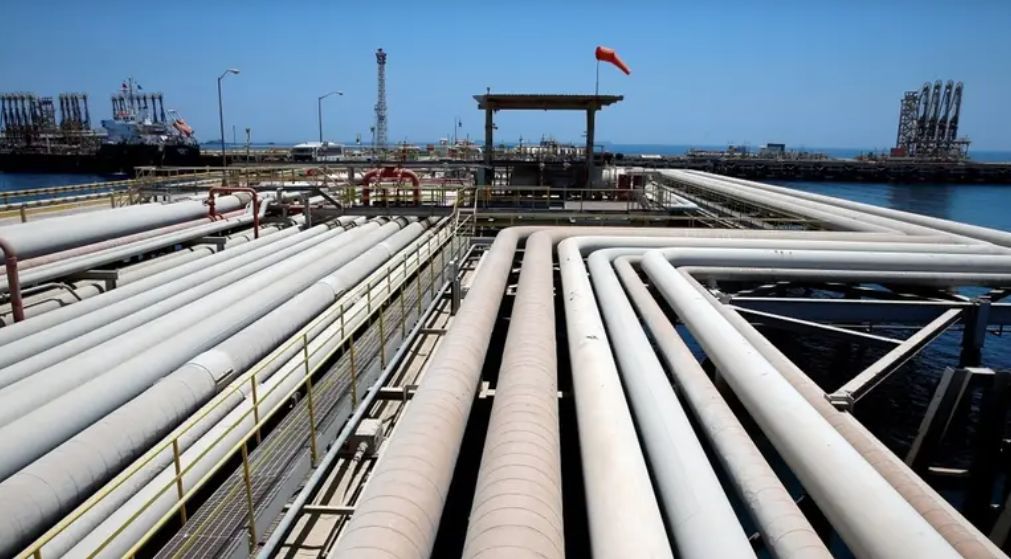
The Kingdom of Saudi Arabia has announced that its East-West pipeline, considered a vital project in the energy sector, has begun pumping oil at full capacity, reaching a production level of 7 million barrels per day. This achievement comes at a time when global markets are experiencing significant fluctuations in oil prices, highlighting the importance of this pipeline in securing energy supplies.
The East-West pipeline is regarded as a strategic project aimed at reducing dependence on the Strait of Hormuz, a crucial transit point for oil transportation. This pipeline enhances Saudi Arabia's ability to export oil to global markets more safely and effectively.
Event Details
The East-West pipeline was commissioned in 2014 and is one of the largest infrastructure projects in the Kingdom. The pipeline extends over 1,200 kilometers, connecting the eastern part of the Kingdom, where the oil fields are located, to export ports on the western coast. This pipeline allows Saudi Arabia to export oil to global markets without the need to pass through the Strait of Hormuz, which is prone to political friction and military tensions.
The production capacity of the pipeline, which has reached 7 million barrels per day, is considered a significant achievement, contributing to enhancing Saudi Arabia's position as the world's largest oil exporter. This accomplishment reflects the ongoing efforts of the Kingdom to boost its production capacity and improve the efficiency of its operations in the energy sector.
Context and Background
Historically, the Strait of Hormuz has been a vital point for oil transportation, through which approximately 20% of the world's total oil supplies pass. However, political tensions in the region, including conflicts between Iran and the United States, have made this strait a sensitive area. Therefore, it has become essential for Saudi Arabia to develop alternatives that ensure the continuity of oil flow to global markets.
Investment in projects like the East-West pipeline demonstrates the Kingdom's commitment to enhancing global energy security and reflects its strategy to diversify energy sources and reduce risks associated with reliance on specific waterways.
Implications and Effects
Achieving this production target is considered an important step in enhancing the stability of the global oil market, as it may help alleviate price pressures that have experienced significant fluctuations recently. Additionally, the increase in production could bolster Saudi Arabia's ability to face economic challenges that may arise due to market volatility.
Moreover, this achievement strengthens Saudi Arabia's position in international forums, showcasing its capability to meet global oil market needs under challenging circumstances. This is significant in the context of global efforts to transition to more sustainable energy sources.
Impact on the Arab Region
For the Arab region, the increase in Saudi oil production is seen as an opportunity to enhance cooperation among oil-producing countries, as it could contribute to price stability and promote economic growth. This achievement sends a positive signal to global markets that Arab countries are capable of addressing economic and political challenges.
In conclusion, the East-West pipeline is a strategic achievement that enhances Saudi Arabia's ability to export oil safely and effectively, reflecting the Kingdom's commitment to securing global energy supplies.