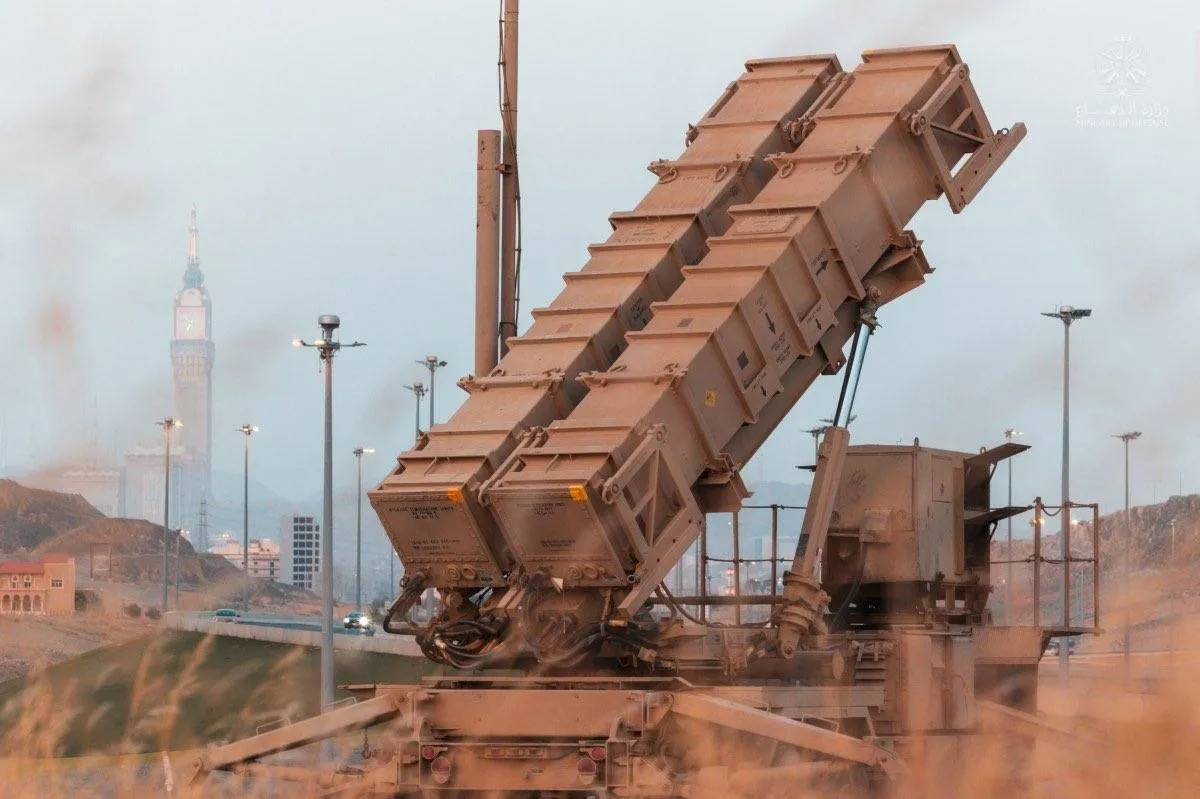
Saudi air defenses successfully intercepted several hostile aerial targets, including ballistic missiles and drones, that were targeting the Eastern Province. In recent hours, air defenses detected 5 ballistic missiles and a cruise missile, managing to intercept and neutralize them successfully.
Furthermore, the defenses destroyed 7 drones as part of ongoing efforts to counter aerial threats. Major General Turki Al-Maliki, the official spokesperson for the Ministry of Defense, emphasized the Saudi armed forces' capability to protect the skies and deal with various threats.
Details of the Incident
In a related context, Saudi Defense Minister Prince Khalid bin Salman discussed the strategic defense partnership between Saudi Arabia and the UK with his British counterpart, John Healey. They reviewed regional developments and their implications for the security and stability of the area, condemning the ongoing Iranian attacks targeting the Kingdom.
Saudi Arabia, along with several Arab and Gulf countries, condemned the Iranian attacks that targeted a camp belonging to the Kuwaiti armed forces and a power and water desalination station, resulting in injuries to several members of the Kuwaiti armed forces. The Saudi Ministry of Foreign Affairs stressed that these cowardly attempts reflect a hostile approach that cannot be justified.
Background & Context
These events come at a time when the region is witnessing increasing military escalation, as Kuwait was struck by an Iranian attack targeting a power generation station, resulting in the death of a worker and damage to buildings. Kuwait has taken steps to enhance its security by establishing a specialized prosecution to combat crimes related to state security.
In Bahrain, 8 ballistic missiles and 7 drones were intercepted, with the General Command confirming that these attacks represent a blatant violation of international law. Meanwhile, UAE air defenses dealt with 11 ballistic missiles and 27 drones, reflecting the scale of threats faced by Gulf countries.
Impact & Consequences
These attacks indicate a serious escalation in regional tensions, as Arab leaders convene to discuss the implications of these attacks on security and stability in the region. Saudi Arabia, Jordan, and Qatar have confirmed that the recurrence of Iranian attacks poses a direct threat to regional security.
The importance of coordination among Arab states to confront these threats has been emphasized, as the risks of escalation on international navigation freedom and energy supply security could negatively impact the global economy.
Regional Significance
Concerns are growing that these attacks could lead to a broader escalation in the region, potentially affecting political and economic stability. Several Arab countries have condemned these attacks, expressing solidarity with Kuwait and support in facing the threats.
In conclusion, the region remains on high alert as Arab countries continue to bolster their defensive capabilities to address increasing security challenges amid rising tensions with Iran.