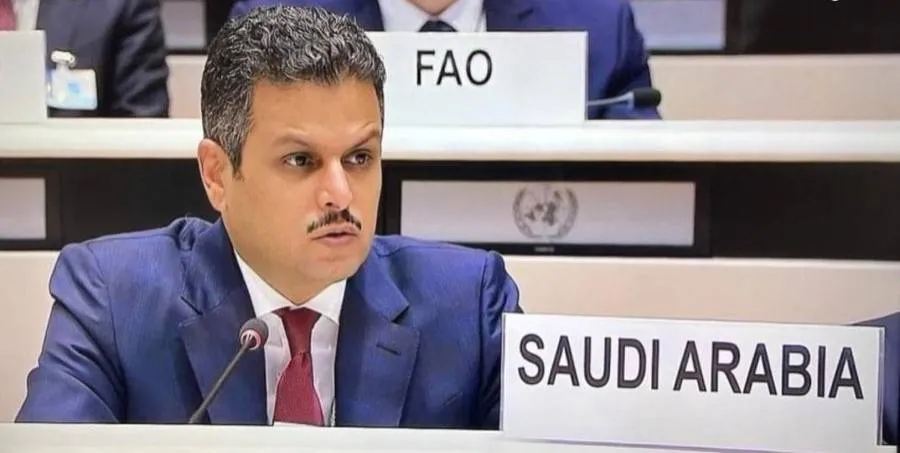
Saudi Arabia has renewed its condemnation of Iranian attacks targeting its territory and several Gulf Cooperation Council countries, as well as Jordan. The kingdom affirmed that these nations are not parties to the ongoing conflict and that what they have faced represents a blatant violation of international law.
In a statement, Saudi Arabia's permanent representative to the United Nations in Geneva, Abdul Mohsen bin Khutaila, stated that these attacks represent a violation of the sovereignty of nations and their territorial integrity, stressing that the continuation of this approach will not yield any gains for Iran but will instead cost it a heavy political and economic price, further increasing its isolation.
Details of the Incident
Bin Khutaila urged Tehran to reconsider its miscalculations, warning that continued aggression against countries in the region will lead to counterproductive results that will exacerbate its situation. He added that targeting a neighbor is a cowardly act and a blatant violation of the most basic principles of good neighborliness, noting that attacking countries that are not parties to the conflict, including those playing mediating roles, constitutes a deliberate undermining of any path toward de-escalation.
The Saudi official described the Iranian attacks as blatant aggression that cannot be justified or accepted, pointing out that Iran's actions reflect a strategy based on extortion, supporting militias, and targeting neighboring countries to destabilize them. He emphasized that these attacks pose a direct threat to international peace and security, resulting in civilian casualties and targeting residential areas and vital facilities, which constitutes a serious violation of international law.
Background & Context
Saudi Arabia also condemned Iranian attacks on commercial vessels in the Arabian Gulf and the disruption of navigation in the Strait of Hormuz, warning of the repercussions on regional security and the global economy. It noted that these practices exacerbate global economic challenges and particularly affect developing and least developed countries, indicating that targeting energy sources and food security requirements negatively impacts international economic stability.
In this context, several scholars and prominent figures in the Islamic world condemned what they described as