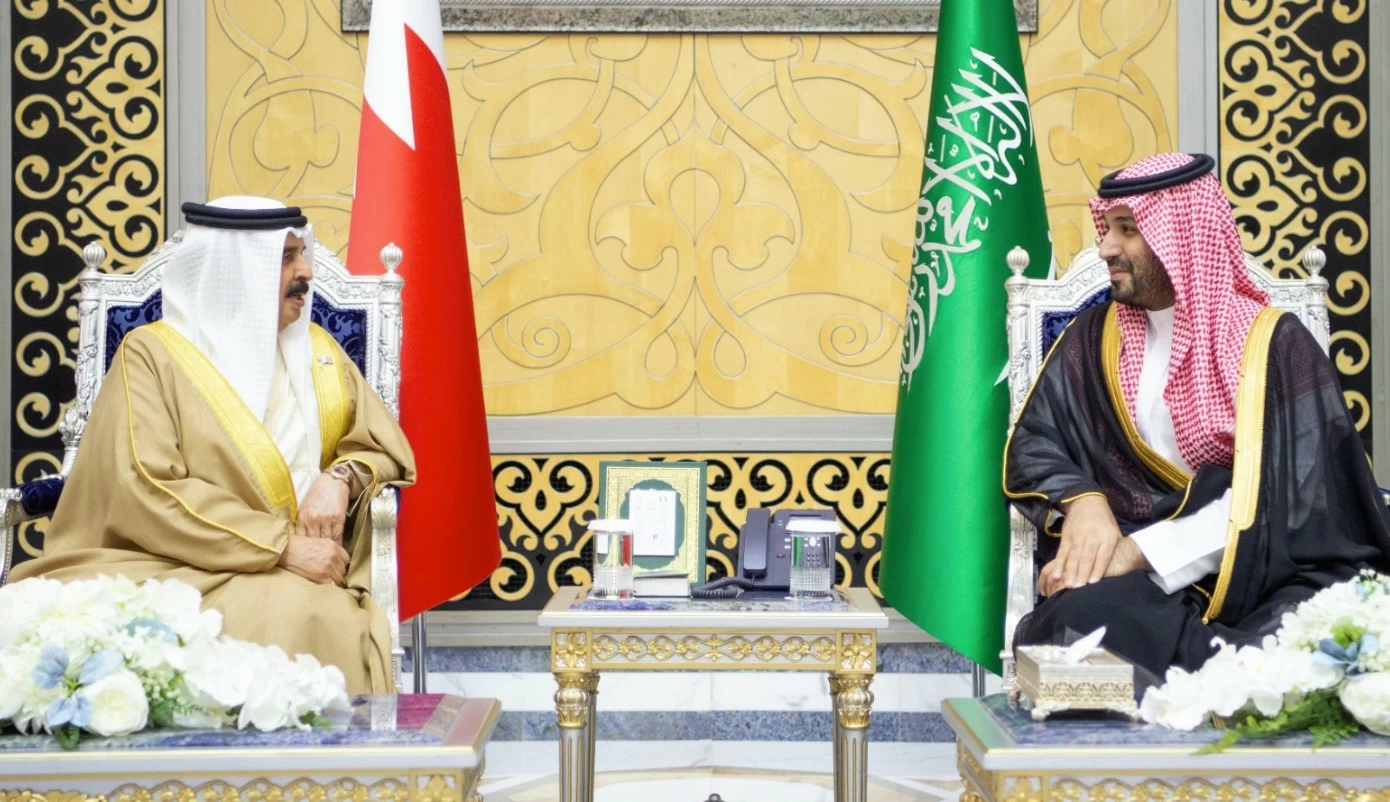
Crown Prince and Prime Minister Mohammed bin Salman presided over the extraordinary Gulf summit for leaders and heads of delegations from the Gulf Cooperation Council (GCC) countries, held today (Tuesday) in Jeddah. This summit comes at a critical time as regional tensions escalate, highlighting the Kingdom's leadership role in managing regional affairs.
The Crown Prince welcomed the leaders of Gulf states, including King Hamad bin Isa Al Khalifa of Bahrain, Emir Sheikh Tamim bin Hamad Al Thani of Qatar, and Crown Prince Sheikh Sabah Khaled Al Hamad Al Sabah of Kuwait. The UAE's Deputy Prime Minister and Minister of Foreign Affairs, Sheikh Abdullah bin Zayed, also attended, showcasing the unity of the Gulf position.
Details of the Event
The summit, chaired by Crown Prince Mohammed bin Salman, underscores the Kingdom's pivotal role in unifying Gulf positions and enhancing collective coordination to face challenges. The leaders discussed attacks targeting civilian facilities and infrastructure, necessitating a joint effort to protect the region's security and stability and ensure the flow of energy.
The Secretary-General of the Gulf Cooperation Council, Jassim Mohammed Al Budaiwi, explained that the summit was convened in response to a call from the Custodian of the Two Holy Mosques, King Salman bin Abdulaziz, where the current regional situation was discussed, particularly concerning the escalation of tensions and Iranian attacks on GCC countries.
Context and Background
This summit coincides with rising tensions in the region, where GCC countries and the Hashemite Kingdom of Jordan have faced Iranian attacks, leading to a decline in trust among nations. The summit explored ways to find a diplomatic path to end the crisis and enhance long-term security and stability.
The leaders expressed their strong condemnation of Iranian attacks, considering them a violation of the sovereignty of nations and the United Nations Charter. They also emphasized the necessity for Iran to take serious steps to rebuild trust.
Impact and Consequences
The leaders affirmed the right of GCC countries to defend themselves, either individually or collectively, in accordance with Article 51 of the United Nations Charter. This stance reflects the commitment of the nations to protect their sovereignty and security, stressing that any attack on a member state is an attack on all.
They also praised the efficiency of the armed forces of GCC countries in countering attacks, reflecting their high readiness. The summit further confirmed the GCC's capability to overcome challenges and quickly rehabilitate damaged energy facilities, contributing to the stability of supplies.
Regional Significance
The summit highlights the importance of Gulf cooperation in addressing security and economic challenges. The leaders' rejection of illegal Iranian actions in the Strait of Hormuz reflects their commitment to securing navigation and freedom of passage, which is essential for regional stability.
At the conclusion of the summit, the General Secretariat was directed to complete joint Gulf projects, including transportation and logistics projects, enhancing Gulf integration and reflecting a forward-looking vision for cooperation among the states.