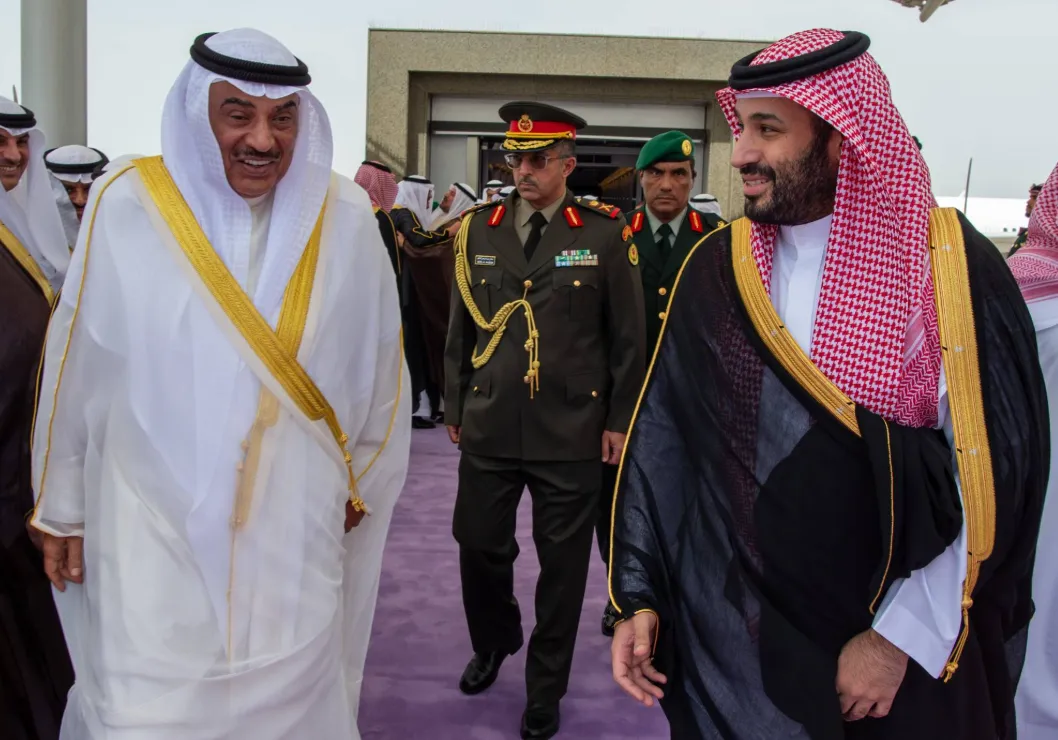
Crown Prince Mohammed bin Salman, the Saudi Deputy Prime Minister, received a phone call on Wednesday from Sheikh Sabah Khaled Al-Hamad Al-Sabah, the Kuwaiti Crown Prince. During this call, they reviewed the latest developments in the region, including the achievement of a ceasefire agreement between the United States and Iran, facilitated by Pakistan's efforts.
Both Saudi Arabia and Kuwait emphasized their commitment to supporting all efforts aimed at achieving stability and security in the region. This call comes at a sensitive time, as Kuwait and the UAE have faced missile and drone attacks from Iran, despite the announcement of a ceasefire.
Details of the Incident
Reports indicate that the Kuwaiti army announced its response to a wave of Iranian attacks, with Kuwaiti air defenses engaging 28 drones targeting the country. These attacks resulted in significant material damage to oil facilities and power stations, highlighting the security challenges facing Kuwait.
In a related context, the UAE Ministry of Defense announced its defense against missile and drone attacks originating from Iran, reflecting the escalating tensions in the region and increasing the need for effective diplomatic solutions.
Background & Context
These events coincide with intensified international efforts to reach a permanent ceasefire agreement in the region, as the Saudi Foreign Ministry welcomed the announcement of the agreement between the U.S. and Iran. It praised the efforts made by Pakistani Prime Minister Muhammad Shehbaz Sharif in this regard.
These steps are part of broader efforts to achieve stability in the Middle East, which has experienced ongoing tensions for decades. The Kingdom emphasizes the importance of keeping the Strait of Hormuz open for navigation, which is vital for the global economy.
Impact & Consequences
Saudi Arabia expects that the ceasefire will provide an opportunity for a comprehensive and sustainable de-escalation, enhancing security in the region. The Kingdom also expresses its rejection of hostile actions targeting the sovereignty and security of nations, including the incursion that targeted the Kuwaiti consulate in Basra.
This escalation in attacks reflects the security challenges faced by Gulf countries and increases the importance of regional and international cooperation in addressing these threats.
Regional Significance
The current situation in the Arab region requires a swift and effective response from the concerned countries, as any escalation could lead to negative repercussions on regional security and stability. Cooperation between Arab states, especially between Saudi Arabia and Kuwait, is vital to face these challenges.
In conclusion, there remains hope that diplomatic efforts will lead to peace and stability in the region, and that leaders can overcome differences to achieve the interests of their peoples.