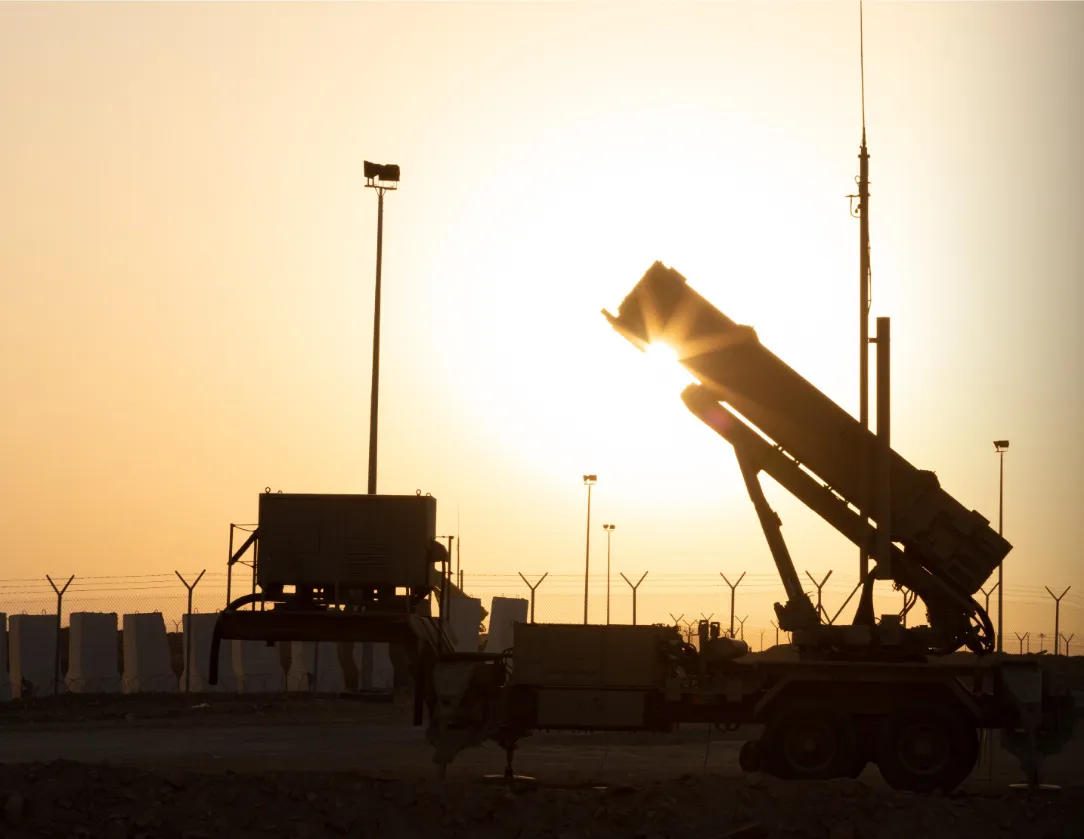
The Saudi Ministry of Defense, through its official spokesman, Major General Turki Al-Maliki, announced the successful interception and destruction of a cruise missile in recent hours. This operation is part of ongoing efforts to protect the security of the Kingdom and the safety of its territory.
Al-Maliki explained that the interception operation was successful, reflecting the high efficiency of the Saudi air defense forces and their capability to confront any potential threats. The Ministry of Defense reiterated its commitment to ensuring the readiness of its forces to handle various threats, ensuring the protection of the Kingdom's security and territorial integrity.
Details of the Incident
This operation comes at a time when the region is witnessing heightened security tensions, as the Kuwaiti armed forces announced their response to missile attacks and hostile drones, resulting in significant damage to some government facilities. Reports indicate that Iranian attacks on Gulf countries have caused material damage without any recorded human casualties.
In this context, the Kuwaiti Ministry of Finance confirmed damage to the ministries complex in the capital Kuwait due to an attack by a hostile drone. The Kuwait Petroleum Corporation also reported a fire outbreak in the oil sector complex in Shuwaikh following drone attacks, reflecting the escalating threats in the region.
Context and Background
These events coincide with an Iranian escalation in the region, as Iran has begun launching retaliatory strikes against Gulf countries in response to attacks by the United States and Israel on its territory. The Iranian attacks, which began on February 28, have targeted civilian and residential facilities in Gulf countries, raising concerns about the implications of these assaults on regional security.
In this context, the Kuwaiti armed forces confirmed that they dealt with eight ballistic missiles and nineteen hostile drones in the past 24 hours, without any recorded human casualties or material damage. Additionally, the Kuwaiti National Guard shot down two drones within their areas of responsibility, reflecting their high readiness to face threats.
Impact and Consequences
These events indicate a rise in tensions in the region, which may affect the security and economic stability of Gulf countries. Nations such as Qatar and Italy have expressed interest in de-escalation, with the Emir of Qatar, Sheikh Tamim bin Hamad Al Thani, and Italian Prime Minister Giorgia Meloni calling for political dialogue as a means to resolve current crises.
Moreover, the continuation of these attacks could exacerbate humanitarian conditions in the region and increase challenges for governments in addressing economic and social crises. Reports have warned that these assaults represent a blatant violation of international humanitarian law.
Impact on the Arab Region
Recent events underscore the importance of enhancing security cooperation among Gulf countries to confront common threats. The Iranian escalation may also impact regional and international relations, necessitating a response from the international community to ensure stability in the region.
In conclusion, the situation in the region remains tense, highlighting the need for effective strategies to address increasing security threats and ensure the safety of citizens and national interests.