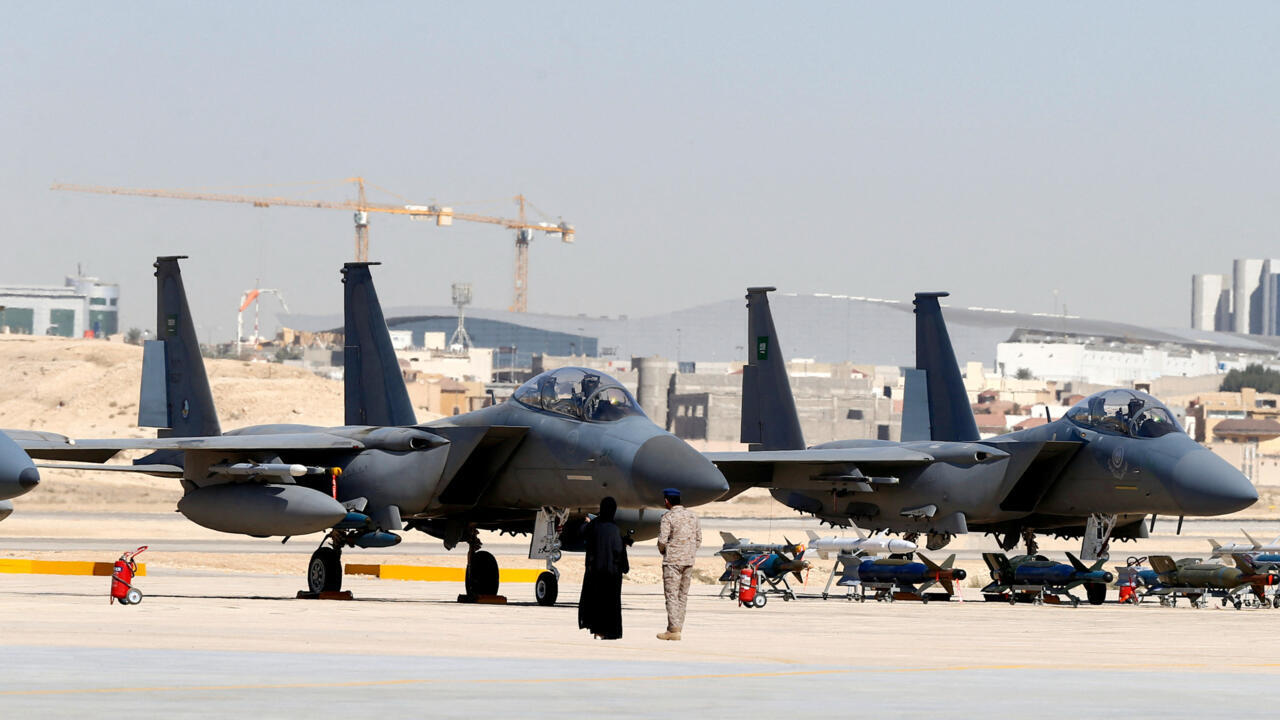
U.S. media outlets have disclosed that both the United Arab Emirates and the Kingdom of Saudi Arabia have executed "secret" military strikes against Iran since the outbreak of the war in the Middle East. These strikes are part of a reaction aimed at avoiding igniting a large-scale regional confrontation.
The Wall Street Journal reported on May 11, citing informed sources, that the UAE targeted several Iranian facilities, including an oil refinery, in early April. Additionally, Reuters revealed, based on Western official sources and Iranian officials, that Saudi Arabia has also carried out repeated strikes against Iran since the end of March.
Details of the Events
Despite the seriousness of this information, no official confirmation has been issued from Washington, the concerned Gulf states, or even the Iranian authorities regarding this matter. If these reports are confirmed, it would mark the first time Gulf countries have directly targeted Iran militarily.
Evidence supporting the UAE's military involvement includes images observed by independent military analysts on social media, showing French "Mirage" aircraft and Chinese "Wing Loong" drones—equipment owned by the Emirati military—flying over Iranian territory.
Background & Context
Shahin Modarres, an expert on Iranian affairs and Middle Eastern conflicts, asserts that Saudi Arabia and the UAE possess the necessary military capabilities to execute such operations. He notes that the air forces of both countries are among the most advanced and modern in the region, enabling them to carry out precise strikes against Iranian facilities.
Prior to the outbreak of the war, Riyadh and Abu Dhabi had refused to allow the United States to use their airspace for strikes against Tehran, fearing entanglement in an open conflict. However, the war has put this neutrality under severe pressure, as Iran has intensified its drone and missile attacks on Gulf countries, particularly the UAE and Saudi Arabia.
Impact & Consequences
Reports indicate that the UAE has been the most targeted by Iranian attacks, with Tehran launching over 2,800 missiles and drones towards it, a number that even exceeds those aimed at Israel. If the Gulf strikes are confirmed, they carry a clear deterrent message to Tehran, indicating that Gulf states are capable of inflicting damage within Iranian territory if the attacks against them continue.
The United Arab Emirates is moving towards using force to send a message to Tehran, having officially warned of its right to defend itself, and has strengthened its operational alliance with Israel, which has already sent air defenses to assist Abu Dhabi in facing Iranian bombardment.
Regional Significance
Saudi Arabia, on the other hand, has adopted a more cautious approach, relying on diplomatic mediation through Pakistan, Oman, and Qatar to emphasize that it does not wish to engage in the war alongside Israel. Therefore, the importance of keeping these strikes secret is highlighted to avoid escalating tensions as much as possible.
If these initial strikes against Iran are confirmed, they risk leaving long-lasting effects on regional relations. What is happening reflects a growing trend among Gulf states towards building independent defensive capabilities, moving away from complete reliance on the American security umbrella.