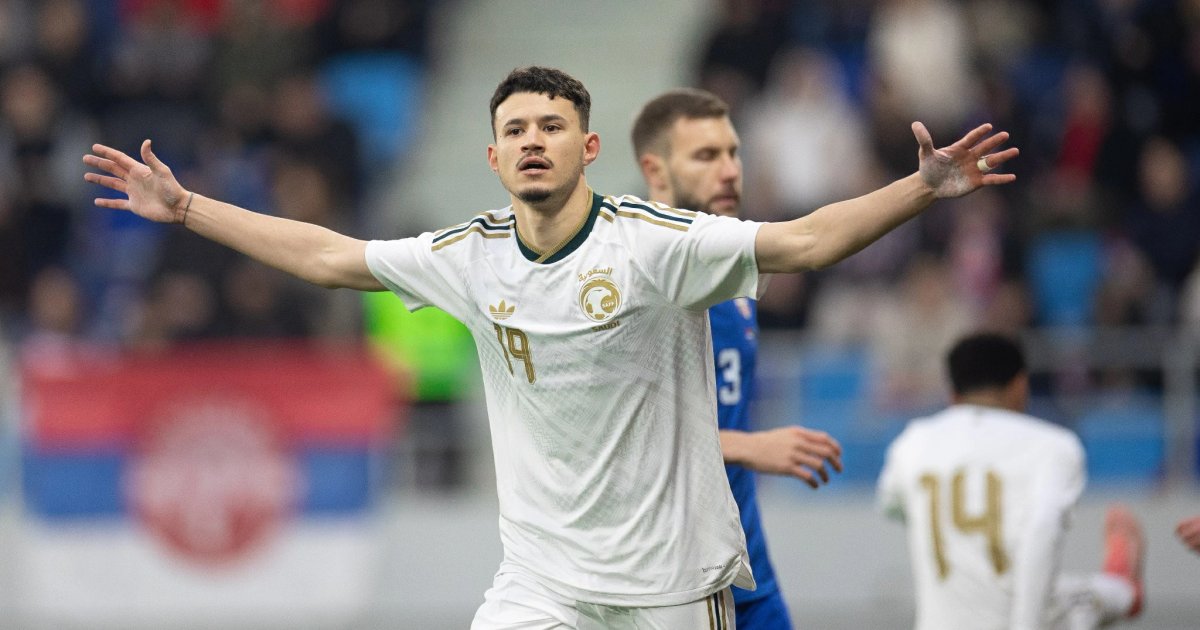
The Saudi national football team lost to its Serbian counterpart with a score of 2-1 in a friendly match held at the TSC Stadium in Backa Topola, Serbia. This match was part of the training camp that the Green Falcons are participating in during the FIFA international days in March, as part of the third phase of their preparation program for the 2026 World Cup.
Despite scoring a goal, the performance of the Saudi team was lackluster, managing only 41% possession, reflecting clear difficulties in imposing their style of play on the field. The Green Falcons also suffered from a severe attacking weakness, as they only attempted 3 shots throughout the match, with just one shot on target that resulted in their only goal.
Match Details
The match between Saudi Arabia and Serbia highlighted the team's inability to capitalize on available opportunities, as they failed to create a real threat to the opponent's goal. The Green Falcons did not benefit from set pieces, managing only one corner kick. Continuous pressure from the Serbian team forced the Saudi players into making mistakes, resulting in two yellow cards.
The final statistics of the match were as follows: Goals: 1, Possession: 41%, Shots: 3, Shots on Target: 1, Corners: 1, Yellow Cards: 2, Red Cards: 0.
Background & Context
This match comes as part of the Saudi national team's preparations for the 2026 World Cup, with the coaching staff aiming to develop performance and improve attacking effectiveness. Historically, the Saudi team has struggled in friendly matches leading up to major tournaments, raising concerns about their readiness for upcoming competitions.
Preparations for the World Cup require the Saudi team to focus on improving their attacking performance, especially following the disappointing display in this match. The coach and players need to work on enhancing coordination between lines and improving their ability to create opportunities.
Impact & Consequences
The numbers indicate that the Saudi national team is in urgent need of reassessing its attacking strategies before the official competitions begin. The poor performance in the match against Serbia could negatively impact the players' morale and increase pressure on them in upcoming matches.
If this performance continues, the team may find itself in a difficult position during the qualifiers and official competitions, necessitating prompt intervention from the coaching staff to correct the course.
Regional Significance
The Saudi national team is considered one of the prominent Arab teams, and any decline in its performance could affect the image of Arab football as a whole. Arab fans are eagerly watching the team's performance in the World Cup, hoping they can deliver a level that befits the reputation of Arab football.
In conclusion, Saudi football needs a comprehensive reassessment of its performance, focusing on improving attacking effectiveness to ensure positive results in the near future.