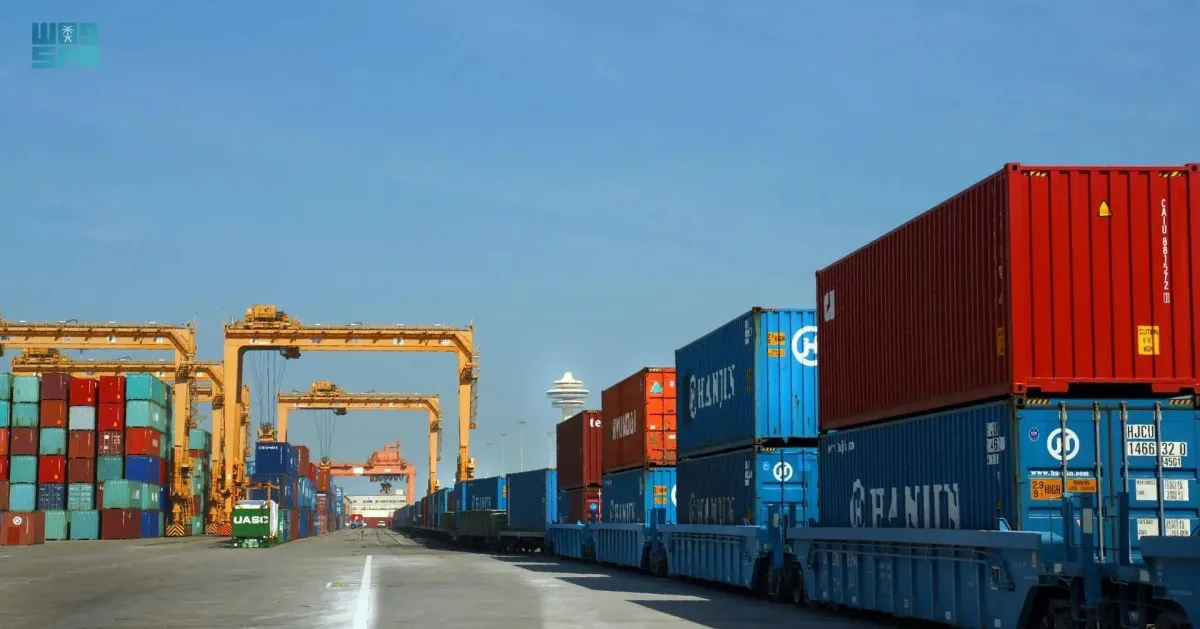
Saudi Arabia has recorded a significant growth in its non-oil exports, which increased by 22.1% in January 2026, reaching 32.6 billion Saudi Riyals (approximately 8.69 billion dollars). This increase reflects the success of efforts made to diversify the economic base of the Kingdom.
According to international trade data released by the General Authority for Statistics, the ratio of non-oil exports to imports rose to 40.0%, compared to about 34.9% in January 2025. This performance is a positive indicator of the Saudi economy's ability to face global challenges.
Details of the Event
The surge in non-oil export performance is mainly attributed to a significant jump in re-export activity, which recorded a record growth of 95.5%, reaching 15.8 billion Saudi Riyals (approximately 4.21 billion dollars). This level is the highest since the beginning of 2017, with growth concentrated in the machinery, electrical devices, and equipment sector, which grew by 78.2%, accounting for 46.1% of total re-exported goods.
In contrast, national non-oil exports (excluding re-exports) declined by 9.9%, reaching 16.7 billion Saudi Riyals (approximately 4.45 billion dollars). This disparity in performance reflects the challenges faced by some sectors amid global economic conditions.
Background & Context
Data indicates that the total goods exports of the Kingdom in January reached about 98.7 billion Saudi Riyals (approximately 26.32 billion dollars), with limited growth of 1.4%. This limited growth was influenced by a decline in oil exports by 6.4%, with their value dropping to 66.1 billion Saudi Riyals (approximately 17.62 billion dollars). This led to a reduction in the share of oil from total exports to 67.0% compared to 72.6% the previous year.
This performance coincided with an increase in imports by 6.5%, reaching 81.4 billion Saudi Riyals (approximately 21.70 billion dollars), resulting in a 17.5% decrease in the trade balance surplus, which amounted to 17.3 billion Saudi Riyals (approximately 4.61 billion dollars).
Impact & Consequences
These figures indicate the success of the Kingdom's Vision 2030 in enhancing economic diversity and reducing dependence on oil. As efforts continue to develop non-oil sectors, the Kingdom is expected to witness further growth in non-oil exports, enhancing its competitiveness in global markets.
This positive performance may also contribute to attracting foreign investments, as the Kingdom seeks to enhance the business environment and provide investment opportunities. With the increasing demand for non-oil products, it is expected that the share of these exports will grow in the future.
Regional Significance
The growth in Saudi non-oil exports serves as a model for other Arab countries seeking to diversify their economies. Amid global economic challenges, the Saudi experience can be an inspiration for countries that heavily rely on oil.
In conclusion, the strong performance of Saudi non-oil exports demonstrates the Kingdom's commitment to achieving its economic goals, reflecting the economy's ability to adapt and grow in a changing global environment.