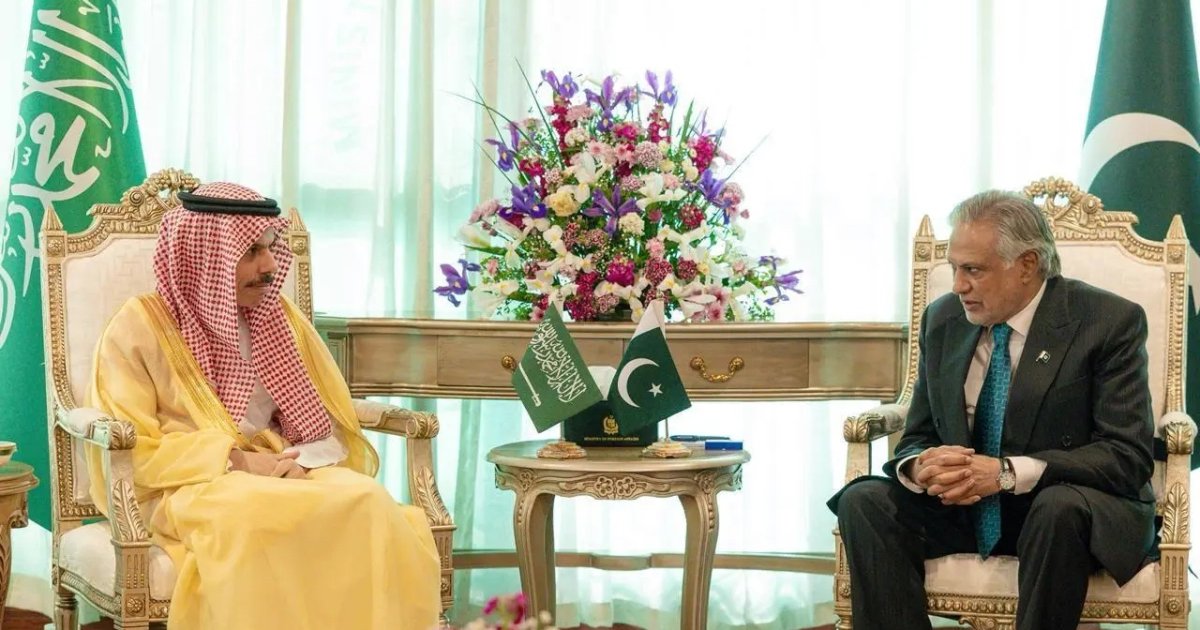
A meeting was held in Islamabad between Saudi Foreign Minister Prince Faisal bin Farhan and Pakistan's Deputy Prime Minister and Foreign Minister Ishaq Dar, where several important regional issues were discussed. The meeting, which took place on Sunday, is part of the two countries' efforts to enhance bilateral cooperation and address current regional challenges.
Prince Faisal bin Farhan arrived in Islamabad to attend a quadrilateral ministerial meeting that includes the foreign ministers of Saudi Arabia, Pakistan, Egypt, and Turkey. This meeting is considered an important opportunity to coordinate positions among the four countries amid increasing tensions in the region.
Details of the Meeting
During the meeting, the bilateral relations between Saudi Arabia and Pakistan were reviewed, with both sides emphasizing the importance of enhancing cooperation in various fields, including security and economy. Political and security developments in the region were also discussed, which require greater coordination among the concerned countries.
The meeting comes at a sensitive time, as the region is facing numerous challenges, including ongoing conflicts in some neighboring countries, necessitating coordinated efforts to ensure regional stability and security.
Background & Context
Historically, the relations between Saudi Arabia and Pakistan have been strong, with historical, cultural, and religious ties uniting them. Pakistan is considered one of the countries that receives significant Saudi support, both economically and militarily. The relationship between the two countries has seen notable developments in recent years, especially in light of geopolitical changes in the region.
Moreover, the meeting is part of Saudi Arabia's efforts to enhance its role as an active regional power, as the Kingdom seeks to build strategic alliances with countries in the region to address common challenges such as terrorism and extremism.
Impact & Consequences
These meetings hold significant importance, as they could lead to improved security coordination among the participating countries, which may contribute to reducing tensions and enhancing stability in the region. Strengthening relations between Saudi Arabia and Pakistan could also open new avenues for economic cooperation, benefiting both countries.
It is expected that these meetings will contribute to bolstering efforts to address security challenges, such as terrorism, which poses a common threat to many countries in the region. Additionally, coordination among the four countries could help achieve sustainable development goals in the area.
Regional Significance
These meetings are an important step towards enhancing cooperation among Arab and Islamic countries, as they could lead to the formation of new alliances to confront common challenges. Amid increasing tensions in the region, strengthening relations between Saudi Arabia and Pakistan could serve as a model for other Arab countries.
In conclusion, this meeting highlights the importance of regional cooperation in addressing common challenges and reflects the commitment of the participating countries to achieve security and stability in the region. Coordination among these countries could contribute to building a better future for the Arab and Islamic region.